Platform about design and technology in the kitchen, home, and bathroom industry
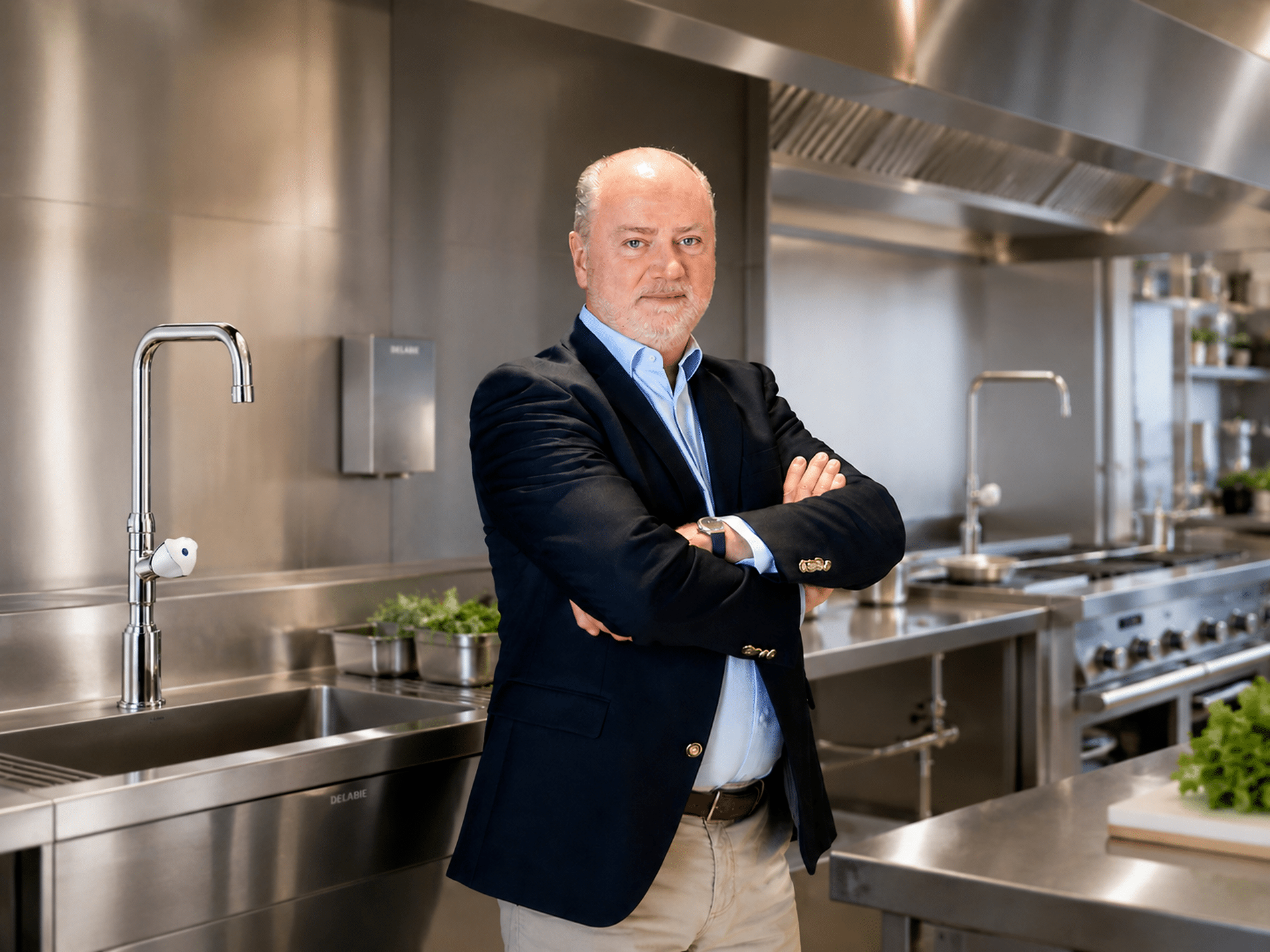
In the kitchen and bathroom industry, we’re constantly making choices—about aesthetics, materials, and budgets. But how often do we first ask ourselves: What is a product actually meant to be used for? In everyday life, we do this automatically. If you’re going for a run, you put on running shoes. Heading to the woods? Boots! We tailor our choices to the intended use and circumstances without giving it much thought. Yet I notice that in the world of professional kitchens and plumbing, we still don’t apply that same logic often enough.
After all, a faucet in a commercial kitchen has completely different requirements than a faucet in a home. Not only in terms of appearance, but especially in terms of use, wear and tear, hygiene, and safety. In professional settings, products are used more intensively, often by multiple people in quick succession. In such cases, it’s not enough to consider only design or price. The application should always be the starting point.
Still, I see that there’s still too little awareness of this, even though every environment places different demands on a product. Is it intended for residential or commercial use? For a restaurant kitchen or for personal use? For intensive daily use or occasional use? For handwashing or food preparation?
This places a significant responsibility on professionals in the industry—not only on manufacturers, but especially on consultants, installers, architects, and clients. After all, working professionally also means looking beyond the obvious and asking deeper questions: Who will be using it? How intensively? Under what conditions?
It is precisely the spaces we use most often—such as the kitchen and bathroom—that call for well-thought-out choices, whether at home or in a professional setting. Interestingly, products that are used intensively on a daily basis are sometimes not considered until late in the process.
That’s remarkable, especially since there’s quite a lot of information available these days, but I don’t think people always actively seek it out. Meanwhile, developments and regulations in the areas of sustainability, water conservation, and hygiene are advancing at breakneck speed. So if you want to stay current as a professional, you have to stay curious: attend trade shows, go to lectures, and keep the dialogue going with specialists and suppliers. Because asking the right questions—based on the right knowledge—ensures that you can provide sound advice. And that customers make choices that actually work in the long run.
Of course, I understand that price also plays an important role. Projects are becoming more expensive, budgets are under pressure, and decisions are being weighed more carefully. But cheap and suitable aren’t necessarily the same thing. It still happens too often that it only becomes clear over time that a product wasn’t actually suitable for the application for which it was chosen.
There’s a huge opportunity there for our industry. We need to think less in terms of standard solutions and more in terms of actual use. After all, the success of a project isn’t determined solely by how something looks or how much it costs, but above all by whether a product does what’s expected of it. So ask yourself: do I still choose the product first, or do I start with the user experience?
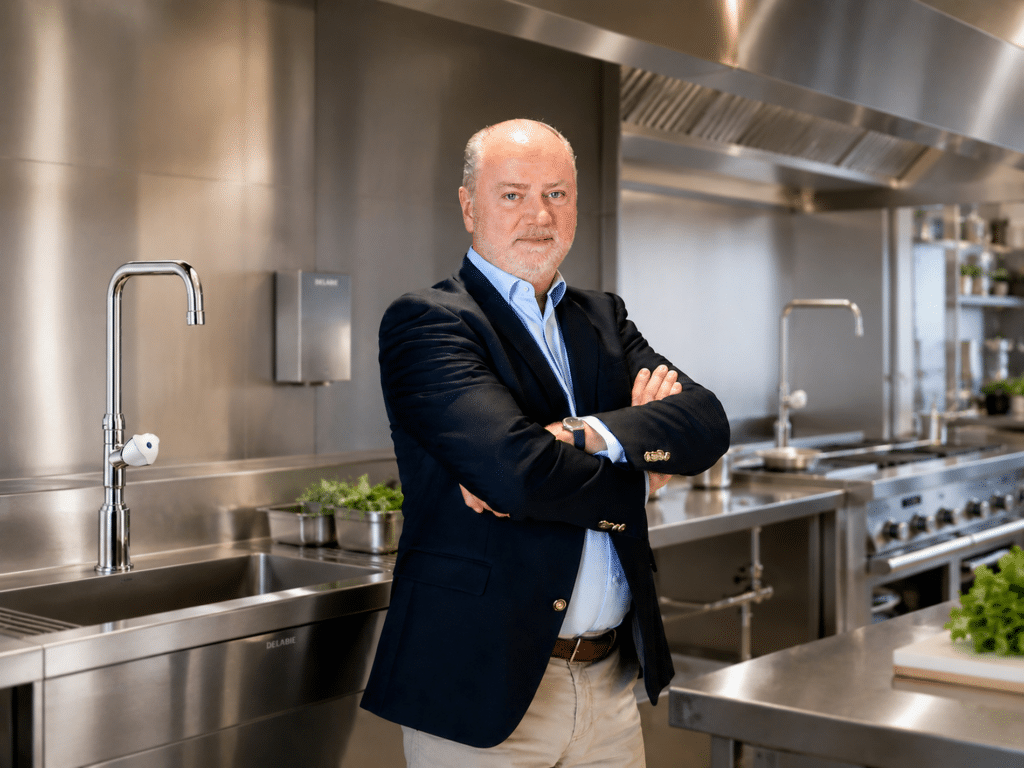
Frank Desmet, Sales Director, Delabie Benelux
Neem dan rechtstreeks contact op met Delabie.
 Contact opnemen
DELABIE, a rich history Georges DELABIE, sanitary wholesaler in Paris, takes charge of a foundry in Friville, located on the Somme, in 1927. Here he mainly develops faucets and floor siphons for bathrooms and kitchens. The following generations always strive to grow the family business, but want to preserve the identity of the brand and the [...]
Bekijk Bedrijfsprofiel