Platform about design and technology in the kitchen, home, and bathroom industry

Making choices, we do it every day. But when choosing a new kitchen, choosing becomes a lot more difficult. Because how do you combine aesthetics, functionality, sustainability and affordability without getting bogged down in an endless amount of options or, on the contrary, too limited a choice? The art lies in making conscious choices - and that starts with us as an industry.
The options are endless: from faucet to countertops, from fronts to appliances. As a consumer, you have to prioritize. Unfortunately, in practice we see that choosing energy-efficient appliances is often the first to come under pressure, because they come with a price tag. While people with smaller budgets benefit most from lower energy bills. Here lies a challenge for the kitchen industry: how do we ensure that sustainability remains a viable choice for everyone?
The kitchen industry focuses heavily on design and innovative features, but less on the affordability of sustainability. Appliances are becoming more economical, but also more complex and expensive as additional features and more luxurious elements are added that drive up the price. Thus, a sustainable choice suddenly becomes less financially attractive to some consumers.
Why not do it differently? I think there is a fear in the industry that if entry-level models become too attractive, the middle class will choose them en masse and more expensive models won't sell as well. That fear hinders innovation in the right direction. But is that fear justified? I notice that the new generation of consumers looks at brands and products very differently. They are less brand fixed and more conscious in their choices. Functionality and durability increasingly win out over a prestigious label.
I think the kitchen industry needs to address that. Salespeople get plenty of training on how beautiful products are and what they can do, but not on what consumers really need. Support consumers to make smart choices instead of merely pointing out functionality or aesthetics. And therein lies an industry-wide task: more sustainable choices must be made more visible and tangible - not by offering even more options, but by better highlighting the right ones.
Therefore, if you ask me, making choices is not a matter of limiting, but of refining. What is really relevant to the consumer? You find out by analyzing consumer search behavior and creating a data-driven approach that really works.
But that takes guts. Guts to offer fewer features, so that an energy-efficient product does remain affordable. Guts to position sustainability not only as a luxury, but also as a smart basic choice. Guts to give honest advice, even if that means that a more expensive model is not necessary.
Because making choices is one thing - daring to offer the right choices is where the real change begins. Do you already dare to choose sustainability as a basis, so that it becomes a natural choice for everyone?
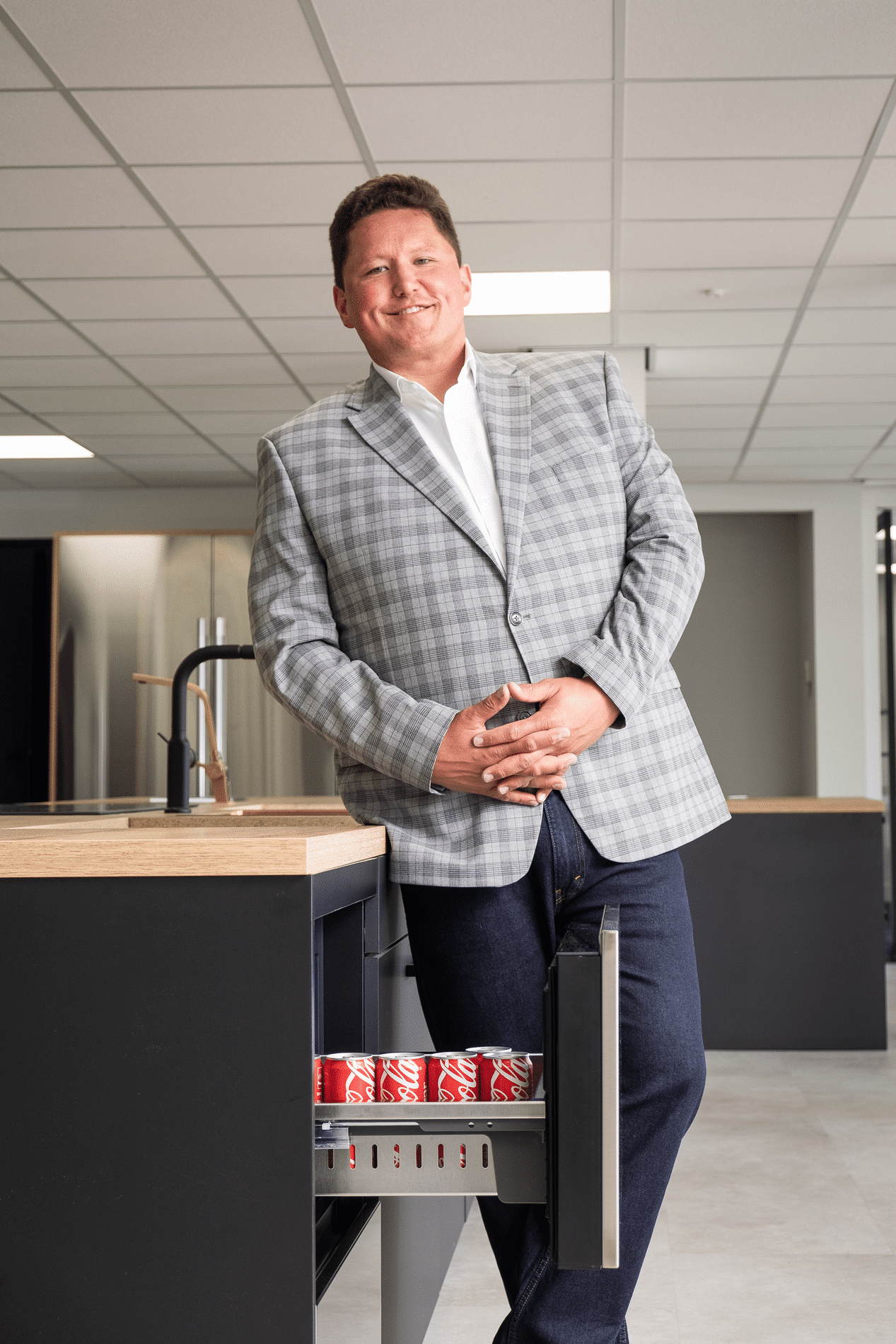
Patrick Nolsen
Commercial Director Retail and Projects at Inventum Household Appliances
Neem dan rechtstreeks contact op met Inventum.
 Contact opnemen
Inventum is a total provider of home appliances, with a wide range of products in the categories of small kitchen appliances, large kitchen appliances - freestanding and built-in, household and climate control. Not only in the Netherlands is Inventum a household name. Even in the farthest corners of the world, many Inventum products have been used satisfactorily since the early years. [...]
Bekijk Bedrijfsprofiel