Platform about design and technology in the kitchen, home, and bathroom industry

Why is PVD worth the extra cost?
Today, the range of colored faucets, sinks and all kinds of bathroom and kitchen accessories is enormous. Champagne, copper, gunmetal ... customers see the options, but do not always understand why, for example, one faucet is a lot more expensive than another. This is when the abbreviation PVD often comes up. Many have heard of it, but exactly what it means often remains vague to consumers. This is precisely why it is important that you, the professional, clearly explain what PVD is, where it comes from and why it is worth the extra cost.
To be clear, PVD is not a recent invention from the world of interior design. In fact, a lot of earlier applications, including in the tool industry, do not involve fancy colors. PVD coating has also been used in aerospace applications for some time, mainly because of its extreme wear resistance, heat resistance and protection against oxidation. PVD also found its way into the semiconductor and electronics industries and even the medical sector, for surgical tools and implants. As for consumer products, we also note earlier applications to luxury products such as watches and jewelry. Only in the last 10 to 15 years did PVD find its way into interior applications, including faucets. That origin immediately explains why the finish is so strong and reliable: PVD was never intended as a ‘pretty color,’ but as a high-performance protective coating.
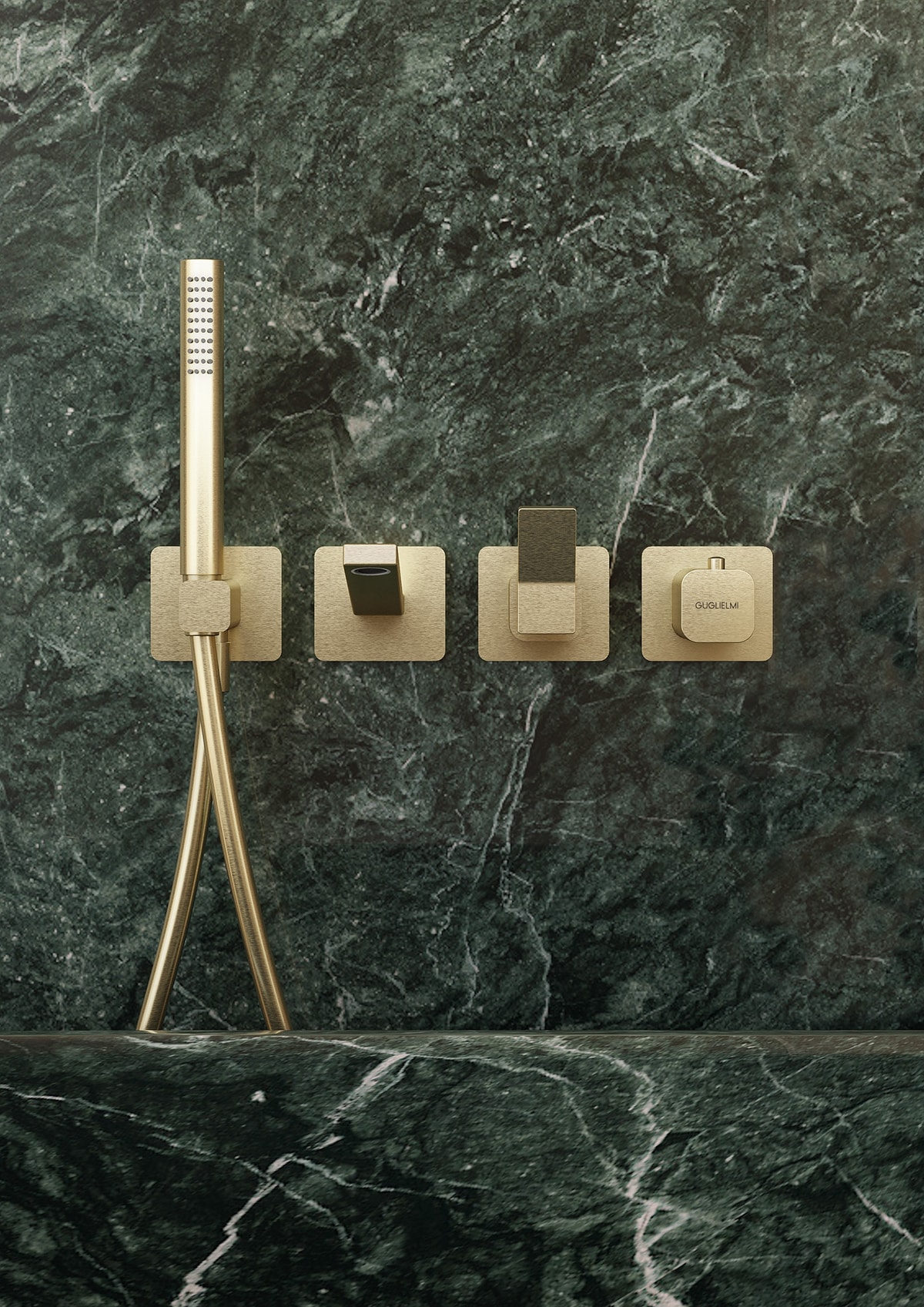
PVD is short for Physical Vapor Deposition, freely translated as physical vapor deposition. It is a thin, extremely hard coating that is applied to the metal of the tap - or other object - in the form of a gas mixture in a vacuum chamber. In the process, the coating is vaporized or ‘sputtered’ after which the atoms adhere to the surface as a thin film. It is neither a lacquer nor a classic chrome layer. Due to the special method of application, the coating adheres extremely well and is much more resistant to scratches, cleaning agents and daily wear and tear. The result for the customer is obvious: A PVD faucet stays beautiful much longer and retains its color even in heavily used bathrooms and kitchens. In addition, PVD offers a particularly wide and stable range of colors. Because the hue comes not from pigment but from metal, colors such as gold, rose gold, copper, matte black or gunmetal remain consistent and even for years. This is of great value in projects where faucets, shower profiles and accessories must match the same finish.
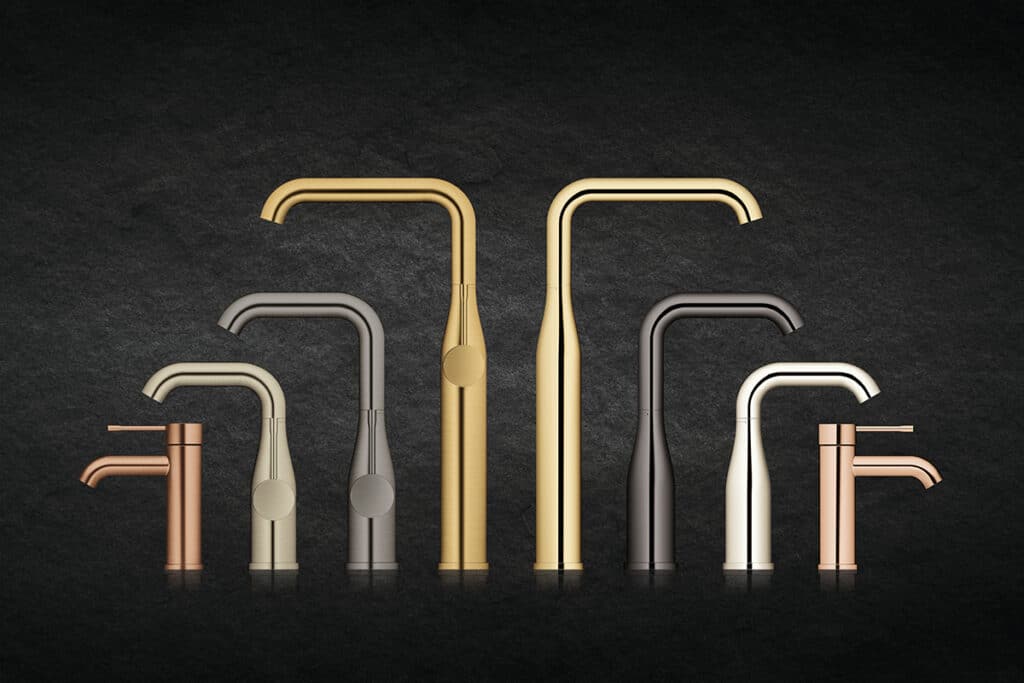
PVD coating requires a sophisticated manufacturing process, strict quality control and specialized equipment. That explains the higher purchase price, but that investment translates directly into longevity. PVD faucets last longer, are more resistant to corrosion and require less maintenance. At GROHE, they talk about a PVD surface that is ten times more scratch-resistant and three times harder than chrome, making the faucets extremely resistant to friction and intensive use. For the end user, this means less chance of damage and less need for replacement. For the installer, it means fewer service calls and fewer recurring problems, an argument that usually convinces customers once it is clearly explained.
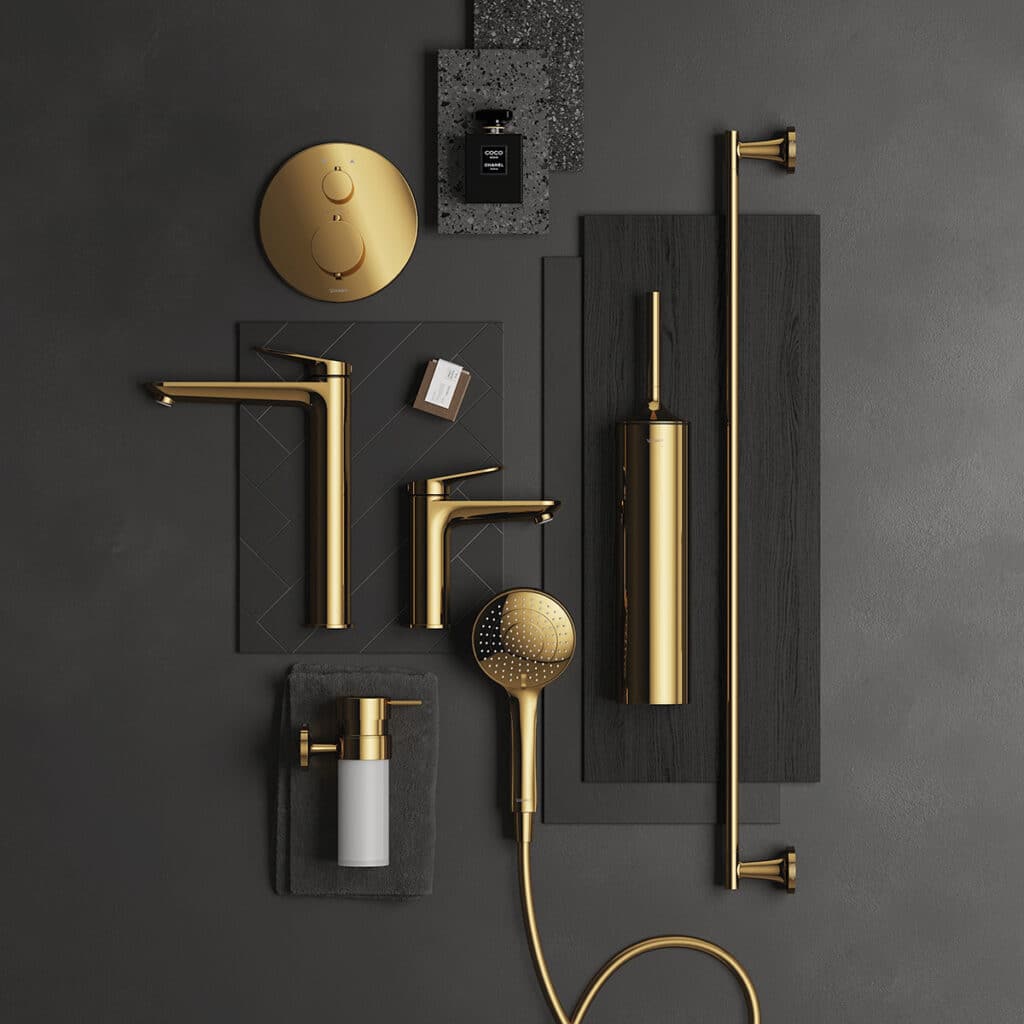
In addition to aesthetics and quality, PVD also offers distinct environmental benefits. Unlike traditional electroplating processes, PVD does not use chemical baths or heavy metals. There is no contaminated rinse water and hardly any harmful waste is released. Moreover, the increased wear resistance guarantees a longer life of the faucet, which means less frequent replacement. That automatically means fewer raw materials, less production and less transportation. So it is a technology that is not only beautiful and sturdy, but also fits within the trend toward more sustainable material choices. A critical note: PVD is an energy-intensive process, though, so its ‘greenness’ is affected by energy-efficient equipment, process optimization and the energy mix used. All in all, it is safe to say that PVD is much more than a fashionable color shade. It is a high-quality, extremely durable finish with roots in industry, now perfectly translated to the bathroom and kitchen. By explaining to customers where PVD comes from, what makes it different from lacquer or chrome, and why it is also a smart choice in terms of the environment and longevity, the additional cost can be easily justified.