Platform about design and technology in the kitchen, home, and bathroom industry

Kitchens are increasingly art-worthy
At KüchenMeile 2025, it became clear that the kitchen world continues to evolve. Whereas last year the Japandi style set the tone with its calmness and simplicity, this year there is a refined further development. Round shapes, warm colors and natural materials bring softness and warmth to the modern kitchen image.
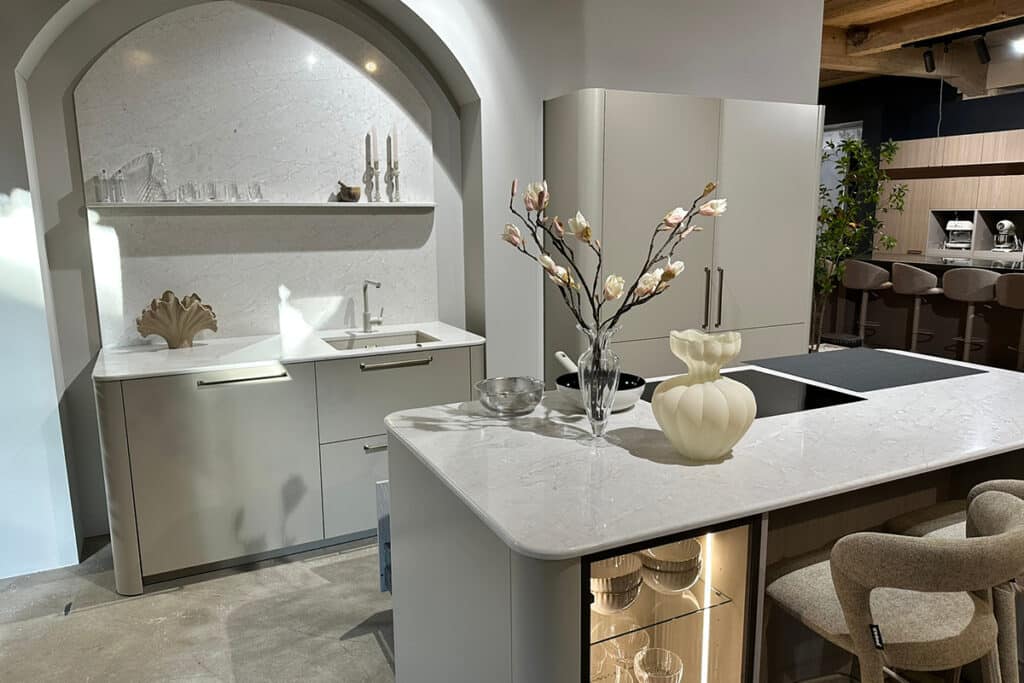
At Gut Böckel, this trend became aptly visible during Jetstone's presentation. The worktop specialist showed how technology and design reinforce each other in kitchens that are increasingly worthy of art. The compositions breathe tranquility, but at the same time are rich in detail. Every line, every rounding seems deliberately designed to follow the eye and invited many a visitor's hand to be touched for a moment. “We see a clear shift from minimalism to experience,” said Mark Joosten, marketing coordinator at Jetstone. “Round shapes make kitchens even more friendly, homey, and thanks to modern processing techniques, we can achieve this perfectly with ceramics and composite.”
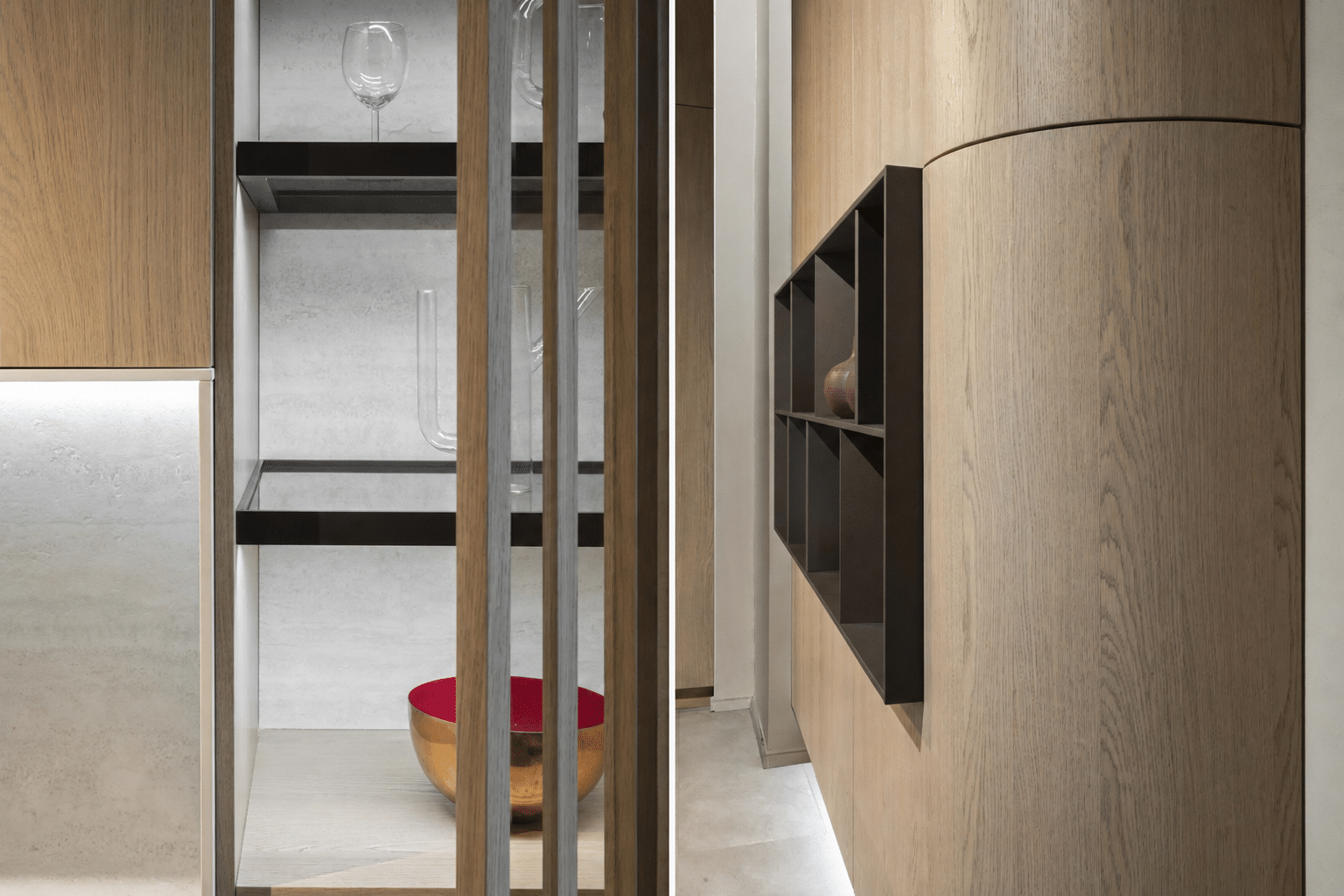
Round shapes were a regular feature in this showroom: in islands with soft curves, rounded seating areas and flowing edge finishes. The result is a kitchen that is no longer purely functional, but more of a piece of furniture within the interior. The play of light across the surfaces enhances that effect: matte and glossy parts alternate, creating depth and dynamism that does contemporary kitchens justice. In addition, Jetstone demonstrated their quality by presenting at Küchenmeile the round miter and radius at the corners, flush with the round solidification of the kitchen cabinets. A development that can only be welcomed.
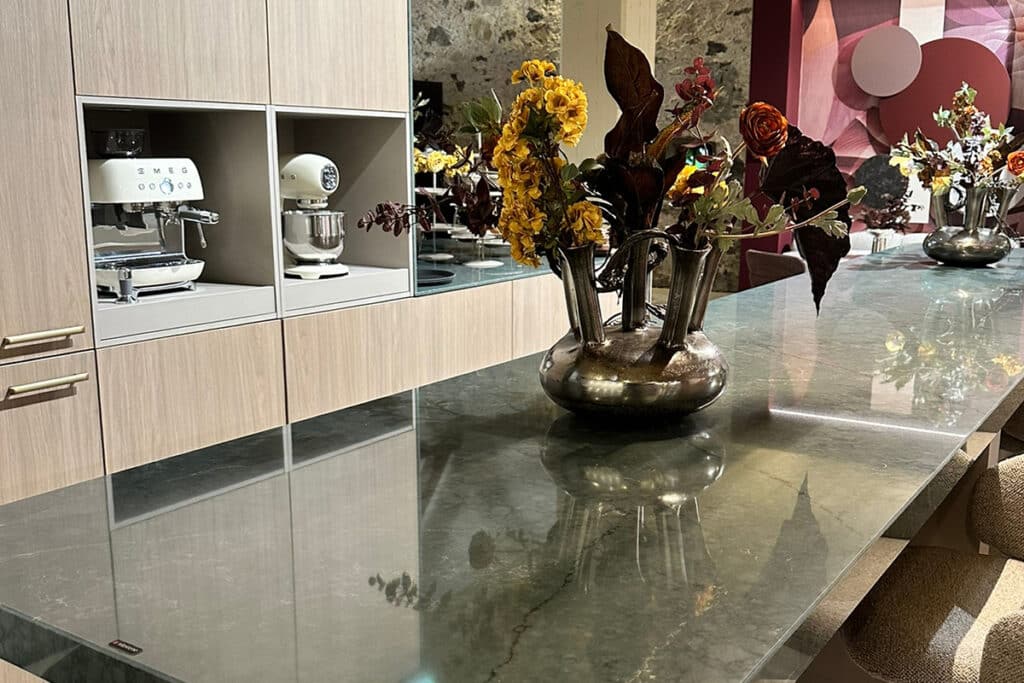
Material-wise, Jetstone is taking further steps toward sustainability. These include composites from the Caesarstone ICON series, which consist of eighty percent recycled glass and are free of silica. The subtle light effect and transparency of these surfaces give a special sense of depth and layering.
In addition to composite, ceramics also play an important role. Surfaces with tactile textures, light marble veins or silk-gloss finishes still adds that extra touch of emotion to the kitchen. Colors range from sand and beige to emerald greens and warm browns, giving the kitchen a softer, more natural look. “Consumers don't want to choose between beautiful or practical,” Joosten continues. “They are looking for materials that are durable, low-maintenance as well as aesthetically distinctive. That combination defines the kitchen of tomorrow.” The presentation at Gut Böckel showed that the future of kitchen design is all about nuance: softer lines, harmonious colors and tangible materiality. A kitchen in which form, function and feeling merge into one and where atmosphere and everyday use reinforce each other to create an inviting living space.
Neem dan rechtstreeks contact op met Jetstone.
 Contact opnemen
Since its founding in 1993, Jetstone has steadily grown into a highly reliable, international cooperation partner for granite, composite and ceramic countertops. The sustainable manufacturer now has two modern production sites and a third (of 16,000 m2) under construction. Among its more than 300 enthusiastic and committed employees, there is a sizeable team of in-house fitters who [...]
Bekijk Bedrijfsprofiel