Platform about design and technology in the kitchen, home, and bathroom industry

AI becomes the silent assistant
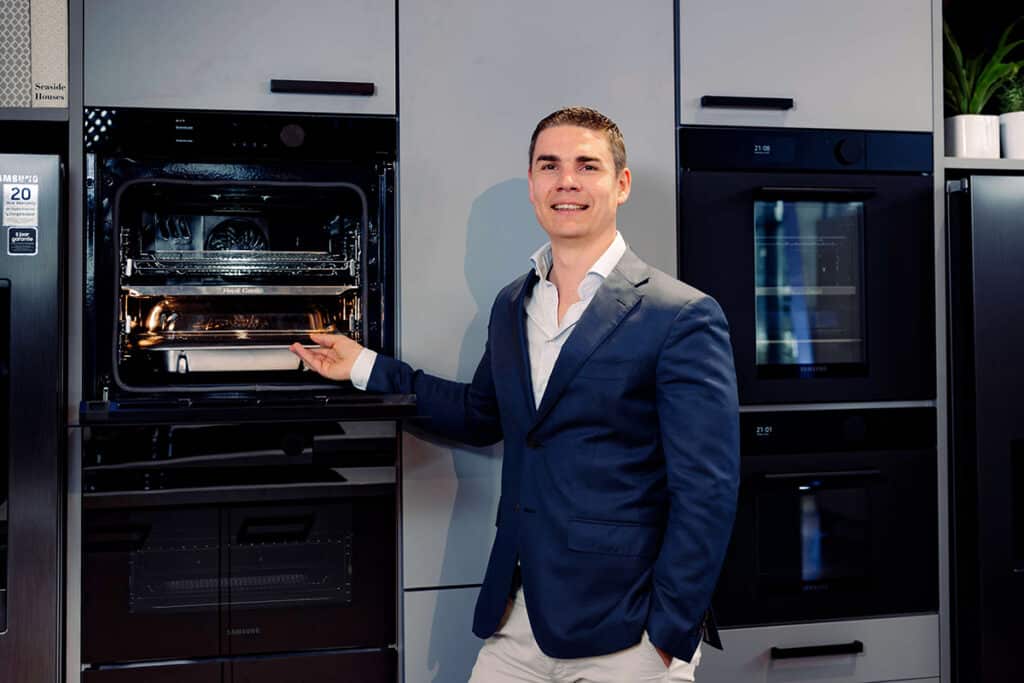
Artificial intelligence (AI) will become an indispensable force in the kitchen in the coming years. Samsung is leading the way in this with its Bespoke AI devices, which today already show what will soon become standard. "Our 7 Series oven uses a built-in camera to recognize which dish you place in it and then automatically recommends the optimal baking program," says Mitchell Keijzer, Field Sales Manager ERT & KRT at Samsung. "This makes cooking easier, more efficient and error-free."
AI is also making great strides in the field of refrigeration. "Our built-in refrigerators have AI Energy Mode. With this you save energy without having to adjust your behavior as a user. The refrigerator analyzes lifestyle patterns and adjusts the cooling cycle accordingly. For example, if someone is going to cook daily around six o'clock, the refrigerator cools down a little further just before with minimal energy consumption. This keeps the temperature stable even if the door opens and closes frequently."
According to Samsung, the ultimate connected kitchen in 2030 is primarily focused on unburdening. "The consumer can fully focus on preparing delicious dishes, while the appliances support where needed," Keijzer said. The smart appliances work closely together in this regard. "For example, the dishwasher can communicate with the solar panels on the roof and start at the moment when there is a lot of solar energy available. Even the lighting can respond: changes color as soon as the oven or dishwasher is ready."
These far-reaching links are made possible in part by the Matter protocol, which is a universal standard for smart home devices. "Since Matter is already widely supported, we expect it to remain the standard for the time being. Thanks to our SmartThings app, users can already control countless devices from one clear application."
Sustainability in 2030 will not only be a requirement of governments, but mainly a logical expectation of consumers themselves, Keijzer predicts. "Consumers have long since stopped paying attention only to energy labels. A is better than B, but they also increasingly look at the production chain: how is an appliance produced and what happens to it after years of loyal service?
Recycling and responsible manufacturing are becoming increasingly important in the choice of appliance."
Samsung anticipates this by integrating sustainability into the design and manufacturing process. By combining energy-efficient technology, smart software and circular initiatives, the brand aims to contribute to a future-proof kitchen.
Despite all the technological advances, in Samsung's vision the kitchen will remain primarily a social space in 2030. "It already is, and that will only get stronger. Technology should actually allow for more time with friends and family instead of being constantly busy with the cooking itself," Keijzer explained. "Smart ovens, refrigerators and dishwashers will take over tasks so that there is more focus on being together."
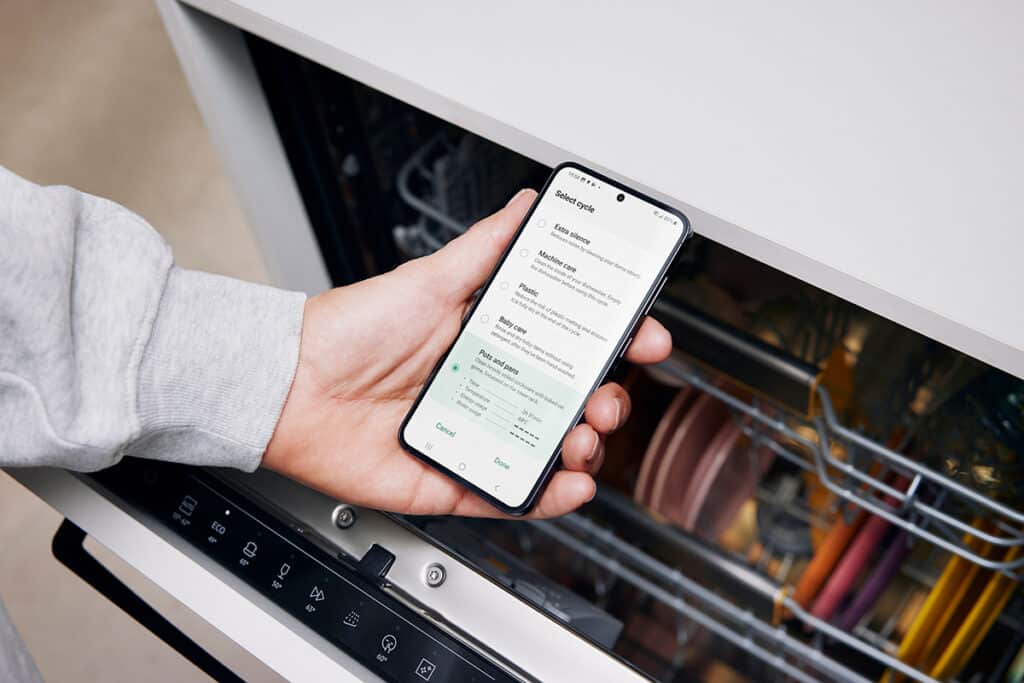
Personalization is another key word for the kitchen of the future. Samsung is already capitalizing on this with SmartThings and Bespoke AI. "Our appliances recognize personal preferences through the SmartThings account. They can respond to your location, the weather or a manual setting. As a result, users hardly need to look back at their devices; they act proactively and adapt to the user's daily rhythm."
This form of customization will only continue to expand in the coming years, Keijzer expects. "Technology is ensuring that the kitchen is not only becoming smarter, but also more and more attuned to the personal wishes and lifestyle of
the consumer."
With 2030 in sight, it is clear: the kitchen is changing rapidly, but it is not losing its human character in the process. On the contrary: thanks to smart technology, the kitchen is becoming a place where convenience, sustainability and togetherness go hand in hand.
Neem dan rechtstreeks contact op met Samsung Electronics Benelux B.V..
 Contact opnemen
Premium Quality Driven by Innovation “Samsung innovates every day. We do this to break the boundaries of what seems possible and make the very best quality available to all. The kitchen is the place where design, innovation and taste come together. Where it's not just about convenience and style, but about everyone's personal needs. From this [...]
Bekijk Bedrijfsprofiel