Platform about design and technology in the kitchen, home, and bathroom industry

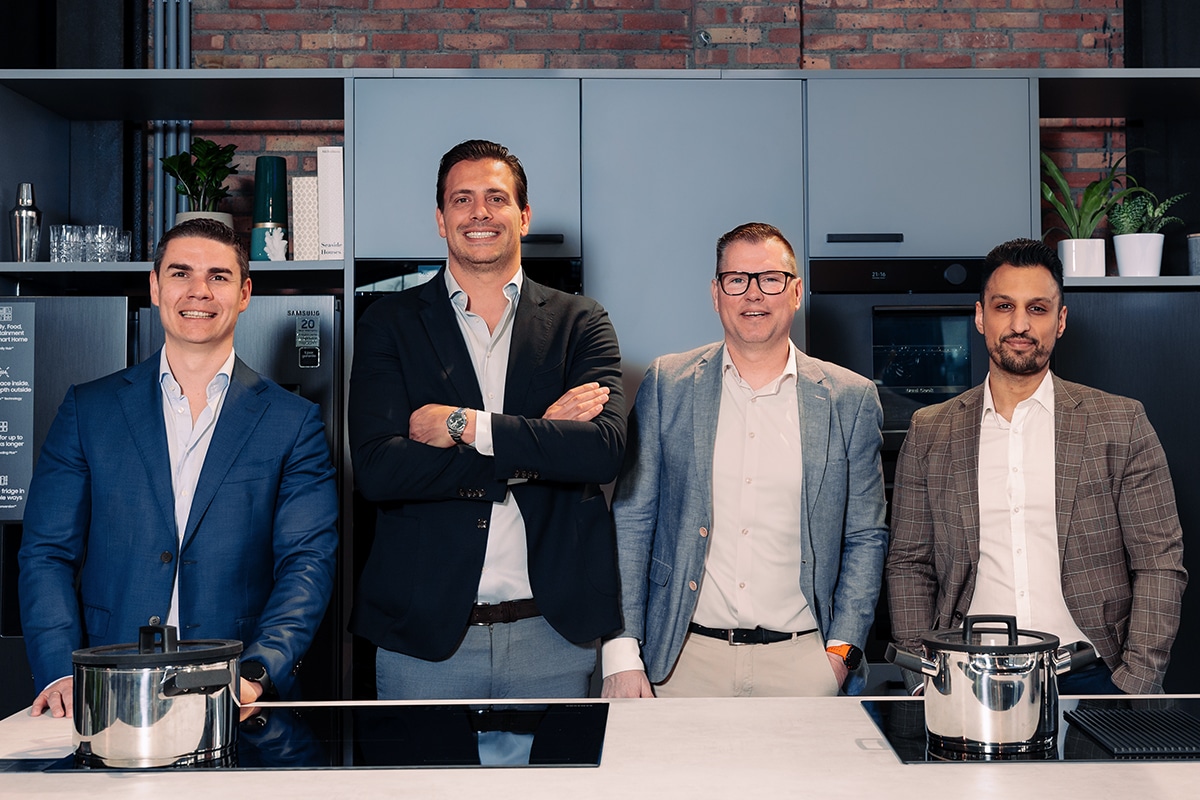
In this edition of Vision 2030, we speak with Ellie Hettema (product manager) and Milan Veling (account manager) of the company ProdInter in Hoorn. This renowned wholesaler in decorative furniture fittings - knobs and handles - has had a keen eye for form, function and trends for years. How do they look today at the kitchen of 2030?

That technology in the kitchen is developing at lightning speed is beyond dispute for Hettema and Veling. Artificial Intelligence that controls your oven and optimizes cooking processes? It is now reality. Yet they are level-headed about the impact: “AI cannot yet taste whether something is good in terms of taste, so there will always be an extra check. You have to keep up with the times in all areas, including in the kitchen,” says Veling.
But despite that technological advance, they see at ProdInter that aesthetics are still high on the agenda. “Fortunately, beauty still prevails. And it will continue to do so. Appearance is chosen first, only then the equipment comes in,” says Hettema. In this regard, decorative furniture fittings play a notable role. “With aesthetics, people look at the design and finish. It has to fit into the whole,” she emphasizes.
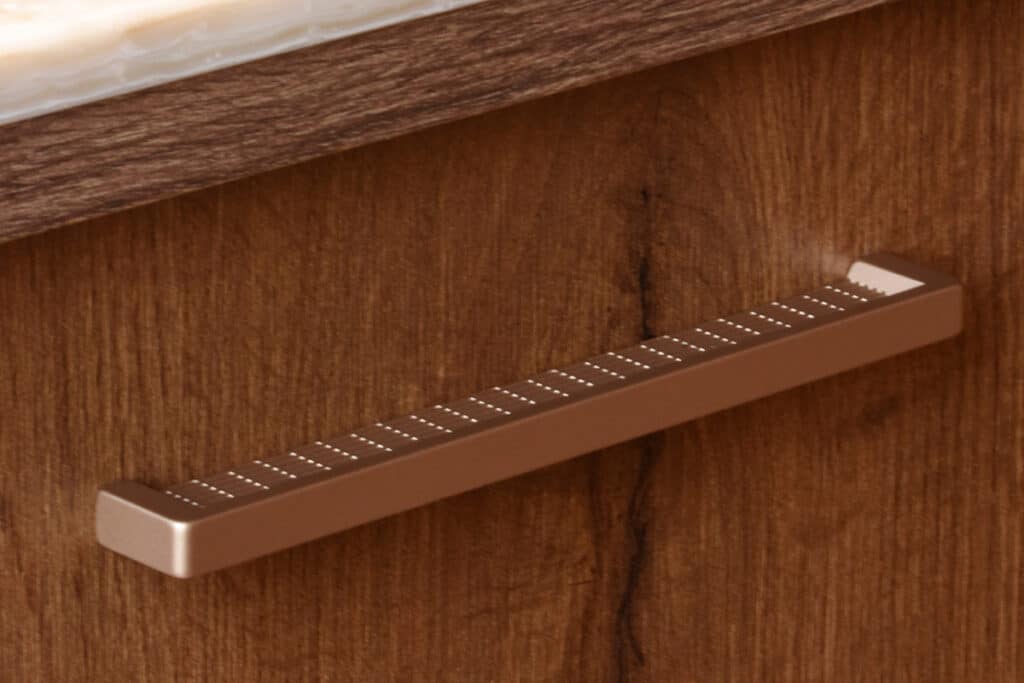
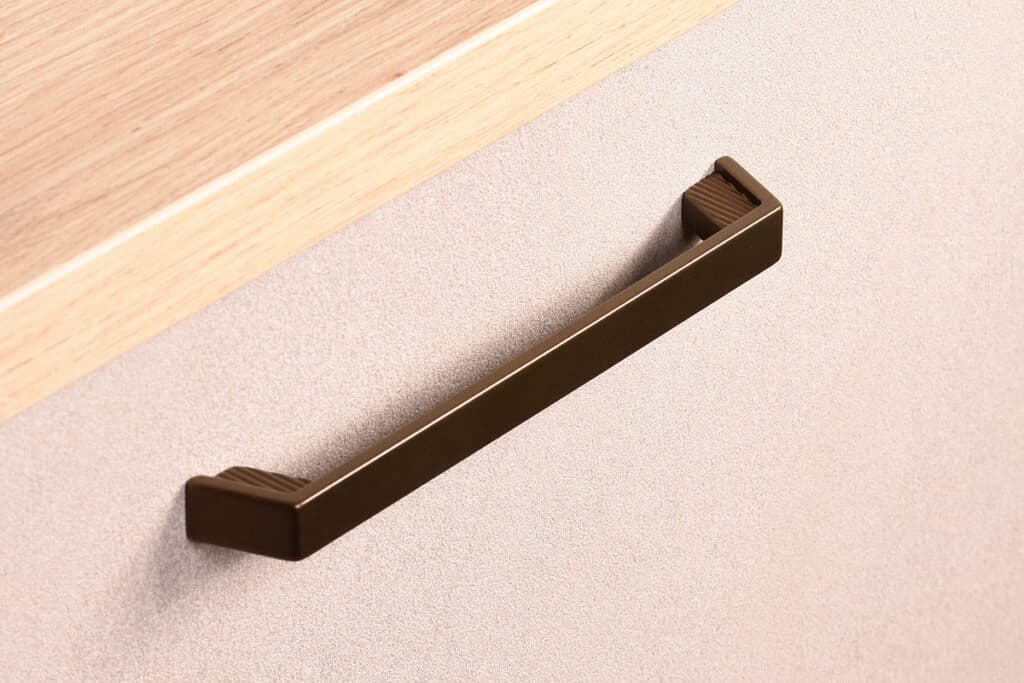
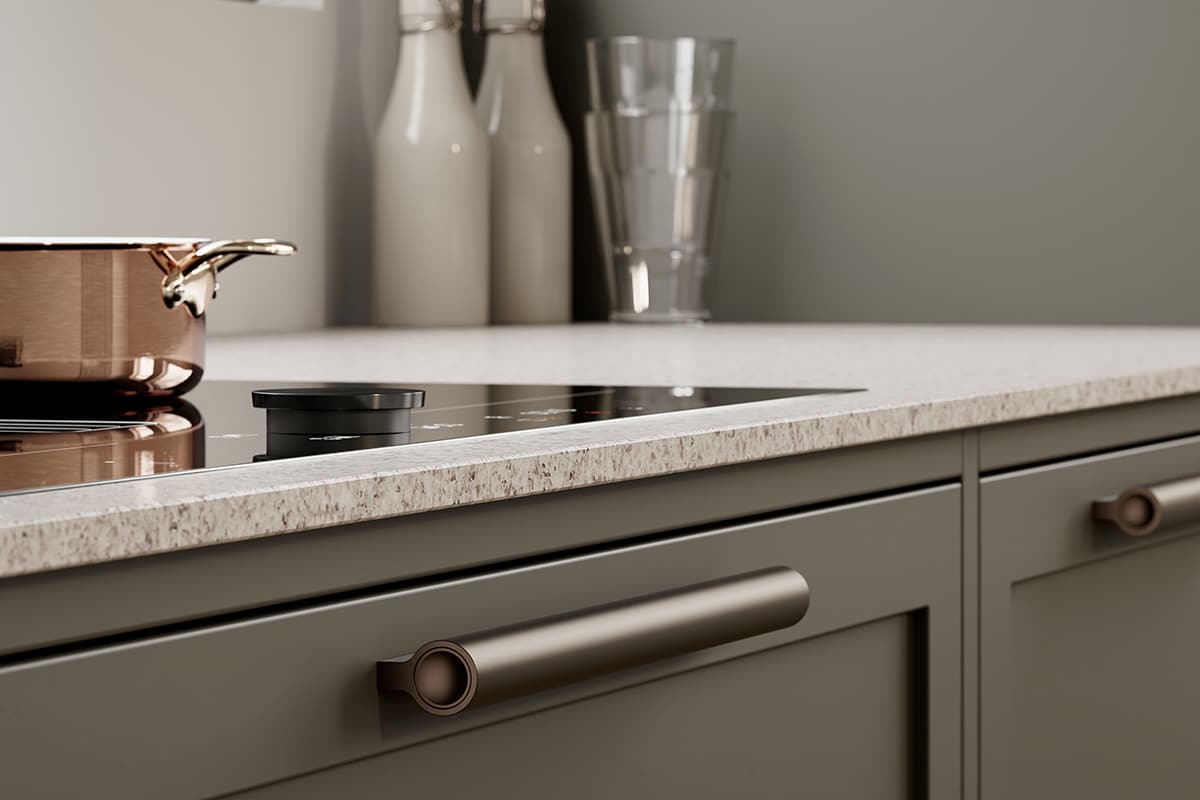
In this, the handle - or knob - is anything but a detail. Indeed, it is often the element that completes the design. “A handle can make or break a kitchen,” states Veling. “It can be just that last, fitting component. The finish and design have to match the rest.” They also see this in the combination of handle-less systems with eye-catching handles. Veling: “The kitchen island is often handle-less, but on tall cabinets, refrigerators and dishwashers you increasingly see a handle again. They are allowed to stand out again. We call that ‘The Finishing Touch’.”
Practical considerations also keep the grip alive. “Should the power go out, a handle always works. As long as even we as wholesalers continue to surprise in form and appearance with our range, the handle will not disappear.”
According to them, a good grip meets simple but essential requirements: comfortable to use, no sharp edges and enough space between panel and grip. “If the handle is too close to the panel and you lose grip as a result, you sacrifice usability,” Hettema says.
Yet the handle is often one of the last choices in the design process. “The finish of faucet and sink is looked at first, and the handle is matched to that. Those elements make the design complementary.”
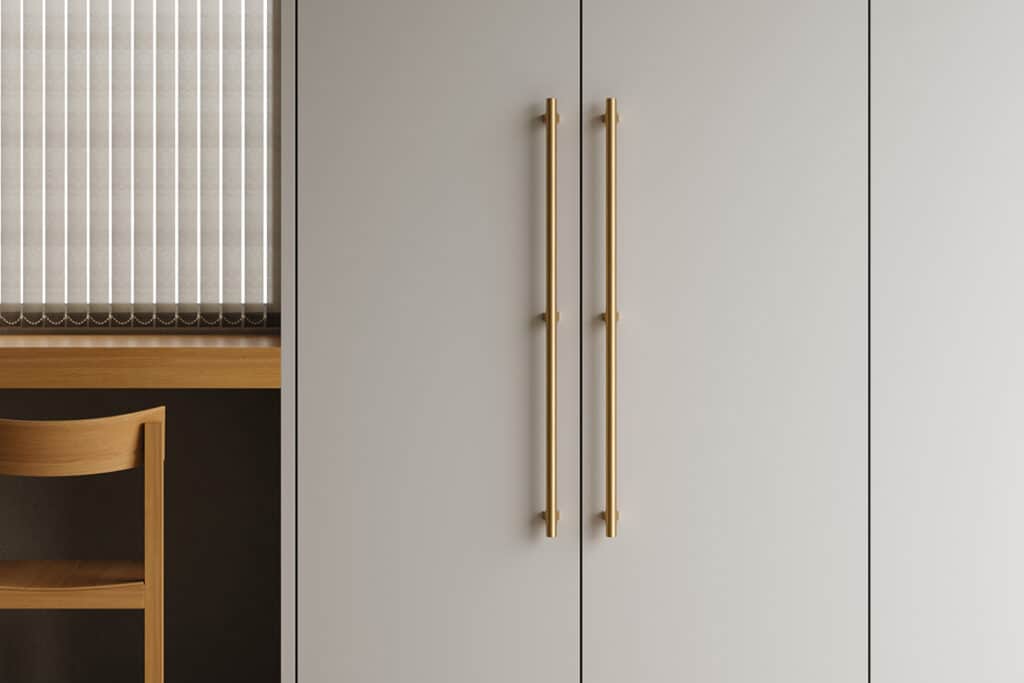
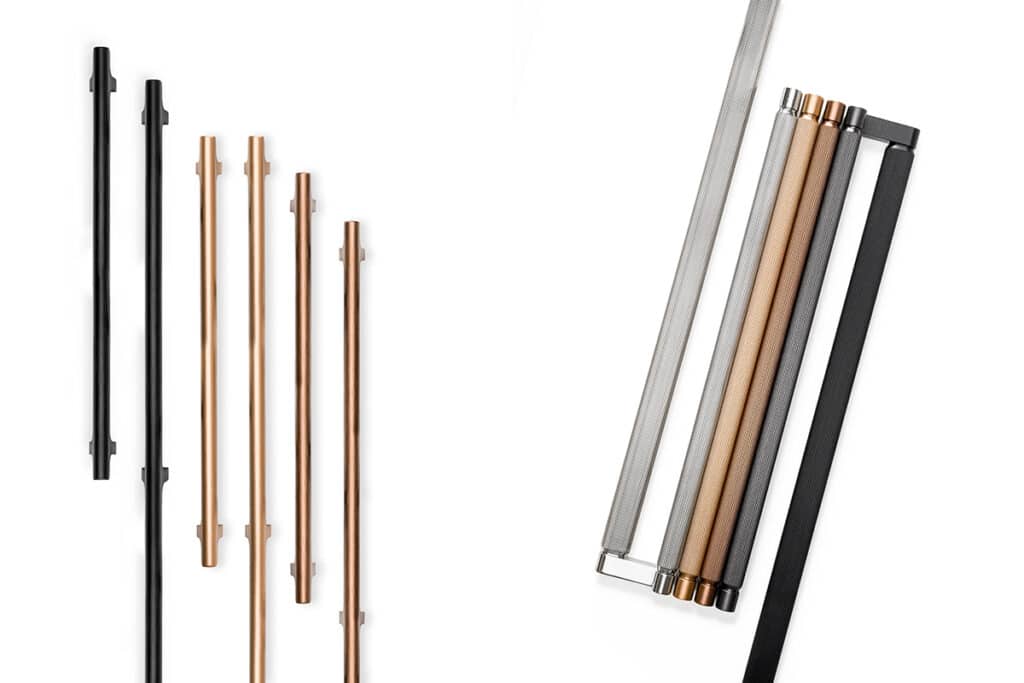
What will the future bring in terms of style? According to Hettema and Veling, we are seeing more and more warm tones and minimalist forms, as well as a revaluation of brutalism. “Stainless steel is coming back. Wood is popular, but there is also interest in materials other than standard metal.” Sustainability is also a factor: “We have worked with a Dutch company to develop a handle made of 100% recycled material.” In terms of design orientation, Italy and Scandinavia are leading the way. “Italy is home to an important supplier of ours, but surprising designs also come from Scandinavia. That's how we keep our collection broad and current.”
Whatever the kitchen of 2030 brings: the handle - and knob - remains a tangible, visible expression of style as well as functionality.