Platform about design and technology in the kitchen, home, and bathroom industry
Supplier links circularity to supply chain collaboration and aims to reuse at least 2,000 refurbished devices annually by 2030
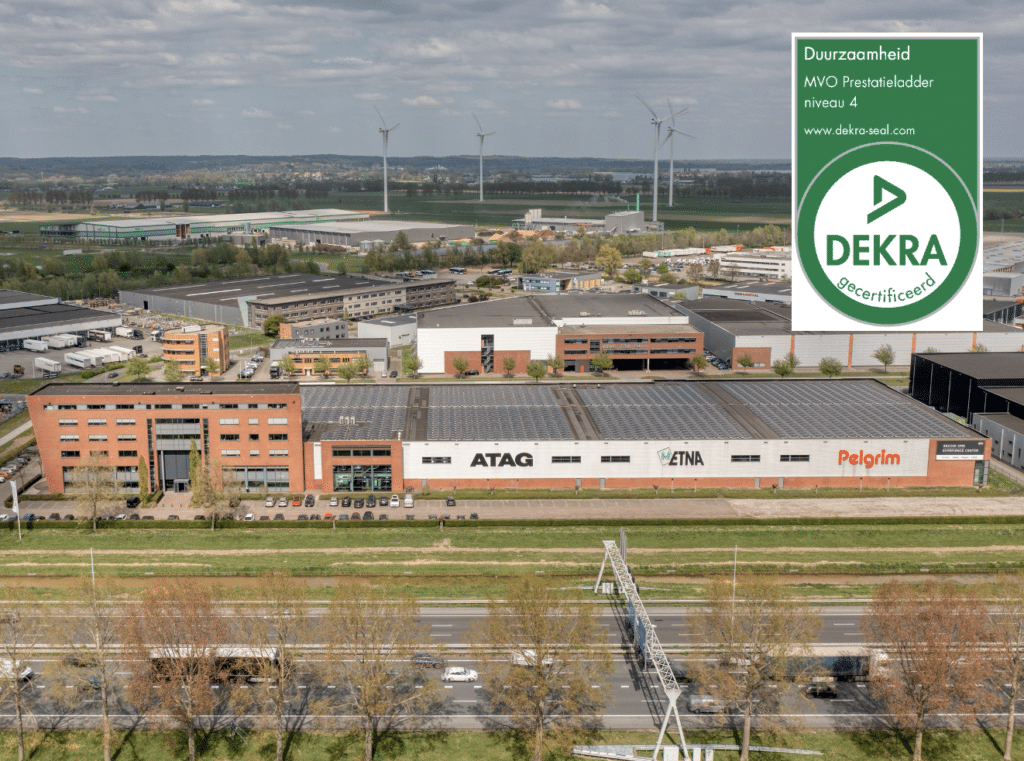
ATAG Benelux is the first supplier in the Dutch kitchen appliance industry to be certified at Level 4 of the CSR Performance Ladder. The certification was awarded in mid-February 2026 following a six-day external audit by DEKRA. This independently confirms that ATAG Benelux not only embeds sustainability within its own organization but also works with suppliers, customers, civil society organizations, and research institutions to achieve demonstrable impact throughout the supply chain. Circularity is a key priority in this regard: by 2030, ATAG Benelux aims to reintroduce at least 2,000 refurbished kitchen appliances annually through its partners.
The certification applies to ATAG Benelux and all the brands it carries: ATAG, Pelgrim, ETNA, Hisense, and ASKO. The move to Level 4 is recognition of the course the organization has already set. Through various projects, ATAG Benelux works with supply chain partners on the reuse of appliances and raw materials, social employment, a healthier indoor climate, and accessible kitchen solutions.
The CSR Performance Ladder is a certification standard for corporate social responsibility. The standard makes sustainable development concrete and verifiable based on the pillars of People, Planet, and Prosperity. While Level 3 focuses primarily on the organization itself and performance standards that are generally achievable within the industry, Level 4 explicitly requires demonstrable responsibility and collaboration throughout the supply chain.
For ATAG Benelux, the move to Level 4 did not represent a completely new direction, but rather a further deepening and consolidation of the existing approach. Collaboration with supply chain partners is not only part of individual initiatives, but is structurally integrated into the sustainability policy and the CSR management system.
“The greatest impact comes when we don’t limit sustainability efforts to our own organization,”, says Jan van Os, innovation manager at ATAG Benelux. “By combining our knowledge, experience, and infrastructure with those of our partners, we can take concrete steps that none of the parties involved could achieve on their own. Level 4 confirms that this collaboration is a demonstrable part of our way of working.”
An important example of the supply chain approach is the collection and processing of used kitchen appliances. ATAG Benelux collaborates with Stichting OPEN and Road2Work on this initiative. Stichting OPEN is involved in the collection, after which Road2Work takes in the appliances and prepares them for reuse.
Appliances less than three years old can be put back into service by ATAG Benelux through its partners after inspection and repair. Older appliances that still function properly are, where possible, redirected through other channels, such as thrift stores. When reuse is no longer possible, appliances and materials are disposed of in the most responsible manner possible.
Currently, approximately 30 percent of returned devices can be reused. This currently amounts to hundreds of devices per year. ATAG Benelux aims to significantly increase this number in the coming years and, by 2030, to redeploy at least 2,000 refurbished appliances annually to its partners.
“Why should an appliance lose its value after just one user? An oven that has already prepared the most delicious dishes can do the same in the next kitchen, provided it is properly maintained and cared for,”, said Van Os. “With our 2030 goal, we’re putting circularity into practice. We’re extending the lifespan of appliances, conserving raw materials, and making reliable kitchen appliances accessible to a variety of target groups.”
Circular economy projects don’t just yield environmental benefits. Road2Work involves people who are distanced from the labor market in the processing of appliances. Similarly, in the partnership with E-Care—which focuses on the processing and reuse of used induction cooktops and Hood-in-Hob products from ATAG and ETNA—people for whom access to the labor market is not a given are employed.
For ATAG Benelux, supply chain responsibility begins with procurement. The organization has developed a framework to evaluate suppliers on relevant CSR topics. The goal is not only to determine whether suppliers meet the set requirements, but also to jointly identify opportunities for improvement. In the coming years, ATAG Benelux aims to involve more suppliers, business customers, and other partners in its sustainability initiatives.
Research and product development are also carried out in collaboration with external experts. Through its collaboration with TNO, ATAG Benelux has gained a better understanding of the formation and spread of particulate matter during cooking. That knowledge has been applied in the development of particulate filters and plasma units that help reduce particulate matter.
In addition, ATAG Benelux developed a whisper-quiet range hood that can remotely control a heat recovery unit. This integrates kitchen ventilation, air quality, and energy-efficient living.
ATAG Benelux is working with partners to develop kitchen solutions for people who face challenges while cooking. Following initiatives focused on cooking for people with visual impairments, the next project is aimed at people with early-stage dementia. Together with industry partners, universities, and other research institutions, ATAG Benelux is investigating which innovations can help this target group continue to cook safely and independently for longer. This project is still in the research phase.
ATAG Benelux also involves students in projects related to repair, renovation, and circularity, allowing them to contribute to current sustainability issues based on their academic training and personal perspectives, while gaining relevant practical experience.
ATAG Benelux’s ambitions extend beyond projects related to reuse, accessibility, and knowledge sharing. Reducing its climate impact also remains a key priority. This is being put into practice through electric vehicles, intermodal transport, and manufacturing in Europe.
Although Level 4 is the second-highest level of the CSR Performance Ladder, ATAG Benelux does not view the certification as an end in itself. In the coming years, the focus will be on expanding partnerships and further increasing and demonstrating the company’s social impact. Level 5 may be a logical next step in the long term.
Van Os: “A certificate is valuable because it provides independent confirmation that our approach works. However, the real progress lies in what we achieve together next: more appliances getting a second life, less waste of raw materials, and kitchen solutions that are healthy, safe, and accessible to more people.”