Transcript
[00:00] Introduction of the episode
Jerry Helmers: This is KeukenCast, the podcast for trade professionals with ambition in the kitchen industry. In each episode, an expert and maybe sometimes a second expert joins to discuss the most important trends, topics and developments.
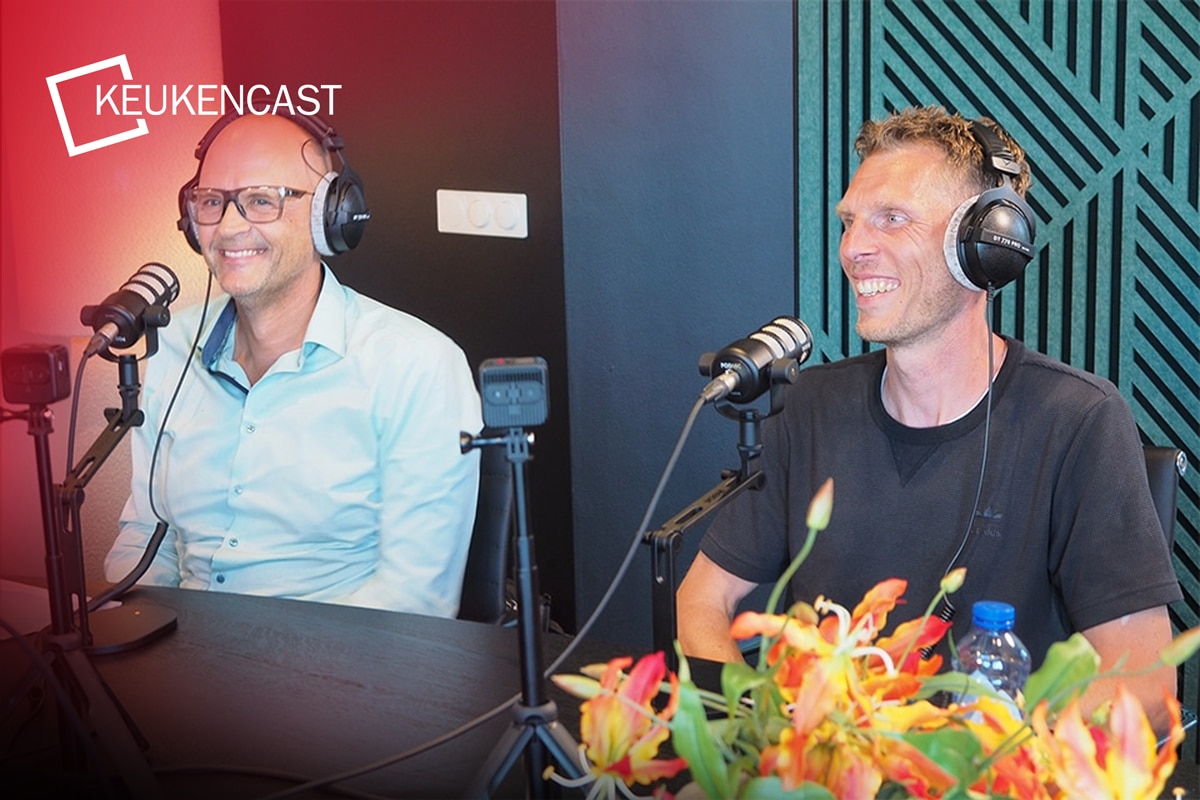
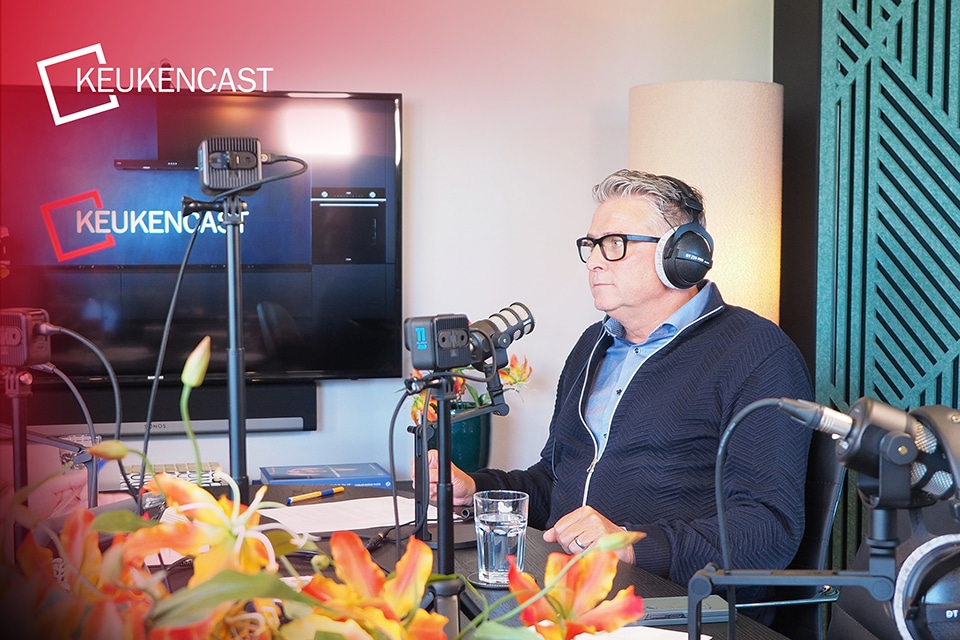
Jerry Helmers: And we don't shy away from a discussion either. At the kitchen table, on the kitchen table, under the kitchen table, we do it all. My name is Jerry Helmers, I'll be your host and presenter. You're most welcome. And how nice it is, we are again at the start of recording a new podcast, KitchenCast of course. Sitting next to me is Maarten Zegstroo, the kitchen guru of the Netherlands. What? You don't like it when I say that, do you?
Maarten Zegstroo: No, rather not.
Jerry Helmers: No. What should we start calling you then, Martin?
Maarten Zegstroo: Maarten.
Jerry Helmers: Maarten. Maarten as the surprise sidekick?
Maarten Zegstroo: Yes, do that.
Jerry Helmers: Good, then we'll do that. Trade editor is also allowed. Ladies and gentlemen, sitting next to me is Maarten Zegstroo, trade editor and kitchen expert.
Maarten Zegstroo: That's absolutely how it is.
Jerry Helmers: A warm welcome again. We're going to hear your critical eye soon. And, of course, also in the middle of this podcast Maarten's Minute, with your spoken column. I'm curious about it. We're curious about it. Because why do I say we? We have two guests in this podcast today. Yep, Sander van ’t Hoen and Sharon Wolters. And Sharon, I say that well don't I?
Sharon Wolters: Very good.
Jerry Helmers: And you are from the firm. Name it collectively in chorus.
Sharon Wolters: ATAG.
Sander van ’t Hoen: ATAG.
Jerry Helmers: Yes, very nice to have you here. We're going to hear a little bit more about you guys in a moment, what brought you here and what you hope to accomplish today on this recording itself. And all of the topics that we're going to discuss we want to know a little bit more about in a moment. But first, I want to present you with some statements. And what I think would be so nice is if you could both chorus agree or disagree. Then we can check whether the people at ATAG are on the same page when it comes to the statements I put forward. Do you dare? I look at Sharon now.
Sharon Wolters: Yes, definitely.
Sander van ’t Hoen: Yes, definitely.
Jerry Helmers: Sander dares that too?
Sander van ’t Hoen: Yes.
Jerry Helmers: Okay. Really do call together at the same time then agree or disagree huh?
Sander van ’t Hoen: We are doing our best.
[02:04] The first propositions
Jerry Helmers: Here comes proposition one. Consumers today buy a brand experience rather than purely a functional device.
Sander van ’t Hoen: Yes. Agreed.
Jerry Helmers: There was a second in between, but you both agree indeed. I note it here as well, because we may come back to it later. I have another proposition for you. Above all, consumers want to avoid choice stress. And that's why the assortment in showrooms in the Netherlands should be reduced.
Sharon Wolters: Disagree.
Sander van ’t Hoen: Disagree.
Jerry Helmers: Disagree. I say to the listeners at home: they weren't looking at each other. They were really looking at the air of: what am I going to answer this? And that was both disagree. Well, for now it's pretty much in line in terms of vision and mission at ATAG, right? But we're going to see what the third proposition is going to be. Coming up. Agree or disagree? Consumers underestimate how much innovation there is in a modern cooktop or oven.
Sharon Wolters: Agree.
Sander van ’t Hoen: Agreed.
Jerry Helmers: Okay. I would almost say, is this going to be a very boring podcast or not?
Sander van ’t Hoen: I don't think so.
Jerry Helmers: No, it didn't. What did you think of it, Martin? Do you want to have a statement for you as well? Or would you like to respond to one of these statements already?
Maarten Zegstroo: I do want to respond later.
Jerry Helmers: Responding shortly. You hold it for a while then.
Maarten Zegstroo: Yes, definitely.
[03:12] Getting to know Sharon and Sander
Jerry Helmers: All right, then we'll go all the way to the content. At least, we're going to get to know the people who are actually at the table here. Sharon and Sander, welcome again from the ATAG company. Ladies first, ladies first. Sharon, what do you do at the ATAG company?
Sharon Wolters: Yes, what do I do at ATAG?
Jerry Helmers: Yes, and what brought you here?
Sharon Wolters: What brought me here? Well, anyway, Volkert's invitation.
Jerry Helmers: Are we talking about Volkert van der Werf?
Sharon Wolters: Van der Werf, yes. Project manager. Yes, warm contacts with them and they contacted us and said: gosh, would you like to join us? I had not yet seen a woman in the podcast, so I thought: I want to go there anyway. And I thought it would be nice to come together with a colleague, so that's Sander. What do I do at ATAG? I'm, as it's nicely called, Brand Marketing Manager for the ATAG brand.
Jerry Helmers: Brand Marketing Manager. Marketing, is that necessary for ATAG? You guys are well known, right?
Sharon Wolters: Well, we still have some steps to make, so that's definitely still needed. Telling great stories.
Jerry Helmers: So what are the steps you want to take?
Sharon Wolters: On name recognition. You may assume, or part of you assumes, that we are already pretty well known. Only, in reality, we still have some strides to make there.
Jerry Helmers: And that's entirely your responsibility?
Sharon Wolters: Among other things, yes. So together with a colleague, the two of us doing that for the ATAG brand, we are responsible for the marketing of the brand. From A to Z, so all facets involved.
Jerry Helmers: But are you here today to kind of keep an eye on Sander that he's not saying crazy things?
Sharon Wolters: Both of them, of course. Both of them.
Sander van ’t Hoen: Well, thank you for the vote of confidence.
[04:50] Sander on his role at ATAG
Jerry Helmers: Sander van ’t Hoen, introduce yourself again to the listeners. And also tell us what crazy things you're not allowed to say today.
Sander van ’t Hoen: That's a very good one. I'm Sander van ’t Hoen, been going along in the industry for a while, about 33 years, and since a year and a half at ATAG. Very nice company.
Jerry Helmers: Of course you have to say.
Sander van ’t Hoen: That's one of the crazy things I'm not allowed to say. No, I deliberately took a step in my career after a very successful period. I was ready for a new challenge. And as Sharon says, that certainly does lie with ATAG. Taking the ATAG brand to a level where I think it belongs.
Jerry Helmers: Okay. So where does it belong?
Sander van ’t Hoen: Well, at the top of the kitchen market.
Jerry Helmers: At the top of the kitchen market?
Sander van ’t Hoen: Yes.
Jerry Helmers: But then is that not the case to date?
Sander van ’t Hoen: No, I don't think we are perceived in such a way by our customer.
Jerry Helmers: Okay, so that's also what Sharon meant: we still have some steps to take.
Sander van ’t Hoen: Yes.
Jerry Helmers: Okay, you guys are really united today. Maarten, can we put another wedge between these two here?
Maarten Zegstroo: No, between these two anyway.
Jerry Helmers: It has to be mission impossible for us and it seems that way. Well, thanks for your introduction.
[06:04] The four topics of conversation
Jerry Helmers: For the few in the market who had never heard of ATAG: they now know a little bit about what it is and the people who work there and so they're here in the podcast. We're going to talk about four topics. About the labor market. We're going to talk about the statement, you might say, is the customer, the consumer really getting what they're buying? We're going to talk about that, as far as I'm concerned, terrible concept of perception. Maybe today in this podcast we'll finally manage to give the ultimate definition of that term. Experience. And the fourth topic in this podcast that we're going to go over are tech developments, AI in kitchen appliances. Maybe we can talk a little bit about that.
Jerry Helmers: Well Sander, when we had that editorial pre-talk in preparation for this podcast, you also said, I want to talk about the job market. You've listened to some previous podcasts of ours. We also talked about the job market in that other podcast. And you triggered me in that phone conversation, because you said then: I thought it was all a bit nuanced and a bit cautious sometimes, all those comments made in other podcasts about the labor market. And then I asked you: this is nice when you tell this in the podcast, in the real recording, but aren't you going to nuance it? What did you mean?
[07:20] Labor market tightness
Sander van ’t Hoen: Nuance, I think we all do, at some point. Because in the industry you don't want to offend anybody. I can remember Maarten also in the previous podcast saying something like: we all know that one customer. Of course, it's not fair to compare the market say about that one customer. I do think there is a big challenge there in the market in terms of finding and keeping the right people in your business. Because it's just a pretty tight labor market right now. I think you have the experience yourself in buying a kitchen.
Jerry Helmers: Yeah, we could do ten more separate podcasts on that.
Sander van ’t Hoen: Well, exactly. But I think that's what we in the industry are all up against.
Jerry Helmers: So what exactly are you running into? And then in this case we're talking about the events, the conversations in the showrooms?
Sander van ’t Hoen: Well, I guess I do want to draw it broader. The moment you as a company want to tell something to the industry, you try to get people to come to you. It also becomes more difficult to get people to come and visit you. With Amsterdam ATAG Live we have a wonderful location for that, where people like to take a look because it's new. But rather not in their spare time.
Jerry Helmers: What do you mean: rather not in leisure time?
Sander van ’t Hoen: There are so many other things they want to do as well. Which makes investing in knowledge that is necessary to make the products and your own business as a kitchen store...
Jerry Helmers: Oh, wait a minute. But so indeed you mean those kitchen showroom salespeople who work with your customers, with your partners. Those are regularly invited, or at least they are invited to the Experience Center to get training. That's what you mean.
Sander van ’t Hoen: Yes.
Jerry Helmers: Okay, continue on that point.
Sander van ’t Hoen: It does take some effort to free up that time. And that has to do with how busy the store is. A huge number of kitchens are being sold at the moment. It's quite a challenge to get that well organized, to get that well installed. Yes, and then sometimes you have to make choices about where to spend your time. Well, we at ATAG believe that informing customers well about the products is incredibly important, towards the second statement you gave: at some point, is the customer getting what he wants? What he really needs and what he needs.
[09:46] Is the customer really getting what he wants?
Jerry Helmers: Yes, Sharon, is that customer really getting what he wants?
Sharon Wolters: I don't always think.
Jerry Helmers: No, where is that? Is it that kitchen showroom salesman who doesn't want to invest time and knowledge?
Sharon Wolters: Not wanting to invest I wouldn't quite paint it that black and white. Look, what we see is that of course in a sales meeting like this, most of it is about the actual kitchen, the cabinets and the countertop. The part about the appliances is comparatively a lot less. Then it's up to the showroom salesperson to ask the right question of the consumer. What does your family look like? Do you like to cook? If that time is already fairly limited and you're kind of like, well, I can get away with a regular set here too, then the right questions aren't being asked. And then the consumer goes home and is completely happy with his new kitchen. And they think: goddammit, I might have wanted a steam oven like that. Because he gets some kind of feeling with that kitchen and pride. And he starts working on it and maybe he doesn't even have the right equipment. Whereas with the right questions in that process, you can give much better advice regarding the equipment.
[10:51] How long should a sales call be?
Jerry Helmers: Can we say, Martin, I'm also quoting you: how long should or can or should a sales call last in the showroom?
Maarten Zegstroo: I don't think it's necessarily time-related, but I hear what Sharon is saying and I do share that opinion. Because as far as I'm concerned it's more in: when a customer walks into a showroom now and he buys a kitchen, he buys the emotion of the furniture, so to speak. Whereas when you go to use it, the emotion is more in the use of the appliances that are in it. Because the emotion eventually goes... You are also, I hope my friend is not listening in, but the first few years you are very much in love with your wife, you think she is fantastic and beautiful, and at some point you get used to that beauty. And I feel that's the same with kitchens.
Maarten Zegstroo: And I think that is sometimes forgotten. Those consumers don't want that either, so they don't ask about it either. But it would be very good, and there are also a lot of good entrepreneurs fortunately, but it still sometimes happens that the focus is put on the appearance of the kitchen instead of the use of the kitchen.
[12:03] Labor shortages and the quality of sales calls
Jerry Helmers: But Sander, is then the tightness in the job market... Everyone, not just in the kitchen industry but every business, is struggling to find good people. So do you see that reflected in a poorer quality of sales calls in that showroom? Because, of course, the topic we're talking about was in the basic labor market.
Sander van ’t Hoen: Well, I would venture to say that not everyone is a good salesman. We can all learn that. Teachable. But sometimes it's also in your genes and your DNA. You are more outgoing, able to listen well to an interlocutor. So yes, that does mean that the shortage on the job market means that sometimes you take on people under pressure because you have too much work, and afterwards you might think: well, I would rather not have had this person in my store. Or in your business, or whatever you do.
Jerry Helmers: But what should you look for when you have a job interview because you need a sales associate in that showroom? I look at both of you, Sharon and Sander, for a moment. What should you look for to at least maximize the chances of having a decent, neat salesperson sitting there?
Sander van ’t Hoen: I don't know if it has to be decent or neat. I don't think it necessarily depends on whether you have a nice suit on.
Jerry Helmers: But decent can be seen metaphorically, of course. Just friendly communication, empathy.
Sharon Wolters: Enthusiasm.
Jerry Helmers: Enthusiasm.
Sharon Wolters: Look, I think totally from my marketing perspective that you can also learn a lot. So the moment you are very enthusiastic and very eager to learn and really have a certain kind of passion for something, that it will work out. And then if I can follow up very briefly on what you say about knowledge and the like. As a kitchen salesperson, there are also so many vendors that offer tools to help you in selling appliances. Think Experience Centers.
Jerry Helmers: But there was the problem there, your colleague Sander also said that, of they don't always have time to go there.
Sharon Wolters: No, but the bridge I want to make to the consumer: if you yourself notice that, gosh, I notice that I get stuck on equipment because one: I don't have enough time, two: I don't have enough knowledge, or I just can't get across the story of certain brands, then make use of the tools that are available. So send such a consumer to, in our case, ATAG Live or another Experience Center. Introduce a consumer to the brand there. There are often consultants working there who can tell everything about the appliances, who can give advice.
Jerry Helmers: And specifically about that one brand, because obviously that's quite the challenge for the salespeople in the showroom. Especially when there's an extensive collection of brands. You just have to know about everything.
Sharon Wolters: Exactly. And the moment a consumer enters somewhere, I think the desire of every brand is to make that consumer as enthusiastic as possible and to be able to provide them with good advice. Well, and then we see that that consumer comes back to the kitchen store with an appliance list of: I would like to have this, with an enthusiasm about a brand, so in this case the Experience Center does your job and helps you in your sales.
[14:53] How many calls are needed for a deal?
Jerry Helmers: How many conversations actually have to take place before the sale actually comes to fruition, Sander? Well, let's just take a round. I'm going to ask Maarten and Sharon this as well. How many conversations have to take place before the deal closes?
Sander van ’t Hoen: Well, I think at least more than one.
Jerry Helmers: But is that more than five?
Sander van ’t Hoen: No. I see it a little bit like dating myself. The moment you get to know your partner, then you have a first meeting. And then you have a certain click or not. And then you make another date and a follow-up. And then you might know ... I'm not a very experienced dater. But after two or three times I do think you know. And then of course at some point you have to go and make a choice.
Jerry Helmers: So what exactly do you know?
Sander van ’t Hoen: Whether in the case of buying a kitchen the click is there. And I think that's important. It's about trust. You're going to spend a lot of money. So you have to have the confidence that that person you're handing your money over to, that they sold you something that's going to make you very happy.
Jerry Helmers: Yes, but that vendor may also need to be aware that money is being handed over. Because I personally feel that that is still sometimes lacking. Maarten, how many sales calls do you think need to take place before the deal actually has to be closed?
Maarten Zegstroo: I think if you do it right, you should also do more than one.
Jerry Helmers: Now make it concrete. That way I can also answer a question.
Maarten Zegstroo: I think you have so much to say as an advisor. It's more than just listening to that client. Because that customer comes in, they tell you what their needs are, but generally those customers are not one hundred percent informed in what's available. So you could also, as an advisor or salesperson, choose to tell more than just what the customer is looking for.
Jerry Helmers: Because there is much more to offer than what the customer knows. More than one, in other words.
Maarten Zegstroo: More than one.
Sander van ’t Hoen: I may explain below: a friend of mine bought a kitchen, he has little time, so he goes to a kitchen store on Saturday afternoon and he buys a kitchen in one go. That one was very happy afterwards: I bought a kitchen today and so happy that I made that decision. He then went back seven more times to adjust his kitchen.
Jerry Helmers: So what went wrong at that point?
Sander van ’t Hoen: Well, in my experience the inventory.
Jerry Helmers: But then, doesn't the consumer, this friend of yours, have some responsibility of his own?
Sander van ’t Hoen: Definitely. No, I agree, sure. I think he could have been able to dig in a little bit more. We can also help him with that as a brand, and online media, and consulting as Sharon says. But of course also the experience of the kitchen salesman who often brings an uninformed consumer into the decision process. I don't know anything about cars, so I do like it when someone asks me the right questions about why I'm going to choose a particular car shortly.
Jerry Helmers: Sharon, the men didn't get beyond more than one conversation perhaps.
Sharon Wolters: Yes, I would say two to max three. I think as a consumer you always want the best deal as well. And I could imagine like this: the longer you talk about something, the more room maybe for negotiation. So that you think: yes, I did put together a fantastic kitchen now, appliances, and we keep talking about it. I think it's always a kind of tension: do I have the best deal? Sure. Could there maybe be some discount in there? I think: in the end, it's also good. You're proud of what you're going to buy. You're happy with the choice you make and then it's also done. At some point, there has to be a point too.
Jerry Helmers: Yes, I think so. In itself, of course, that's also not illogical, because, of course, even a salesperson can't keep having conversations forever. But of course what you said is very interesting. Because the more often you have conversations, or the longer the conversations are as a salesperson in the showroom, you may be unconsciously giving something away with that that can be used against you in the price negotiation.
Sharon Wolters: Yes, I think so.
Jerry Helmers: To put a point behind it at some point.
[19:06] How do you keep good people in the industry?
Jerry Helmers: Anyway, back to the topic we started this discussion around. The job market is tight. How do we recruit, how do we really keep the best possible staff in that kitchen industry? Who do I look to for that? Maarten maybe. How do we recruit, how do we keep, how do we really get professionals in the showroom? How do we keep them in?
Maarten Zegstroo: That's a good question, Jerry.
Jerry Helmers: Of course, that's what I'm here for.
Maarten Zegstroo: Yes, I know. You know exactly how to throw it over the fence with me. But yes, of course it's not for nothing that companies like ATAG and BSH also start doing it themselves, say, informing consumers. So labor shortages that are there, they can't always be solved. So how do you keep them in? Then maybe you start talking about compensation, about future opportunities, advancement opportunities. I find it quite difficult.
Jerry Helmers: Why is that inconvenient?
Maarten Zegstroo: That could also be at a good instantiation point. It could also just be the case, Jerry, that the industry is changing. That a lot of brands are going to take the step like ATAG does, like BSH and Miele do, by just informing consumers themselves. And that you get a very different role from that retailer.
Sander van ’t Hoen: I want to add the nuance to that as well, Maarten, maybe from our perspective for a moment. Informing is one thing, selling directly is another.
Maarten Zegstroo: No, I'm not talking about direct selling either.
Sander van ’t Hoen: No, exactly. So that's what we don't do.
Sharon Wolters: Look, if you're talking about attracting good staff, that's obviously not just for the kitchen industry, but I think that actually applies to all companies. So step one, I think, is that as a company you yourself know very well: who are you, what kind of people do you want to attract and what is your job market communication like? And why should you come work for us and what do we offer?
Sharon Wolters: And I think you yourself as a person would like to work at a company that suits you.
Jerry Helmers: But isn't it also true that all these young people nowadays... Here we have a man who is almost 57. Then I really am one of those white boomer, as they call it. I am sometimes surprised that these young people come in for job interviews and they only want to work three days a week. Because two days they should also be able to work on themselves. Is there any work ethic left to really want to do something for the business?
Sharon Wolters: That's changing. I see that too. I don't consider myself very old, I'm 35, but I do see a difference in my work ethic and an even younger generation.
Jerry Helmers: And an even younger generation.
Sharon Wolters: I see that, yes. So that's changing. You have to go along with that as a company. But still I think the key really lies with the company itself. When you start working somewhere, of course you have certain ideas, but it also feels like: does it fit me? Does it coach me in my career? Will it help me move forward? The moment you as a company set that up well and really stand for your employee, then you want to stay there, because then you are proud to work there.
Sander van ’t Hoen: Sharon also mentioned it: learnability. What should you look for when you hire someone? That learnability. Is someone willing to move with changing circumstances? I think that is a key. They lack that, that's my opinion on that.
Jerry Helmers: But if that is very difficult, then such a separate Experience Center is also the solution to be able to give that detailed product information there.
Sander van ’t Hoen: Definitely. We're very happy to support them with that.
[22:23] On to Maarten's Minute
Jerry Helmers: Okay, then after the break we're going to talk a little bit more about that, because then we'll link to the concept of perception. What is that? And what's going to happen in the break? We have to stay with it, because it's Maarten's Minute. Who is going to orate for a minute, I say. I have no idea what he's going to talk about. It's his spoken column. Maarten, are you in the starting position?
Maarten Zegstroo: Almost.
[22:53] Maarten's Minute on Dutch pride
Maarten Zegstroo: Germans buy German, Italians Italian, English like British. And here in the Netherlands, we are sober we say, but are we so euphemistic enough when it comes to built-in appliances? But maybe it's not sobriety though, but maybe it's something else. Perhaps the Dutch seem to be more open to things that come from other countries, while we ourselves have fantastic Dutch built-in brands. With good techniques, innovations and knowledge of our kitchen practices. ATAG, a Dutch brand and a traditionally long history.
Maarten Zegstroo: And yet it is not an obvious topic of conversation to simply choose Dutch at the kitchen table. As is the case in other countries with their own brands. And that while in the Netherlands we are also seen as a country where many innovations are tested first. Where a critical look is taken and technology is quickly embraced. That makes the position of a brand like ATAG all the more interesting. So today's question to our ATAG guests: how do you personally view this? Is it sometimes frustrating to see that Dutch pride is less obvious, or does this critical market actually offer something valuable?
[24:01] Dutch pride and ATAG
Jerry Helmers: Well Maarten, thank you very much. It's almost like Netherlands first.
Maarten Zegstroo: See him in huh.
Jerry Helmers: Yes, I see him indeed. You're not the Johan Derksen of the KitchenCast, you're the Donald Trump of the Dutch KitchenCast. But the question is clear in my opinion, Sharon and Sander. Dutch pride in Dutch brands. How do you guys look at it? Is there pride or would you like to express that pride more because you are a Dutch brand? And is that maybe a unique selling point right now?
Sharon Wolters: It's definitely a unique selling point. It's a flag that we...
Jerry Helmers: Made in Holland.
Sharon Wolters: Made in Holland. Well, not that, but we really are a Dutch brand by origin. And we fly that flag too little. Many consumers who own ATAG don't even know that we are Dutch. So that is something we want to bring out much more in the coming year, in the coming years. That with ATAG you're really buying a Dutch brand. And what I see in collaborations that we enter into, consumers that we speak to, retailers that we speak to, is that the Dutch character of the brand really is a strength.
Jerry Helmers: So where is that strength in it? Like you have for example a Swiss watch or in Germany a kind of solidity image. So what is that Dutch image?
Sharon Wolters: Good question. When I look at the company, we have our own service technicians, all in house, contact center all in house. So you really buy from us. When you call somebody, you don't get some phone center in Farawayistan. We don't send a hired service technician. You really buy all that from us.
Sander van ’t Hoen: Well, I do want to pick up on it as well. You say it yourself: the Dutch market is often the testing ground for developments. Also for others in the countries around us. They still look at the Dutch market as the start of development. And we stand in the industry, where we also grew up, as the brand that has shown itself to be extremely strong in positioning itself as a cooking brand. Our entire office in Duiven is not just all people who kindly focus on the Dutch and Belgian market, no certainly not. We also have quite a few people working in our R&D center where we develop products for our partners around the world. And that piece of knowledge that we have gained there over the past 75 years and more as a Dutch brand, that is something why we hold that position in the market right now. Only, as Sharon does say, we could fly that flag much more. We should be much more proud of what we have achieved so far and why ATAG as a brand was actually always chosen when it came to cooking.
[26:49] Sustainability as a focus
Jerry Helmers: I'm missing an aspect in that story. Yes, of course I am not an employee of ATAG's marketing and communications department, but I miss the sustainability story in this. Because something you buy in the Netherlands, you don't have to get from China or I don't know where. Why do I miss that with you? Or am I now giving the ultimate marketing tip?
Sander van ’t Hoen: Well, you do give the ultimate marketing tip. I think it's just that: sustainability is very high on our agenda. We are working on a number of projects in which we are looking toward corporate social responsibility in different ways. We are running a test of recyclable equipment. So giving a device a second life. That works super interesting. Only, it's extremely expensive right now. I can remember, in a previous podcast it was also said: people don't want to pay for that yet. So that's kind of the biggest challenge we have, for example.
Jerry Helmers: But people also may not want to pay for distant transportation if the equipment comes from far away. Sharon, how are you going to adjust your marketing plan?
Sharon Wolters: By sustainability, you mean?
Jerry Helmers: Yes, exactly.
Sharon Wolters: What we do in the area of sustainability, just apart from looking at specifications on energy levels and so on, is that for the organization, as Sander just mentioned, sustainability is a high priority. So in product development within Europe. Transportation by train, not by plane. So we're already trying to look at the most sustainable ways of transportation there. We're trying to look at: how do we package our materials? EPS-free packaging, that's an item we're very much working on and thinking about. So from that point of view, sustainability is very high on our agenda.
Sharon Wolters: In the marketing story, no, because it's also quite a tricky line that you walk across.
Jerry Helmers: Sustainability is tricky, but it's important.
Sharon Wolters: Very important. Only in the way of communication there are some guidelines attached to it. The moment you write away that you are the most sustainable brand or the most energy-efficient...
Jerry Helmers: But surely you can just say: we are a Dutch brand. If you buy from us, at least we know that there are no distant transport movements from the Far East or the Middle East, or wherever equipment may possibly come from. That's not so complicated to tell, is it?
Sharon Wolters: No right, just the message we tell consumers is really on cooking experience.
Maarten Zegstroo: May I talk about sustainability then in this case? Isn't that USP also in the short lines within the company? Because other brands that we sell in the Netherlands as a built-in brand sometimes have to think internationally. So isn't it much easier for you guys to switch from: there's a demand for this, we can offer that, so then we're going to supply that? Or is that process just as long?
Sander van ’t Hoen: No, certainly, you have a point there. Then that is indeed away from sustainability. But we are able to respond more quickly to market demand. Then sometimes you are a forerunner and everyone has to get used to it. Is it touch operation or do you have to use a button or both? The introduction of ATAG's new 8 series is so fantastic because we looked at the functionality of operation. Much more intuitive. And therefore, for example, a combination of button and touch controls. I have some kids who are having a great time gaming. They are using the mouse and keyboard. And then you see that that still taps into the wishes of the consumer. And we can bring that in faster in the processes that we send to our factories.
[30:31] What is perception?
Jerry Helmers: And then I immediately have the bridge to also what we definitely need to discuss. Because we told listeners this. So is this about perception? And my sub-question is, what is the ultimate definition of experience? You've used it yourself a couple of times in the conversation. Sharon also in the beginning said something about perception. What is perception? And then a big silence fell.
Maarten Zegstroo: You once said that transparency should not be mentioned in this podcast.
Jerry Helmers: Did I not mention transparency?
Maarten Zegstroo: You wouldn't let me mention that. You thought that was a nasty word.
Jerry Helmers: Transparency, yeah, I kind of have the same thing with that as I do with perception. But that aside. What is it? Everybody in the industry, even outside the kitchen industry, is talking about experience. Sander, you put the benchmark on the term. What is perception?
Sander van ’t Hoen: Well, I asked AI.
Jerry Helmers: Come on, you can think of something yourself, right?
Sander van ’t Hoen: No, but that one didn't come out either. For me, experience is the feeling. Because the moment a product I bought makes me happy... If I'm in the kitchen and I'm having a nice dinner with my kids or with my girlfriend, and it's fun, an interesting discussion arises, like the one we're having right now about the sense and nonsense in life, yes, that gives me a good feeling.
Jerry Helmers: Experience is happiness. Sharon, can you -- I like it there.
Sharon Wolters: Yes, I like that very much. I can relate to that. And certainly when I look at the kitchen, obviously it's much more part of the house. Maybe the centerpiece of the house. And that's where it happens. That's where you have nice conversations, that's where you might have sad conversations, that's where you're cooking, that's where you have smell, that's where you have stimuli. All your senses are actually stimulated in the kitchen.
Jerry Helmers: Experience is happiness. Yes, I like it. Maarten, could it be that tonight, driving back home from Weert, you think: those guys from ATAG had quite a point with the concept of perception?
Maarten Zegstroo: Well, at least it's something that fits on a tile, so that's an advantage.
Maarten Zegstroo: But I think it fits perfectly. Because I think if you look at my perception, it indeed has to do with that if you move in that environment, that everything should be able to be solved. And that's that perception. And with all the conveniences that can be there, that those are there for you. And that you don't have to work very hard for your feeling to achieve what you want to achieve in the kitchen.
Jerry Helmers: I think we have a historic moment coming up in this podcast. We did talk about the concept of experience many times in this podcast series, but now it seems to have become sort of the ultimate definition: happiness.
[33:25] AI in the kitchen - should we want it?
Jerry Helmers: I want to bring up one more topic. And yes, I really like that myself, a little bit of moral-ethical discussions. Technical developments, AI. We've already talked briefly also about the boost of AI. I sometimes wonder: there are ovens today that already think with you via apps when the cake you are baking is all right. Is a cake no longer allowed to fail? In other words, do we still want to think a little ourselves as human beings or are we going to surrender everything to these technological advancements and AI? I look at you both. Sharon or Sander, should we want this as human beings?
Sharon Wolters: I think AI in itself is not an end, but it's a means. So it helps you, I think. Convenience serves man. It helps you, for example, in a cooking process. It helps you when you have a lot of ingredients in the kitchen or in your refrigerator and just don't know what to make for a while. Then it helps you in a menu for that week or an ingredient for dinner, you name it.
Jerry Helmers: But don't we want to try anything ourselves anymore? Is nothing allowed to fail anymore?
Sander van ’t Hoen: No, yes Jerry, of course you do. It's about searching for ultimate happiness and a little help can't hurt. When I was 21 and living on my own and I was going to cook for the first time, I called my mother, my AI at that time. Then I asked: how long do those potatoes have to be up again? And if you add cauliflower, can it be put together in one pan? Those are very silly questions, of course, but I didn't learn to cook at home. So when I lived on my own, then suddenly I had to. And then a little help, can't hurt.
Jerry Helmers: But if that fails and you go and try again one time, it's also luck when you see that it succeeds then, right, because you learned from your mistakes?
Sander van ’t Hoen: Well, certainly it does. As Sharon says, AI helps you with it. But tastes differ. So that crispy crust on the chicken for Sharon will be different than mine.
Jerry Helmers: Is there a limit, do you think, to what we should want as human beings? It's a bit of a philosophical discussion, but I love it. I think it also belongs in this podcast. But should we want this as human beings?
Sander van ’t Hoen: Yes, I think so.
Jerry Helmers: It may be technologically unstoppable.
Sharon Wolters: No, developments are going very fast. But I think you always need some kind of human touch to get to the end result, in the case of cooking. Look, AI helps you, but you're still at the controls yourself. Of course, just because it helps you in certain cooking steps doesn't mean that that cake comes out heart-stoppingly perfect. Because we are lucky to have a chef on the team who makes recipes, also a little bit my AI then. And I take a cake according to all the steps there, but still it wasn't quite cooked inside. Well, then I have to check it myself. Maybe add a few more minutes anyway.
Jerry Helmers: But at some point that's also a task that AI can take over.
Sharon Wolters: Yes, I think that because developments are also going so fast, we will eventually become more and more accustomed to AI. That devices will start thinking more for us and it will become a bit woven into our lives. You also see it in cooking shows before....
Maarten Zegstroo: You don't see so many cooking shows these days, but of course you used to see people saying: if you put it in the oven it has to be in the oven for twenty minutes, I personally like to do it for 25 minutes because then that crust is just a little bit crispier. And that's the same with AI, of course. You can see the back of the label, which is actually the AI, so to speak. And do you want it just a little bit different? That's why you have to use AI to ultimately arrive at your ideal way of preparing that dish.
Jerry Helmers: Okay, I'm a little different on that, I think, but maybe we should devote a whole other comprehensive podcast to that. But I was curious about this, because of course I also understand that you as ATAG embrace these technological developments. Ultimately, that also has commercial value, to put it so simply. But sometimes you have to dare to make moral-ethical and philosophical points.
[37:20] ATAG's closing minutes
Jerry Helmers: You may also make a commercial point sometimes, because we have come, almost at least, to the end of this podcast. And you know it: those last two minutes are for our guests. For you, Mr. and Mrs. of ATAG. Two minutes of commercial speaking time. Maarten and I don't say anything more. And you can advertise your latest offer. We may come back to something that was said in this podcast. In a moment, I'm also going to put the clock down for you. And the two minutes will be yours. Are you ready?
Sharon Wolters: Definitely.
Sander van ’t Hoen: Well, normally ladies go for it. But we agreed that I would kick off, Jerry. First of all, super cool that we get to be here today. For the ATAG brand, to be able to say something about that. But if I just personally-we were just talking about learnability. I think it's super cool to do this. I also thought it was super exciting. It's a way to be stimulated for a while, though, other than a script. Through the questions that are asked, just having a discussion with each other. So compliments to you guys. I think that's super cool.
Sander van ’t Hoen: And I think we really have a lot to say at ATAG. And I would also like to invite all listeners of the podcast to come and check us out anyway. Make that investment in the knowledge. Provide learnability. I'm sure together we hope to make kitchen work a success.
Sharon Wolters: Just to follow up on that. Then I would actually like to invite everybody to come to ATAG Live. That's our new Experience Center, which we recently opened in the prestigious Houthaven building in Amsterdam. A beautiful place on the Amstel River. And that's where you're going to experience the brand. You almost don't dare say it, but you do enter the world of ATAG there. It's really something quite different from an appliance showroom. We can inform you there, we can inspire you there, we can enthuse you there, but above all we can provide you with advice, so that you can get the best set prescribed for you and so that you can also discover the chef in yourself. Because whether you want to make something from nothing or always cook for friends in cooking clubs, at ATAG we can help you and provide and serve you in equipment. It's just a really inspiring place, from master classes to meetings, podcast recordings, anything goes. So I really want to invite you to come and have a look at us at ATAG Live. And also to hear what you thought of the experience then. Just to bring it back to experience. Thank you.
[40:04] Closing the episode
Jerry Helmers: Well Maarten, we had to make the long trip to Weert today from the almost far north, we both live in North Holland. But actually next time then we should just go to Amsterdam, to the ATAG Experience Center.
Maarten Zegstroo: I wanted to bring this microphone already, but I don't know if we can get the technicians to come with us to Amsterdam.
Jerry Helmers: No, so we'll just have to do that then. Well, a nice ending I think, Sharon and Sander. How was this podcast experience? Sander mentioned a little bit about it in his two minutes, but can we welcome you back to the studio again?
Sander van ’t Hoen: Yes, please.
Jerry Helmers: Do you have any tips for us?
Sander van ’t Hoen: No, you keep us on our toes. Ask the questions you need to ask. I think that's important, too. But I'd love to come back again, because we have a lot more to say at ATAG than just what we've let out today.
Jerry Helmers: Yes, there is a lot of dynamism in the kitchen industry.
Sander van ’t Hoen: A lot, yes.
Jerry Helmers: Are you going to do something with your marketing plan anyway? I'm thinking anyway to see how you can get your way.
Sharon Wolters: By sustainability, you mean?
Jerry Helmers: Yes, exactly.
Sharon Wolters: Well, I can always open the conversation with my colleague. Generally speaking, we are reasonably on course.
Jerry Helmers: So okay, well then I'll definitely stop by your place in Amsterdam at that point as well. Maarten, what did you think of this podcast?
Maarten Zegstroo: I liked him.
Jerry Helmers: Was this a fun podcast?
Maarten Zegstroo: I also kind of liked it, because of course we also evaluate the podcast. I also thought it was nice, especially in the beginning, to discuss general information with someone from the kitchen industry.
Jerry Helmers: Good. Sharon and Sander, thank you very much for joining us. Dear listeners, you've been listening to KeukenCast, the podcast for professionals with ambition in the kitchen industry. My name is Jerry Helmers and I was your host and presenter today. Of course thanks to our regular sidekick, kitchen guru and kitchen expert Maarten Zegstroo. Will you stop by KitchenCast sometime? That would be great fun. Check out www.keukenbouw-online.nl. You are most welcome. Engineering: Daan Halters and Mark Schouten. Project manager: Folkert van der Werf. And final editing of our magazine is of course in the professional hands of Suzanne Peek. KeukenCast is a production of Louwers Mediagroep in Weert. Until the next episode, until the next KeukenCast.