Transcript
[00:02] Introduction of the episode
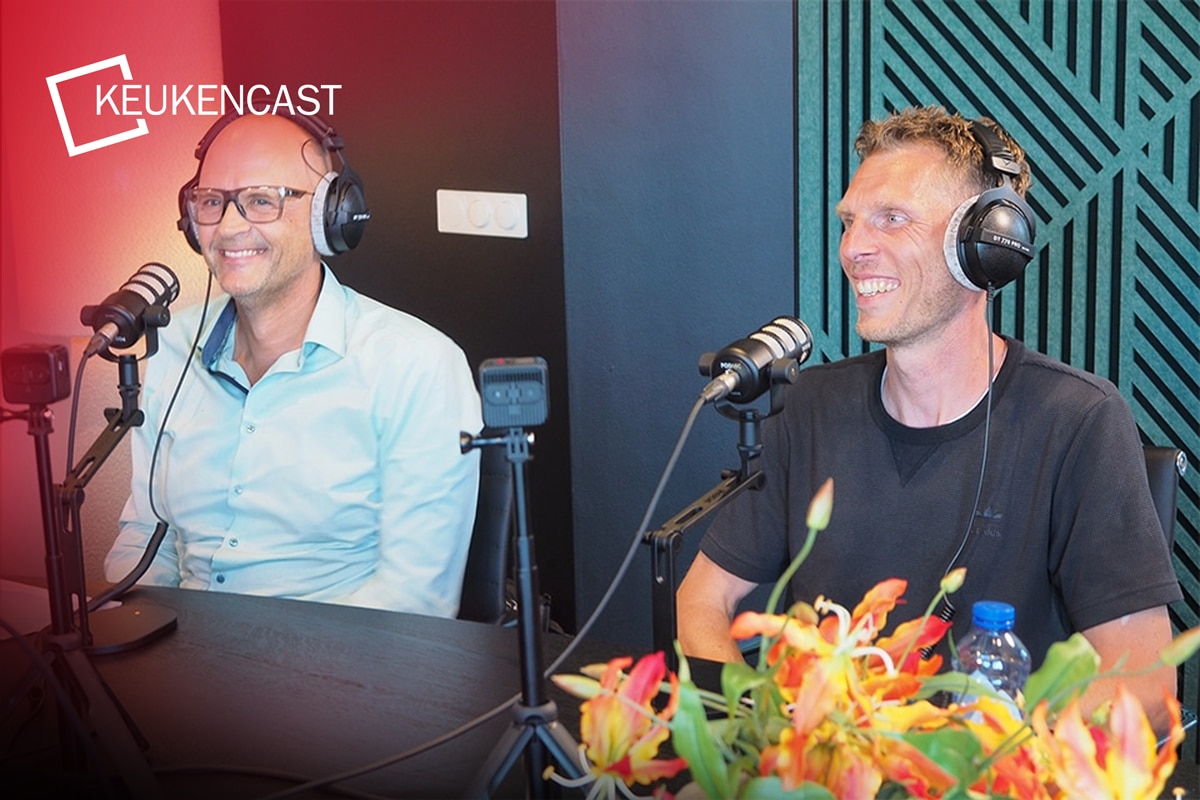
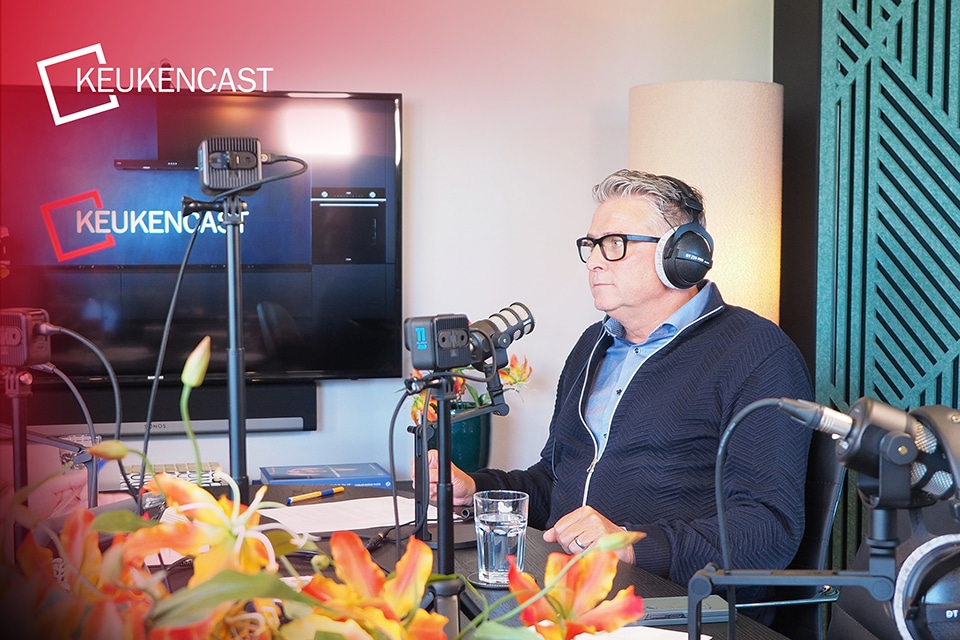
Jerry Helmers: This is KeukenCast, the podcast for trade professionals with ambition in the kitchen industry. In each episode, an expert joins us to discuss the most important trends, themes and developments. And we don't shy away from discussion either. At the kitchen table, on the kitchen table, under the kitchen table. We do it all. My name is Jerry Helmers, I'll be your host and presenter. You're most welcome. Yes, dear listeners, we are here in the studio in Weert at Lauwers Media Group. And I have none other than Don Wijnschenk here at the table from V-ZUG. A very warm welcome, Don.
Don Wijnschenk: Thank you very much.
Jerry Helmers: Nice to have you here. You survived a long trip to Weert.
Don Wijnschenk: It was a long trip for good reason.
Jerry Helmers: A long journey, but it will be the most fun trip of your life. Is this your national podcast debut?
Don Wijnschenk: This is my national podcast debut, yes. It was limited until now to a little fashion show with Tineke de Nooij on television. A very long time ago.
Jerry Helmers: The next step is KitchenCast.
Don Wijnschenk: This is KitchenCast.
Jerry Helmers: KitchenCast.
Don Wijnschenk: Champions League.
[01:00] Presentation of Maarten Zegstroo
Jerry Helmers: We want to hear a little bit more from you in a moment. Who you are. I'm going to put some statements to you first in a moment anyway. But I'm also looking at the other side right now. Because that's where Maarten Zegstroo sits. My highly esteemed kitchen guru, cum sidekick. What we call it. Maarten, also very welcome. Should I also ask you if you survived the trip to Weert?
Maarten Zegstroo: It was an excellent trip.
Jerry Helmers: It was a fine ride indeed. Yeah, we've obviously worked together on previous episodes of this podcast. Just a question of conscience. What was the most enjoyable episode that you say here: well, dear listeners, you should listen to that? Or do you say: well, that will be this episode with Don Wijnschenk.
Maarten Zegstroo: That will be this episode with Don Wijnschenk.
Don Wijnschenk: This has cost money.
Jerry Helmers: Yes, the sidekick understands what to answer.
[01:40] The first propositions
Jerry Helmers: All right, Don. We're going to hear more from you in a moment about who you are and why you're here. But first, I want to put three statements to you asking you to answer agree or disagree. The first statement is: lowering prices is the beginning of your downfall as an entrepreneur.
Don Wijnschenk: Agreed.
Jerry Helmers: You agree with that. Comes the next statement. Most kitchen stores communicate far too functionally and not enough on emotion.
Don Wijnschenk: Agreed.
Jerry Helmers: And then I have the last one for you. Kitchen salespeople talk too much about products and not enough about lifestyle.
Don Wijnschenk: Disagree.
Jerry Helmers: Disagree. Shall I put them to you as well then, Maarten? Do you remember them, the statements?
Maarten Zegstroo: Yes, I do remember them.
Jerry Helmers: Lowering prices is the beginning of your downfall as an entrepreneur.
Maarten Zegstroo: Agreed.
Jerry Helmers: Most kitchen stores communicate far too functionally and not enough on emotion.
Maarten Zegstroo: Also agree.
Jerry Helmers: And kitchen salespeople talk too much about products and not enough about lifestyle.
Maarten Zegstroo: Agreed.
Jerry Helmers: And then there was a moment of silence.
Maarten Zegstroo: Yes, I had to think for a moment.
Jerry Helmers: Okay, so here's where we disagree versus agree.
[02:57] Don introduces himself
Jerry Helmers: All right, we're going to get to the content. Don, for maybe still the few in the kitchen industry. The bulk of our listeners are made up of the kitchen specialists in the Netherlands. For the few who don't yet know who you are, introduce yourself.
Don Wijnschenk: There are plenty of those, I think. Don Wijnschenk, 58 years old now. Father of three children, two beautiful girls and a son. And indeed active in kitchen land for 38 years.
Jerry Helmers: 38 years?
Don Wijnschenk: Yes, once started after college with...
Jerry Helmers: When you've been in this industry for 38 years, what's so great about the kitchen?
Don Wijnschenk: I think many listeners will recognize this, but I got into the kitchen business by accident. That used to be very old-fashioned with a Telegraph you opened and some job ads. And if something seemed nice, you chose to write a letter. So one of those was sales consultant or kitchen consultant at Keller Kitchens. And I wrote a letter to that and I was hired there. And I enjoyed doing that for five years. And then you're actually caught by that virus again.
Jerry Helmers: The kitchen bug.
Don Wijnschenk: Yes, yes, yes.
Jerry Helmers: Someone once said to me: secretly, then, you are a chipboard and stainless steel.
Don Wijnschenk: Right. That was sales and consumer sales. And then I went outside.
Jerry Helmers: I can imagine...
Don Wijnschenk: Yes, sorry. It was called sales representative then, sales manager nowadays.
Jerry Helmers: Like account manager.
Don Wijnschenk: Yes, exactly. But I thought that was very ... that was actually my ambition. I really wanted to do that work.
[04:25] The switch to V-ZUG
Don Wijnschenk: And now at V-ZUG. So a lot happened in between as well, but indeed now for four and a half years at V-ZUG. V-ZUG is a Swiss manufacturer of built-in appliances and washing and drying machines. And for years the market leader in Switzerland. And in the Netherlands still very short on the market, or relatively short on the market.
Jerry Helmers: Yeah, when are you guys, we're recording this podcast in 2025, it's spring 2025 now, when exactly did V-ZUG enter the Dutch market?
Don Wijnschenk: Well, I myself started in the summer of 2020. Only yes, the world was locked. It was the covid period. So that I could really go to Switzerland for my familiarisation period, respectively, so I could start visiting the dealers, we were a bit later. So say late 2020, early 2021 really actively started with the brand. On my own, with a car, a laptop and a Belgian leaflet.
Jerry Helmers: And a Belgian leaflet. Yeah, why Belgian?
Don Wijnschenk: Well, in Belgium we've been on the market for 15 years. And so the company has been around since 1913. Was founded once as a galvanizing plant in Zug. And a metal company.
Jerry Helmers: Yes, yes. Zug is also a city.
Don Wijnschenk: Yes definitely. Yes, near Lucerne. 29,000 people, little town. Just yes, they activated export in that respect very late. And that started fifteen years ago with the premises in Harelbeke in Belgium. And that's where V-ZUG Europe came into being. What was necessary for our export, because we, you have to have a legal entity outside Switzerland then, you have to be located in an EU country. And so that ended up being Harelbeke, near Kortrijk.
Jerry Helmers: And from there the sales and marketing towards the Netherlands is also done.
Don Wijnschenk: Yes, because you are responsible for the Netherlands.
Jerry Helmers: Yes, yes, yes.
Don Wijnschenk: I am, as it's nicely called, general manager Netherlands of V-ZUG. But so I also work with a number of Belgian colleagues who are in Harelbeke. So think for a moment about the inside sales department. Think for a moment about taking complaints when a failure is reported. But so we also have a number of our own people. Meanwhile, the Netherlands team now consists of three and a half. Because we also have a lady who does the marketing for both Belgium and the Netherlands.
Jerry Helmers: Okay, but you immediately explained well what half means indeed.
Don Wijnschenk: Yes, but there are two full-timers coming soon. Then there will be five and a half of us.
Jerry Helmers: So V-ZUG is growing in the Netherlands.
Don Wijnschenk: Yes, we are almost doubling this year.
[07:03] The first impression of V-ZUG
Jerry Helmers: Maarten, did you know V-ZUG before V-ZUG came to the Netherlands?
Maarten Zegstroo: I knew it from, I think from LivingKitchen. I saw them on a regular basis. So I knew the logo.
Jerry Helmers: Yes, exactly.
Maarten Zegstroo: And I did walk around the showroom once. But I didn't know then that it was already in Belgium, but well, now I do.
Jerry Helmers: You describe from your perspective: what is V-ZUG? We're going to see if Don nods or shakes no.
Maarten Zegstroo: That's a good question. No, I think V-ZUG is a very nice brand. I shouldn't give too much away, because again you ask a question that partly comes back in my minute.
Jerry Helmers: What we'll do later, Maarten's Minute. So is that proof that it will actually be a surprise?
Maarten Zegstroo: Yes right. It proves that we don't prepare it with each other. But I think it's a very nice brand. And that's because, well then I'm going to reveal a little bit, because it's trend-setting and not trend-following. And that's what I like about V-ZUG. That things are put on the market, in specifications and things like that, that are not there yet with others.
Jerry Helmers: Should, but if you say you're going to say something about this later in Maarten's Minute, so I really shouldn't ask Don right now: please respond to the profiling that you put down here on the sidekick.
Maarten Zegstroo: You could have said he was already nodding.
Jerry Helmers: Well, that's true. You can't see the viewer, but you were indeed nodding.
[08:31] Do kitchen salespeople talk enough about lifestyle?
Jerry Helmers: Well, we put those statements to both of you a little while ago. And you agreed on two of the three statements. But on one statement, though, you disagreed with each other. Because Don said at the statement, kitchen salesmen talk too much about products and too little about lifestyle, Don said: disagree. And Maarten said: agree. Can you explain, Don, why you disagree with that statement?
Don Wijnschenk: Yes, well, then I think you're generalizing very much. Because generally they are consultants, almost sometimes interior designers.
Jerry Helmers: Wait a minute. Kitchen salesmen are almost interior decorators?
Don Wijnschenk: In many cases, yes.
Jerry Helmers: Yes? Okay. Yeah, yeah, yeah.
Don Wijnschenk: Because it's not just about a functional workspace. As it may have been in my parents' time, where the kitchen is where you cook. But today we also live in the kitchen.
Jerry Helmers: Exactly. Look at a birthday.
Don Wijnschenk: Everybody immediately dives into the kitchen corner. Go there for a drink. So in that sense: the good salespeople, and fortunately there are many of them, they really advise. They really ask about the consumer's situation. So I had my doubts. You could hear that from my answer. But I do think you are selling them short if you say: I do indeed think that they are not doing enough about this.
[09:42] What falls under lifestyle?
Jerry Helmers: But you say: the statement also says lifestyle. So what exactly do you think lifestyle is? I mean, when I came up with the proposition, there I am also thinking: what do I actually mean by it myself? I was also like: healthy eating.
Don Wijnschenk: Yes, well good. Of course that's something that is asked, because when you go toward the stove or the oven, for example, in a kitchen: how do you use it? What do you want to do? Are you a hobby cook? Then that does come into play. It would be bad if a kitchen consultant doesn't ask of: do you like to cook? Because the combo steam, for example, that's a product that's very much on the rise in kitchen land. And that's really for the people who like to cook. The cuisiniers, the hobby cooks. And if you include that under lifestyle, I think that's important. But also, how important is an entire interior? How important is really anything where the...
Don Wijnschenk: Cocooning, that was also such a buzzword a few years ago. People are preoccupied with their homes. People are preoccupied with their furniture. People are busy with colors. People are doing all kinds of things. And I think all of that does fall under lifestyle.
Jerry Helmers: Yes, you mean when you enter somewhere, you do often have an impression of: okay, this type of person lives here.
Don Wijnschenk: Or is that the toughest...
Jerry Helmers: Where I wanted to go?
Don Wijnschenk: I think if people ... Look, a lot of people also buy a kitchen, for example, at the time they have a new home.
Jerry Helmers: True.
Don Wijnschenk: Or an existing home where they don't like the interior. Yes, then they are definitely dealing with such things. And I would advise a kitchen consultant to then also talk further about things like the lighting plan, the rest of the furniture, for example. Do you have children? Do you like to cook at home or do you eat out a lot? There are a lot of things.
Jerry Helmers: And it does get asked. It can be talked about.
Don Wijnschenk: Yes.
[11:25] The kitchen salesman as confidant
Jerry Helmers: So the kitchen salesperson actually almost has to be a psychologist slash social worker to really get to the bottom of the customer.
Don Wijnschenk: Yes, if you want to sell well, you also have to be able to understand the customer. Yeah sure. And you almost enter into a kind of short marriage there.
Jerry Helmers: A short marriage, yes yes yes.
Don Wijnschenk: Yes, you will have to ask. The basis of a good relationship, I always say, is trust and being able to be yourself.
Jerry Helmers: Yes indeed.
Don Wijnschenk: Well, creating trust is obviously very important in a sales conversation. Especially with such a, yes, generally expensive product. And especially being able to be yourself. Also being able to give advice to the consumer. But above all let the consumer talk. What exactly does he want? What exactly does he expect from that kitchen or that appliance?
Jerry Helmers: Okay.
Part 2
[12:09] Why Maarten did agree with the statement
Jerry Helmers: At least you disagreed with the proposition. But Maarten, you agreed with the proposition. So where is the difference? Because I did see that Don was nuancing a very little bit. It was a difficult proposition. But where is the difference with you?
Maarten Zegstroo: Five seconds of silence I had before I said yes... You were already not very enthusiastic with your answer right away.
Jerry Helmers: No.
Maarten Zegstroo: But that's because I, yes, the disadvantage of disagree and agree is that you don't have the middle. And middle of course is boring, I know how you feel about that Jerry. But it is of course, I also totally agree with Don, we come across an awful lot of good retailers, because the disadvantage of propositions is that you start generalizing. But I did say, because I still hear stories on a regular basis, that in terms of asking through about lifestyle, but about use of the kitchen, about use of the appliances, that it could be better here and there.
[13:05] So where do things go wrong in practice?
Jerry Helmers: Give an example, because you say you hear this. I understand you don't want to call him names and numbers right away.
Maarten Zegstroo: No, I will not mention names and numbers. And if he listens he might know it was him, because I did discuss it once with that retailer. But that is, for example, that someone buys a kitchen from him and has absolutely no idea what appliances are in it. Well that it's from a certain brand, but not whether it's an 1800 euro oven or an 800 euro oven. And he also hadn't asked: what do you use an oven for? And there are people who use an oven for their microwave menu, lasagna and pizza and that's it. And there happen to be people who use it that way. And turned out in the serial number there was an oven in there that I thought, well, then I wonder if you should necessarily recommend this one. Okay. And I thought that was unfortunate. And that still makes me say once on this statement.
[14:04] Do consumers even see the whole picture?
Jerry Helmers: At the end of the day, don't consumers see the whole picture of the whole kitchen? Because you don't really build it out of modules either. I mean, you walk into a kitchen store. You see a kitchen here in the showroom. You like that one. And then, of course, you kind of start looking at what you need. But isn't it also true that all people... Everybody has an oven, right? Everyone has a dishwasher, right?
Don Wijnschenk: You may pick up on that?
Jerry Helmers: Yes, please.
Don Wijnschenk: The fact is that actually appliances, every appliance brand in the Netherlands that is on the market almost, has its own showroom. And that's because the kitchen salesman has an average of two, two and a half hours to have a good conversation with a consumer. That consumer wants to know a lot more about appliances. Well, what is often done then? Then an appointment is made in the showroom of the particular appliance brand. And the consultant or advisor there does indeed go into detail about the equipment. Always. Of course it would be ridiculous if such an important piece of a kitchen... and of course the furniture is important, the color, the top, the faucet, those appliances, yes that's where you're going to make the difference. And a good recommendation has to come out of that. And that can be both... that can be the down side, that people say, not so important that oven, or whatever. Okay. But then if they like to cook... yes then....
Maarten Zegstroo: And I also think that's one of the reasons why I said once, because it also sometimes happens that the story around the devices is a bit understated compared to the overall sale. First about color, material, handle.
[15:44] Concerns about the kitchen industry
Jerry Helmers: Don, you said in the preliminary interview we had a week before the recording that you do worry about the kitchen industry as well. Explain.
Don Wijnschenk: Yes, there are one of two things. That hooks into actually the story, into one of your statements. That's actually the whole, yes still the price erosion, the flight in prices.
Jerry Helmers: One of the statements you gave.
Don Wijnschenk: Or the one you had.
Jerry Helmers: Lowering prices is the beginning of your downfall as an entrepreneur.
Don Wijnschenk: Yes. Because a store, very simply, doesn't run on sales, but of course ultimately runs on profit. And that is the most important thing. And of course volume has to be realized, but there is no such thing as the cheapest. I mean, you always lose that competition. There's always somebody cheaper. So when it comes to that, the distinction is in a completely different thing.
Jerry Helmers: Yes. So what specifically are you concerned about?
Don Wijnschenk: Well, that what I said, that is that flight is indeed in price.
Jerry Helmers: Do you mean the flight in price from the consumer's point of view? Or are you saying, I see that the kitchen specialty stores are still fiddling with the prices too much and would like to adjust them downward even more to bring the customer in? Is that what you mean?
Don Wijnschenk: Yes, in that sense. Surely it is very difficult to determine when a consumer comes in what he has to spend. Of course, we all want to work on a budget.
Jerry Helmers: Yes, but that's not always thrown on the table right away.
Don Wijnschenk: No. So then it's very important to mirror with that consumer and to properly fill in what he or she is looking for. And if you only think that you're going to win the competition there on the basis of a low price, and that you have the feeling of well, these people who may be able or want to pay a maximum of 15,000 euros for the kitchen, while they have a completely different budget, then that's perilous. Because then you are also not going to fill in the picture the way they are looking for.
Jerry Helmers: But how do you find out?
Don Wijnschenk: By becoming friends. By asking very good questions initially. By establishing relationships with these people. By actually helping them decide rather than reselling. That's pretty tough.
[17:36] The image of the kitchen salesman
Jerry Helmers: And what if I'm being perfectly honest: kitchen salesmen don't have the very best reputation?
Don Wijnschenk: No, but so...
Jerry Helmers: That's often unjustified.
Don Wijnschenk: Yes. What Maarten just said. Of course, we know them. You know, from the past, that name came about that way. But I think by now the wheat has been separated from the chaff. Especially if you start looking at the mid-high end in kitchen land. That it's all not that bad. Because it really is a profession. Actually, I think this is a shortcoming for people, that it is a kind of piracy. Just as the automobile industry was years ago. That is no longer true either.
Jerry Helmers: Yeah, you don't want to run into a car salesman so to speak.
[18:10] The rise of interior designers
Jerry Helmers: Okay, but you didn't say too long. You said there were two reasons. You said first was the flight in prices. So what's the second reason? The second reason is actually -- why you're concerned.
Don Wijnschenk: Yes, concerns. Well, that maybe hooks in a little bit, because you were referring to the pre-conversation. And then I touched on a little bit that the interior builder is on the rise. See, what you've been seeing for years in Belgium is that there the cabinetmaker, the counterpart of interior builder, is actually defining there. And certainly in the higher segment actually delivers and sells more kitchens than kitchen retail. That means that the whole discussion about custom products, about together with the designer, the consumer comes in and something has to be advised, at the moment there is an impression that that can only be realized by the interior designer and not by the kitchen retailer. While very often that is the case. Only yes, there is next week ... we just talked about it briefly, start the Art of Living Fair here in Rosmalen.
Jerry Helmers: Yes, we are indeed now the recording in May, so the Art of Living indeed in May.
Don Wijnschenk: Have to get used to it. Anyway, there are a lot of designers there with brilliant presentations. Who do they do business with in terms of a kitchen?
[19:31] Should kitchen retailers think more broadly?
Jerry Helmers: But then are you also saying that the kitchen specialty store, we also discussed this in a previous episode with another guest, do you think that the kitchen specialty store, for example, should then also sell flooring?
Don Wijnschenk: Well, that's funny that you point that out, because that was very important for a period of time for a while and now that seems to be going to the background a bit. But indeed I think that if that fits into a concept, window decoration, flooring... bathroom is then maybe a little more complicated.
Jerry Helmers: But that's also literally in another room again, the bathroom.
Don Wijnschenk: Yes, exactly. But that it has to be in harmony. That indeed it has to fit together. Definitely. To make a complete living concept.
Jerry Helmers: And do you think the floors should be sold? The kitchen specialty store?
Maarten Zegstroo: I can very well imagine doing that as a business. You have to have the knowledge... you shouldn't do it on the side. You have to be able to sell it as a specialist.
Jerry Helmers: So you also have to think of yourself more as an interior designer. Because Don says: the interior builder is....
Maarten Zegstroo: Maybe not everyone, but I can imagine very well. Because we are talking mainly about open kitchens, it has become more of an overall picture. It's not: open a door and you're in the kitchen space. And you used to be able to have a whole different color than your living room with ease. And nowadays it's a part of ... it's a piece of furniture in your living room. And for a consumer, it's also very nice if that can be done in one place.
Jerry Helmers: Yes, definitely.
Maarten Zegstroo: So I do see added value in that. But I do agree with Don. You see it come up, you see it then kind of quiet again. You see it kind of coming up again now. That a lot of things do start doing it again. But the fact is: you have to have the knowledge for it. You shouldn't just do it on the side.
Jerry Helmers: Well, then maybe they should hire you, because you have the knowledge and people who have knowledge ...
Maarten Zegstroo: And not in floors.
Jerry Helmers: And not in floors, but well, you understand that you may have to offer a complete concept, you understand that. Yeah. You did say something about that. But anyway, you're the kitchen guru, because we got to Maarten's Minute, to your column. Don, we need to start listening carefully to what our all-Maarten is going to tell us. And then we are going to respond to that.
Part 3
[21:45] Maarten's Minute on V-ZUG
Maarten Zegstroo: The Dutch kitchen market has its challenges. Brands are trying to distinguish themselves in a playing field where consumers expect more and more. And where service, innovation and experience are at least as important as the product itself. In that context, I find it remarkable how V-ZUG has profiled itself since its introduction in the Netherlands. Because where many new brands follow trends, V-ZUG actually makes a trend-setting impression on me. The products really breathe Swiss precision and craftsmanship, but at the same time they know how to establish their own signature. Think advanced steam technology, induction hobs that respond intuitively to the user and the stylish minimalist design that fits perfectly into modern kitchens. The Pearl series launched a few years ago, for example, with its unique finish and refined look, underlines the fact that V-ZUG is not a follower, but a designer of the future. Because many followed after V-ZUG with this beautiful color scheme. So to me, V-ZUG feels like a keeper. But how did this success actually happen? Because the question that always stays with me with new players is: is pure quality, however distinctive, enough to make a brand successful in the Netherlands or the broader Benelux market? Or do other factors come into play, such as brand experience, timing, a bit of luck and especially the right people in the right place? So Don, how do you actually look at this since your experience at V-ZUG?
[23:14] Is quality alone enough?
Jerry Helmers: Thank you Maarten for this spoken column. It was almost indeed already a one-minute commercial for V-ZUG. Many compliments, but still with some nice questions. For instance, is quality enough for a brand to be successful? That, if I understood correctly, is the first question our sidekick asked. Or is it also about other things? Brand experience, timing or luck, the people doing it? What is your response?
Don Wijnschenk: Well, very simply, Jerry by the way. Thank you Maarten for those nice words. Hourly billing is going to be handled at the table, I see again. Well, start with just the proposition indeed: is quality enough? No. Because look, in 2014, 2015 I sent an open mail to V-ZUG. Guys, you are not active on the Dutch market. I think I can put the brand down. Then I had two incredibly nice conversations and the answer was no. That means that the product did not yet lend itself, in terms of aesthetics, in terms of appearance, to the Dutch market. Because those Swiss knew very well that the Netherlands is a very beautiful but also a very critical country when it comes to design. And the quality of V-ZUG stood like a house. Only the design was, dare I say it, old-fashioned.
Jerry Helmers: So they actually saw of: we can't actually sell this successfully at all in the Netherlands.
Don Wijnschenk: Yes, the Netherlands is still too early. Well, so in 2020, they came back to me with the knowledge that a new line would be introduced in 2021. And that line, so what we call the Excellence Line, that matches the needs of the premium kitchen and appliances.
Jerry Helmers: So what is specifically Dutch in that that you say that they didn't have that in 2014, 2015, but a couple of years later they did? What specifically is that Dutch characteristic then?
Don Wijnschenk: That we dare things in terms of color, in terms of design, in terms of arrangement.
Jerry Helmers: Wait a minute, by we now mean the Dutch market, the Dutch people?
Don Wijnschenk: The Dutchman, yes. That also means that if you are going to introduce a product in a market that is already saturated, because there were enough appliance brands on the market and good appliance brands, then you have to have something distinctive. And more than just quality. The design of the Excellence Line, so that whole new design, there was a good look at countries that are therefore indeed very ahead in terms of design.
Jerry Helmers: There are around us ...
Don Wijnschenk: Maarten referred briefly to that color Pearl. Pearl is a kind of champagne-like color. By now we are fortunately being copied a lot in that, because it's only right that you all work that market together. But we dared to include that in the Netherlands very quickly in our showrooms and in our kitchens. Consumers dared to buy it. We are one of the best selling countries worldwide when it comes to Pearl. And that's very typical, because there are also a lot of conservative countries where the kitchen is still wood with black or wood with stainless steel or white with black or white with stainless steel.
[26:19] Quality, design and brand experience
Maarten Zegstroo: I think you hit a good point in this. Because the V-ZUG that I saw in LivingKitchen at the time, you couldn't see what was under the hood, you couldn't see the design. And I also have the feeling that the Dutch find that very important. That if something is premium, it should also have a premium look. In those years you just named here, 2015, that wasn't so bad. At least in LivingKitchen I was thinking: yes, of course I didn't know what was behind it. Because I didn't have conversations then with V-ZUG. But I had no idea of: gosh, this is a premium brand. But I did have that when I first came to your gallery in Amsterdam.
Jerry Helmers: So. Beetle. Isn't that quality here and...
Don Wijnschenk: Quality and brand experience go hand in hand.
Jerry Helmers: Quality and brand experience. Quality, brand experience.
Don Wijnschenk: Quality, design and brand experience. I think that's very important. Of course, it's exactly what Martin says. If you don't know what's going on behind that door. But then we depend on the sales floor, on the salespeople in the showrooms, to carry that out. And if that doesn't happen enough, then they just see a black device with a button and it says V-ZUG on it. And so I can say that, because people didn't even pronounce it yet because it was very unknown at that time. And yes, then that doesn't get sold. Then you can forget about that. So then that whole story behind it has to be important. But it also has to match the current design of the modern kitchen.
[27:41] How do you build a brand in the Netherlands?
Jerry Helmers: Why did you manage to build this in about four or five years anyway, we're now in 2025? Maybe nice also as a lesson in entrepreneurship and marketing for the listeners?
Don Wijnschenk: I did get trained as an entrepreneur. Sure, to begin with, you need a dose of perseverance and a dose of luck. I always say: a professional soccer player, the moment he makes his entrance into the Dutch team, he has to stay whole, because otherwise that will have been his last game immediately. What did I do? First of all, I set up and arranged everything well behind the scenes. Because of course you have to... a machine also breaks down. And then you also have to service. And service on time and service well. So we looked for the service technicians, built up the organization. And apart from that it is indeed kicking in doors. It is really missionary work. It's really literally...
Other speaker: missionary work.
Don Wijnschenk: Yes. And he says that two weeks after we elected a new pope.
Jerry Helmers: Very appropriate right?
Don Wijnschenk: Yes, exactly. But anyway, of course it's true that in the beginning you're just shooting hail. I had my network, I knew the stores, at least a lot of the entrepreneurs I knew. And then you go in with that Belgian leaflet and your story. And it sticks with some, but not with others. With one you are mistaken, because he only solves a problem because he can't get a delivery from another brand or there are defects. But so I was given that space by V-ZUG to...
Jerry Helmers: And, of course, you sometimes hear stories of companies entering the Dutch market and within a year they have to make a profit.
Don Wijnschenk: True, true yes.
Jerry Helmers: Those companies often come from another part of the world.
Don Wijnschenk: Yes. But no, no. So this is the Swiss precision.
Jerry Helmers: The Swiss precision, the Swiss patience maybe too.
Don Wijnschenk: But anyway, we were profitable much faster than planned. So, but well, you have to write a good business plan. And we made fun of it during a sandwich about the name V-ZUG. And was told not entirely for nothing: start, of course, by getting the name right. V-ZUG, that German quality or that Swiss quality sound. It's also not a...
Jerry Helmers: Bull-thaup and Gaggenau and Audi.
Don Wijnschenk: Bull-thaup, Gaggenau. Well that sounds German solid or Swiss solid. So that's very important. Brand the name. Make sure that name is pronounced well. So well, then you take steps forward. It's very basic. Then you start writing a business plan. And eventually that filters down now. We're a couple of years down the road now. And we're doing business with the good retailers.
Jerry Helmers: How many locations are you at in the Netherlands?
Don Wijnschenk: Well, right now the number of retailers actively selling us will be between 90 and 100.
Jerry Helmers: Yes. And that still varies.
Don Wijnschenk: New retailers join, some leave.
Jerry Helmers: Yes.
Don Wijnschenk: But especially the designer and architect who also knows how to find us now. And that is very important. You do have to be at the front of that chain in design.
[30:45] Why consumers expect more
Jerry Helmers: I also want to come back to something Maarten said in his column. Consumers today expect much more. At least that's what you said at the beginning of your column, Maarten. What are you basing that on? Just a quick side question to you.
Maarten Zegstroo: The world did get a little smaller. I notice in the fifteen years I've been in the industry, not as long as Don then in this case, but that the kitchen has really gotten a boost in the home. And that makes it a part of the home that has become more and more important. And so what consumers are becoming more into as well.
Jerry Helmers: And so ultimately expecting more. So how do you deal with that then with that troublesome consumer in the Netherlands who keeps expecting more and more and more?
Don Wijnschenk: That's of course initially that consumer will generally not know V-ZUG. So that story initially has to be told through the retailer. It's storytelling. We invest a lot of time and a little bit of money in training and in education. Because that retailer has to alert consumers to the brand. Next, I have two canny people walking around the country. Arjan Struis, who manages the whole east of the country as sales manager. But also Petra Vaassen, who is with me in the concept gallery in the showroom. And who receives that consumer. Who explains in two, three hours what the product stands for, what the brand stands for. People are invited to a free, no charge, sorry, no charge has no value, but no charge....
Jerry Helmers: Everything costs money huh.
Don Wijnschenk: We create ambassadors. She does inspiration sessions with a chef at night. So it's the people in the pasture who make the competition. It's my colleagues who continue to tell that story to the consumer.
[32:22] What do kitchen retailers need to do better?
Jerry Helmers: But then what advice would you give to kitchen specialty stores to deal with those changing consumer thoughts, those critical consumer thoughts, when you look at how they should set up their business?
Don Wijnschenk: Well, then I kind of hook into one of the earlier podcasts, because I think that's been talked about as well, about the knowledge level of the retailer. Obviously, it's very important when you're helping the consumer decide to fully get all the knowledge to you, draw it to you, to be able to advise that consumer well.
Jerry Helmers: Yes, but how do you radiate that?
Don Wijnschenk: Well, first of all by just indeed having your homework in order, that's one. Two, I think it's very important to invest some more money in decoration and entourage as well. Because it is, we just talked a little bit about that home, about selling floors with kitchens or whatever. But that consumer when he enters a showroom, he also needs to feel at home. Should he also feel not just with the man or woman in question, but just the whole ambiance. Why isn't there often a savory thingy with a wine at the end of the afternoon?
Jerry Helmers: But are we doing this right now in the Netherlands? Or do you still say here from your expertise all these listeners, the kitchen specialists, of guys we should all maybe do this a little bit better.
Don Wijnschenk: Well, not all of them. Because there are very good ones among them. Only I hope that the people who are listening and who think: hey, there is still profit to be made here, that they will switch to that. Because it is more than putting up a few chipboard cages and a few kitchens and a salesman in a suit. It's obviously the feeling...
Don Wijnschenk: There is now also talk of kitchen boutiques.
Jerry Helmers: Okay, yes.
Don Wijnschenk: Well, if you take a clothing boutique for a moment. There, of course, you already see very much that that is created with atmosphere and with, instead of a lukewarm cup of coffee, also an actual nice drink and a snack.
[34:09] Advice for kitchen retail
Jerry Helmers: Well Maarten, what do you think? Do you have any advice for the kitchen specialist?
Maarten Zegstroo: Well, advice ... it's going to be tricky. I did have a discussion with a friend this week who bought a new house and replaced his kitchen. And he was surprised about it. I thought that was a pretty good signal. Only I don't know yet what I can do with it. But so he said, yes, I have a kitchen I had myself in my old house, which was twelve years old. I am actually curious to know that when I visit the kitchen store that I will be told what has changed in the kitchen world in those twelve years. So that you tell them: this is possible and that is possible. And I think that could be better. So when did you last buy a kitchen?
Jerry Helmers: My parents had bought the last kitchen 25 years ago.
Maarten Zegstroo: We don't ask for much, we are 80. So they come in, they prefer to get out within an hour as well. But there is so much to tell what has changed and improved in that time. And I think there could be profit in that. That you immerse yourself in the customer who comes in. That you know what kitchen knowledge he carries with him. Or she. Because the woman generally does decide. And that you also realize that they actually want this kitchen to be just that little bit nicer and better than the last one. Just as we all have with cars.
Jerry Helmers: Finally Maarten, do you have any tips for V-ZUG? How they could become even bigger in the Netherlands?
Maarten Zegstroo: Well, the way I followed V-ZUG, I think V-ZUG is doing an excellent job. And there is always answerable, I'm going to do that. I would love it if they, I think architects are very important in the world, I would love it if they continue to make their way in the retail industry, in the kitchen retail industry.
Jerry Helmers: Why do you say they should leave the architects a little bit?
Maarten Zegstroo: No, I'm not saying that. In fact, I can imagine that they do have an excellent brand to start putting their focus on that as well. And I would love for them not to lose sight of our kitchen retail business. I'm not saying you do, but I do have some fear of that.
Jerry Helmers: Don, you have one last tip for the listeners, a tip for the kitchen supply store, how they survive all these tumultuous years we're in now?
Don Wijnschenk: Tip? Well, again, keep focusing primarily on that consumer, how they are changing and what they want. Above all, keep gathering enough knowledge. That, indeed, you always keep knowing more than that consumer who, through the Internet or through certain showroom visits, is of course also getting smarter and smarter. Yes, and actually very simple. I used to say that with a different color, but the color of V-ZUG is blue, so stay the blue penguin in the colony.
Jerry Helmers: Stay the blue penguin in the colony. But a little red flag with a white cross in it indeed.
[37:27] The last two minutes of Don
Jerry Helmers: Well, we're almost at the conclusion of this podcast. I had a tickle in my throat from time to time, but I'm completely revived by all these wonderful stories of yours. But Don, you also have your two minutes of speaking time at the conclusion, all free for you. Martin says nothing more, I say nothing more, I promise not to cough either. But two minutes for you to proclaim your closing message. You know, you can say anything you want. You may come back to something we've talked about in this podcast. You get to voice a commercial for yourself. Are you ready?
Don Wijnschenk: I'm ready, Jerry. Yeah. Well, again Jerry and Maarten, super thanks for this very interesting podcast. And then I get to talk a little bit and get to pitch a little bit regarding V-ZUG. Well, we are, of course, a Swiss quality brand. If you produce something in Switzerland, and this is very important, we also produce ourselves. And if you produce almost everything yourself, you can also call yourself Swiss Made. Then of course that already refers to Swiss quality, precision. And we do that not only by indeed producing the products well, but also, for example, by keeping the parts in stock for 15 years. So that means that in any case you also offer a guarantee to repair appliances where they break down if necessary. Speaking of which, V-ZUG is the only one in the industry right now working with a 10-year full warranty on its appliances with no fine print. And what do I mean by fine print? You don't have to order four or five appliances from us. But just on one appliance. When a consumer buys an appliance from V-ZUG, it also comes with a 10-year full warranty. And those ten years in full means: no call-out fees, no labor and no parts costs. Not even in the eighth or ninth year. Of course, we mention normal use and factory defects of the appliance, so your warranty is unique, quality is unique, the country of origin of production is unique. That also works against us sometimes, because it's not the cheapest place in Europe to produce. But well. And it's a distinctive product. We sometimes say: the product is unknown in the Netherlands. That's a huge sales opportunity. It is the best kept secret. The consumer doesn't know it yet, thus has something new and something unique in his kitchen. And with that I think he can complete that beautiful piece of furniture, a piece that a kitchen can be after all, with the most fantastic built-in appliances. Well, I'm all but a few seconds through the two minutes, so thank you for this space, Jerry.
[40:03] Closing the episode
Jerry Helmers: Don, thank you very much. Best kept secret. I do feel like we revealed something today. For me, I have to be honest, what was new for a while was that you guys kept it in stock for fifteen years. That was new information for me. Did you know that, Martin?
Maarten Zegstroo: No, certainly not.
Jerry Helmers: Well, so at least you taught us something very concrete here in the podcast. Yeah, that was well worth the trip then.
Don Wijnschenk: That's right.
Jerry Helmers: Has it been at all good to be here and get your word out?
Don Wijnschenk: Awfully nice, yes.
Jerry Helmers: Yes, yes, yes.
Don Wijnschenk: I ... it's obviously the first time for me in this way to get in the picture, but I really enjoyed it.
Jerry Helmers: Maarten did something right. What Don says of himself, that he liked it. You did a good job, helped nicely.
Jerry Helmers: Yes, exactly. Maarten, thank you, of course, for coming. Don also, thank you for coming. I hope you'll come back another time. We're definitely going to talk further. You know the industry well, at least we noticed. Thank you very much in any case.
Don Wijnschenk: You're welcome.
Jerry Helmers: Dear listeners, you have been listening to KeukenCast. The podcast for trade professionals with ambition in the kitchen industry. My name is Jerry Helmers and I was your presenter and host. Thanks again to our regular sidekick, kitchen guru and kitchen expert Maarten Zegstroo. Will you stop by KitchenCast sometime? Would be fun. Check out www.keukenbouw-online.nl. You are most welcome. Engineering: Daan Halters and Mark Schuiten. Project manager: Volkert van der Werf. Final editing of our magazine of course in the hands of our very own Suzanne Peek. KeukenCast is a production of Louwers Mediagroep in Weert.
Other speaker: Until the next episode, until the next KitchenCast.