






In the picture or not, that's the question!
Net zoals de keuken evolueert, evolueren ook alle toestellen die we er vinden. Elke fabrikant en elke consument zijn daarin gelijk: de toestellen moeten doen waarvoor ze gemaakt zijn. Maar dat betekent niet dat op esthetisch vlak de eisen minder worden. Het oog wil ook wat. Inzetten dus op technologie en esthetiek!
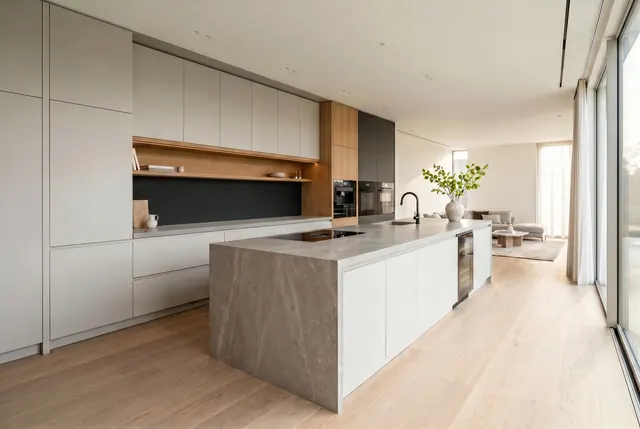
What we've known for years, and what has been (and is becoming) increasingly obvious, received another firm boost during the lockdown. The kitchen has taken the lead in a home in terms of "beating heart. Unlike in the past, when the kitchen was hidden in a separate room and it served exclusively to prepare food, today the kitchen is a showpiece. More so, kitchen and living space merge into one big whole, with all the consequences that entails. When it comes to extractor hoods, we see two clear trends, either visible as a real eye-catcher or as visually minimal as possible. Both in terms of technology and aesthetics, we see a host of innovations from the various manufacturers.
Technological steps
If we listen to the various manufacturers who develop and produce cooker hoods, the message is unanimous: a cooker hood must do what it is designed to do - remove annoying cooking vapors and odors from the kitchen as efficiently as possible. Preferably as quickly and quietly as possible. This last requirement is rapidly gaining in importance as kitchens take on a much more prominent role than they used to. Nobody likes to do their pleasant conversations at the end of a working day or at the weekend while shouting, let alone not having these conversations because the extractor hood is doing the talking. In this, too, all manufacturers are unanimous, making enormous efforts to transform extractor hoods into technical marvels that do their job without standing out (in terms of noise, that is). Whisper quiet is the goal, with a little louder they are not satisfied. The way the fumes and odors are eliminated is also meticulously considered. Moreover, it does not stop at simply getting rid of them; filtering them is also high on the priority list, especially when recirculation is involved.
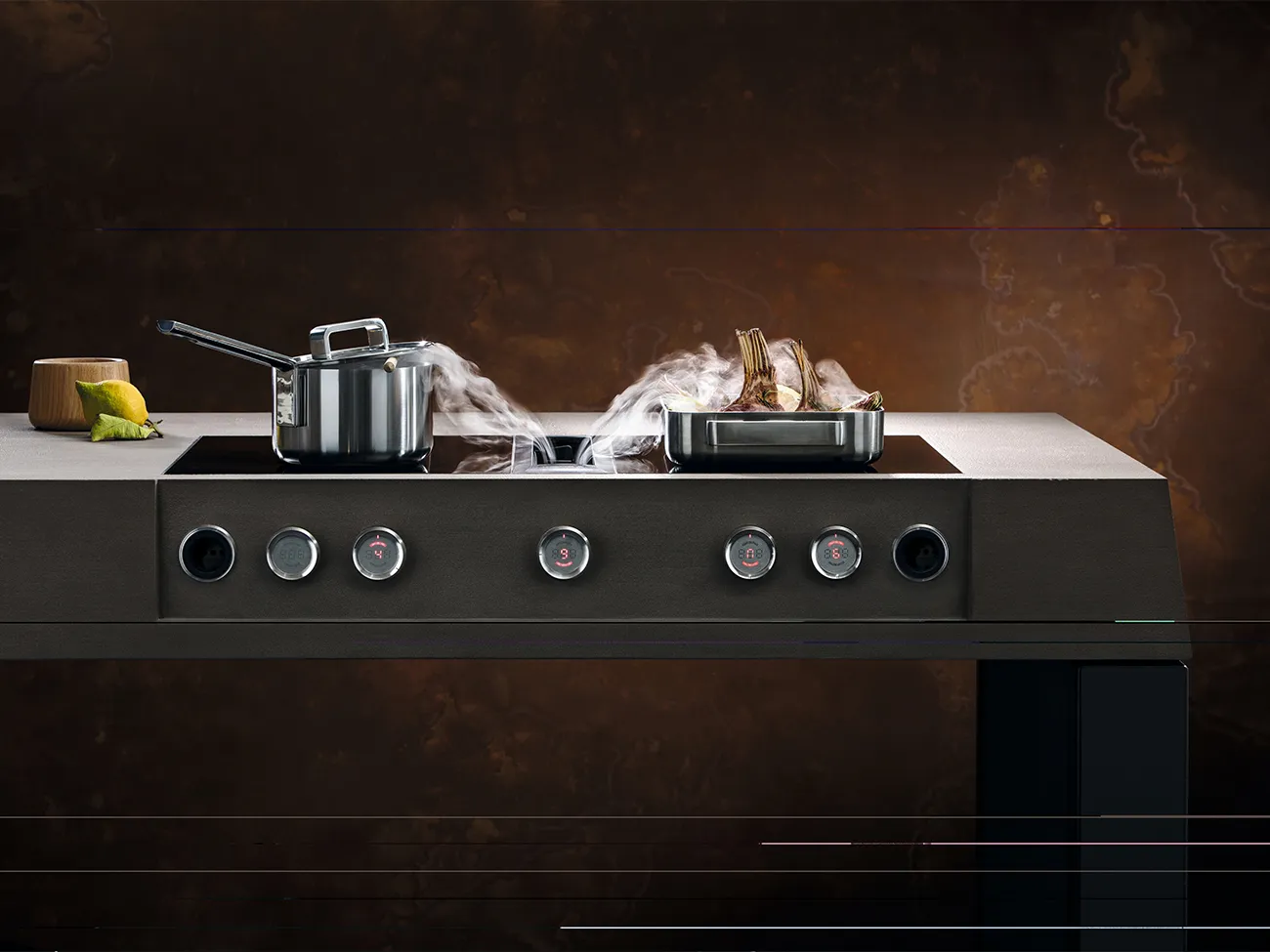
Air stays inside
Very simply explained, a recirculation hood sucks in the air during cooking, filters it and then blows it back into the kitchen. Immediately you notice that the traditional way extractor hoods work -
in which the air is blown outside through a wall bushing - is completely different from this recirculation technology. The biggest difference: a wall bushing is no longer necessary for those who choose a recirculation system. No hole in the wall means the heat stays inside in the winter (and thus the cold outside) and vice versa in the summer. An absolute necessity for those who live in a passive house or want to build one (a passive house is a very energy-efficient home with a healthy and comfortable indoor climate). Although today there are also systems that can hermetically seal a wall penetration when not in operation, thus also keeping out the cold in winter. By adding a whole range of high-performance filters, recirculation hoods also ensure that harmful particles and irritating odors do not re-enter the kitchen. Recirculation is not limited to cooktop extraction or extraction through an extractor fan above the cooktop or on the wall, the technology is universally applicable.
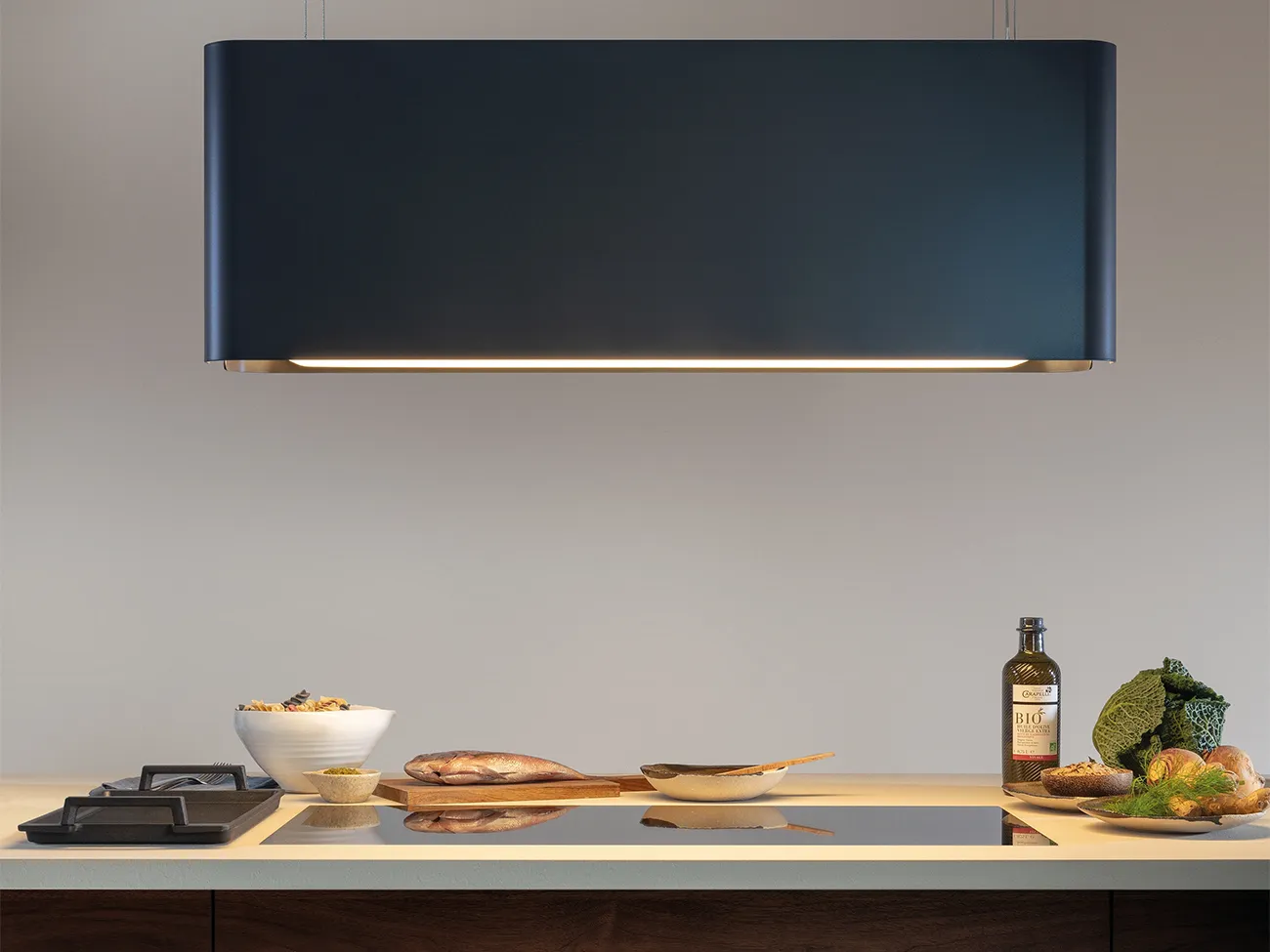
Visual tranquility
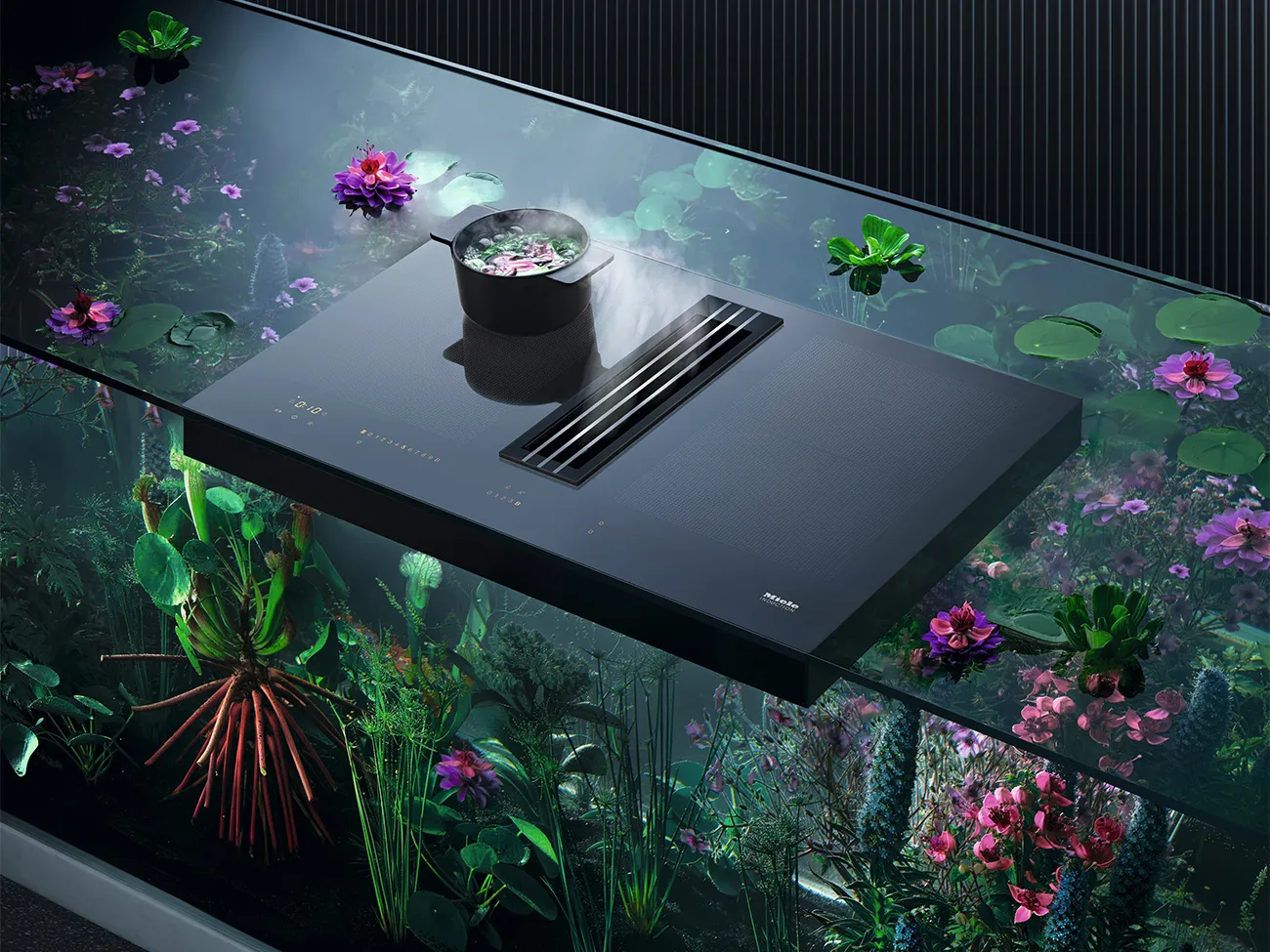
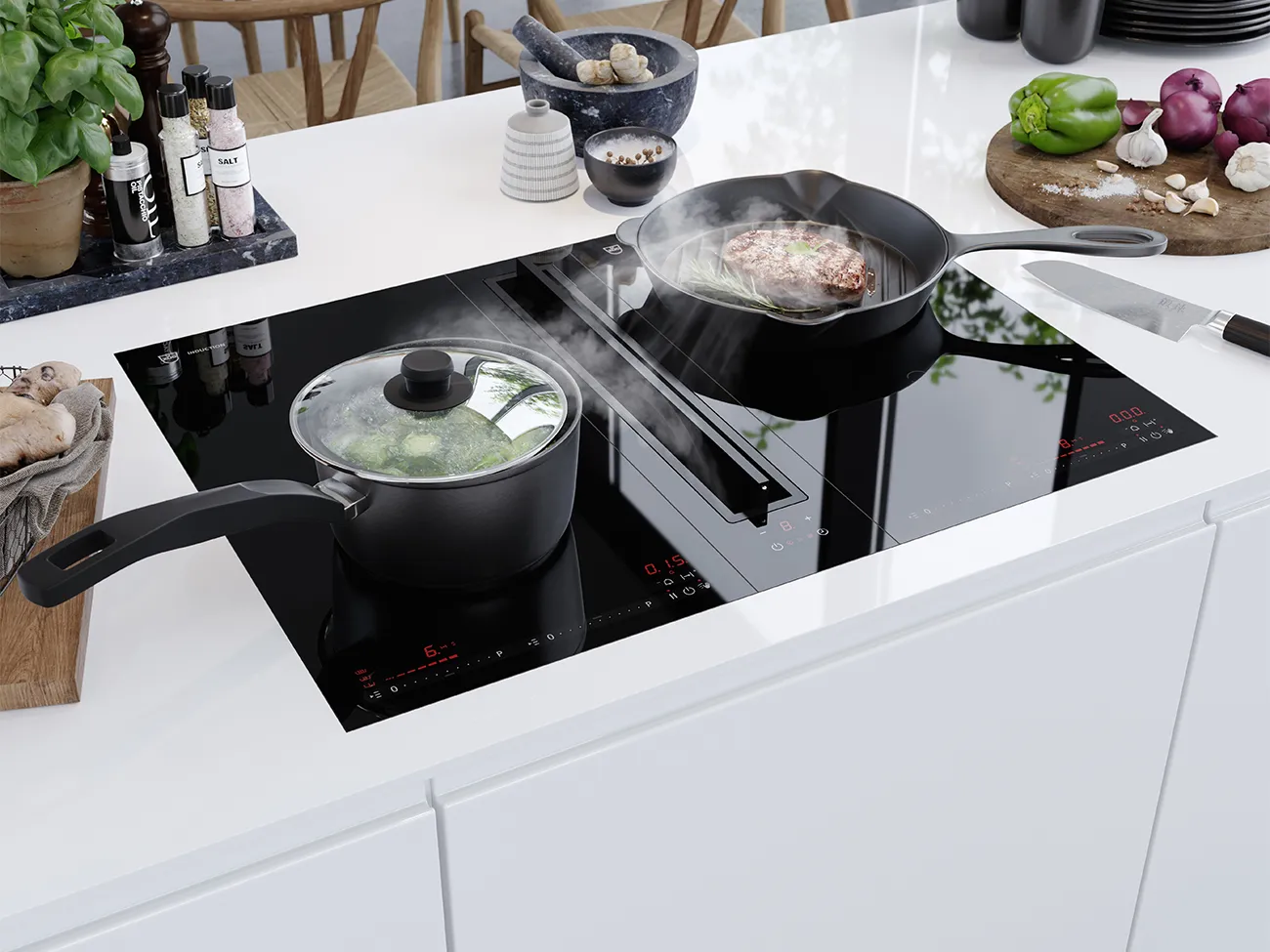
While some opt for a system that draws off cooking vapors where they arise - mainly directly in the cooktop itself - others opt for a more classic arrangement with the extractor hood above the cooktop. The fumes rise naturally, you know. An advantage of the cooktop extractor, and by extension the telescopic models where the extractor hood is hidden in the worktop and only emerges when cooking itself, is the fact that the extractor hood is not present, so to speak. When not cooking, you don't see the hood, which creates a visual tranquility that fans of this system look for. An added benefit to the trend in which kitchens and living spaces merge. Even when the area of the kitchen is not that large, the cooktop extractor fan is a handy ally.
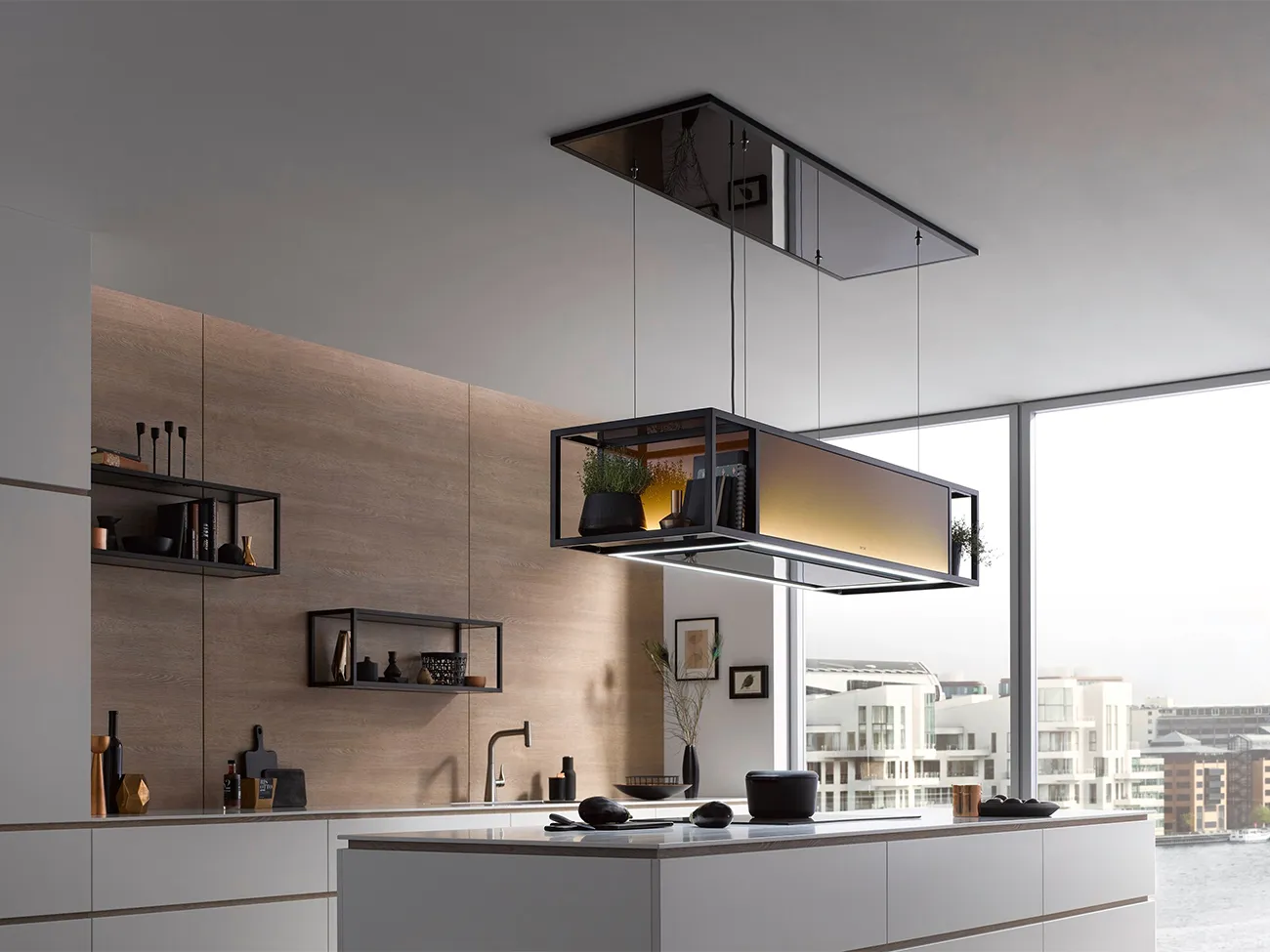
Deliberately visible
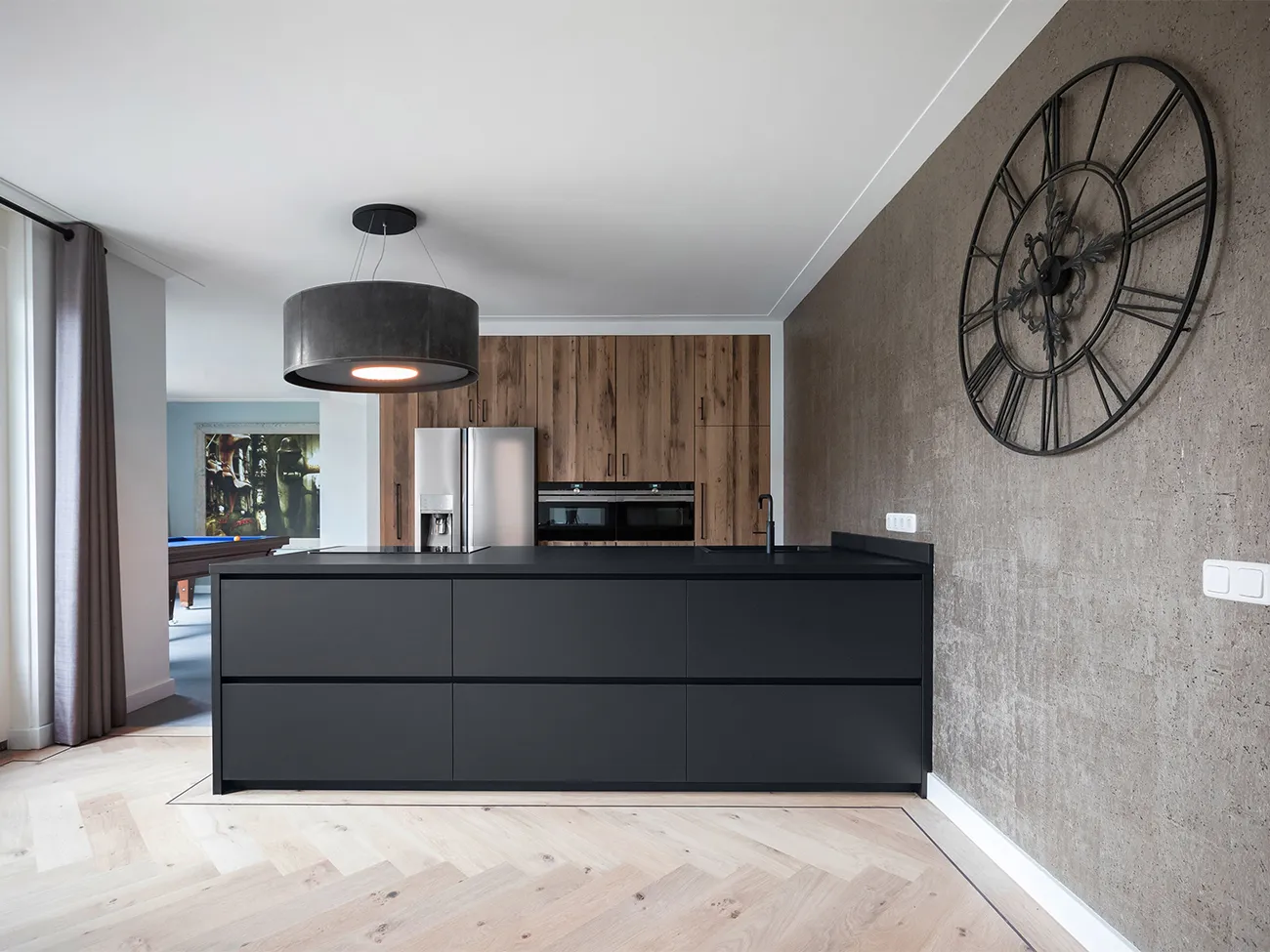
Of course, the opposite concept also has its supporters. Instead of removing the exhaust hood from sight, these people deliberately choose to have it in view. An additional design element in the interior as it were. This trend has not gone unnoticed by the extractor hood manufacturers with quite a few responding nicely to it. In terms of design, we see the most beautiful, largest or extravagant extractor hoods appearing. And it doesn't stop there. Several manufacturers also offer extractor hoods as lighting fixtures, without extraction, of course. It immediately ensures that the same aesthetic from the (open) kitchen is extended into the living space. A different kind of visual tranquility is created.
We are also seeing the appearance of so-called multifunction systems from a number of manufacturers that bring together an extractor hood, shelves, frames to hold cooking utensils and lighting in one unit.
An eye-catcher of stature but with functional assets deliberately spread out visibly.
Question about this story? Ask your question
Keep following this
Get an email when a new story is published. No account needed.
- ThemeClean air in the kitchen
- SubjectGeneral