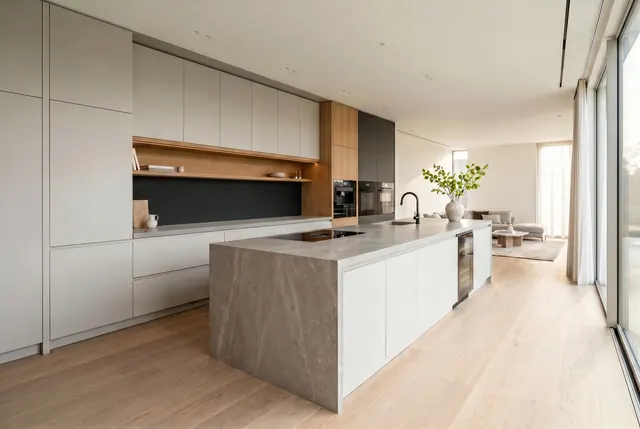







Inox is here to stay
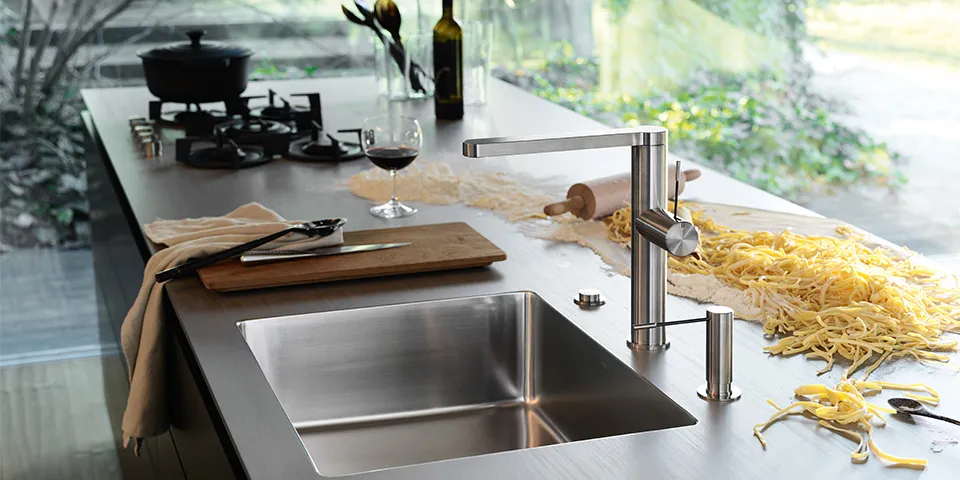
We can no longer ignore it. Stainless steel kitchens, long the most widely used option in professional settings, are increasingly being considered for new domestic kitchens. A worktop, a sink or an entire kitchen in inox: anything is possible.
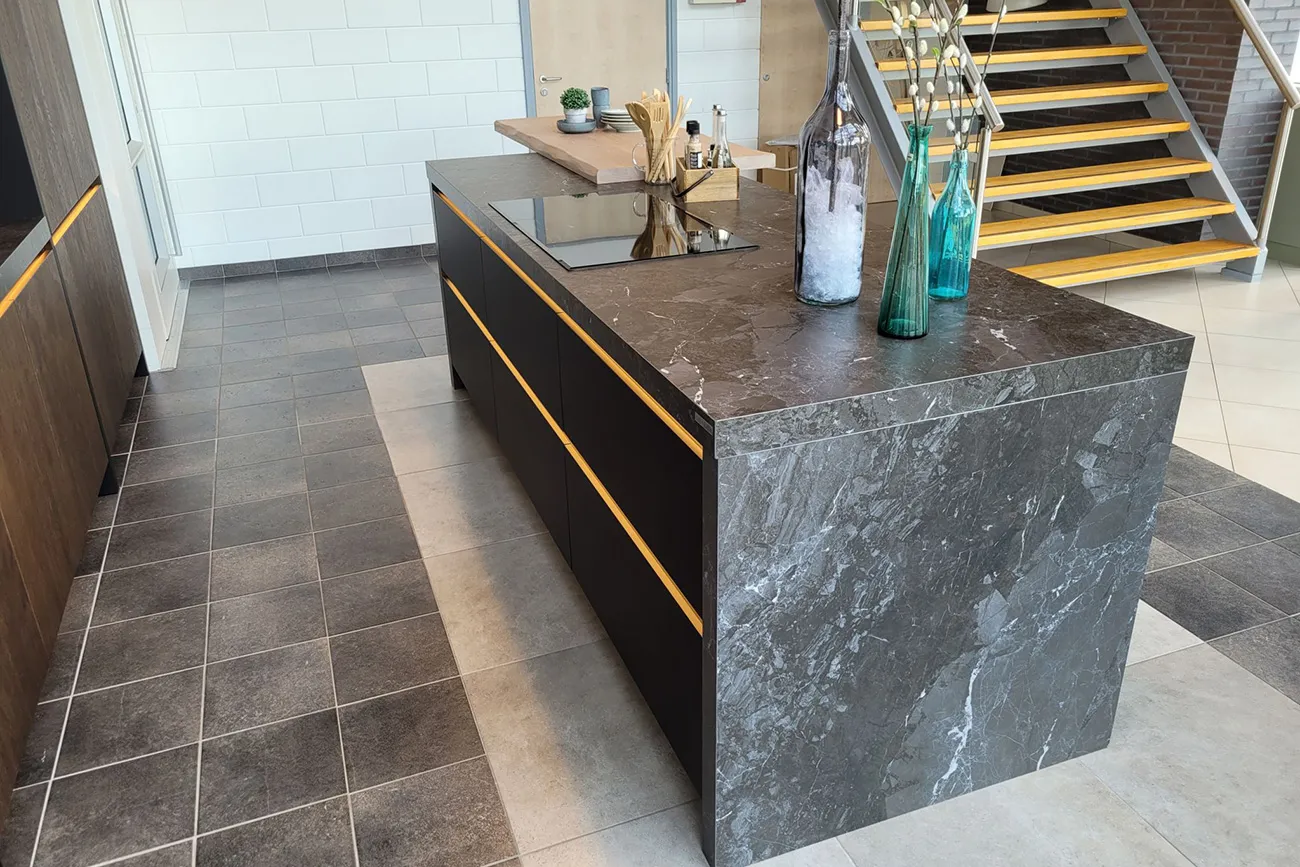
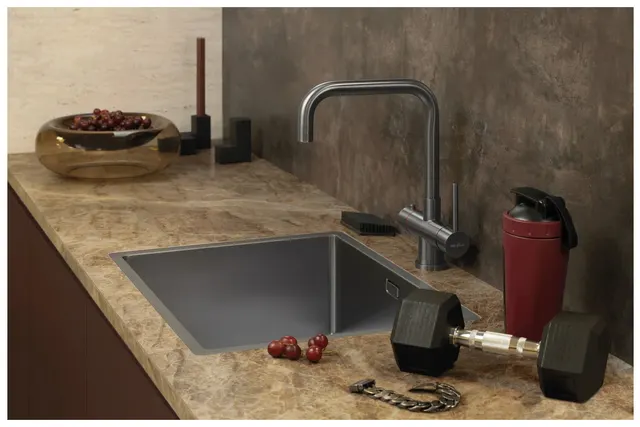
Stainless steel combined with other materials produces an attractive result. (Image: Reginox)
Call it inox, stainless steel or rust-resistant steel, these different names all refer to the same material, with the same properties. There is no doubt that inox is a strong, high-quality material. Add to that the fact that it is highly hygienic and requires little maintenance, and you have its three most prized qualities. Other useful properties in the kitchen include heat resistance (although you should still take care not to put very hot pots and pans directly on the surface; a trivet is a sensible precaution), acid resistance, water resistance (which goes without saying) and exceptional durability. In frequently used kitchens, however, the worktop and sink will show signs of use. Scratches are inevitable: knives, wire wool, keys and other items all leave their mark. But for those who choose an inox kitchen wholeheartedly, that is precisely what gives it its charm.
What is inox?
Inox is an alloy of iron, chromium, nickel and carbon. Wikipedia also tells us that steel can only be described as rust-resistant if it contains at least 11 to 12 per cent chromium and no more than 1.2 per cent carbon. Its resistance to rust develops when chromium comes into contact with oxygen. This immediately forms an invisible layer of chromium oxide, also known as the passive layer.
Oxidation usually damages a material, as rust does. In some cases, however, the oxide layer protects it against other forms of attack. That is what happens with the layer of chromium oxide. It acts as a barrier against moisture, protecting the underlying metal from further rusting (oxidation). This combination of properties makes inox a smart choice for use in kitchens. The material also features in a wide range of applications: the food industry, mechanical engineering, ironmongery, fasteners, shafts, fittings, machinable parts, the pharmaceutical industry, construction, and the chemical and petrochemical industries.
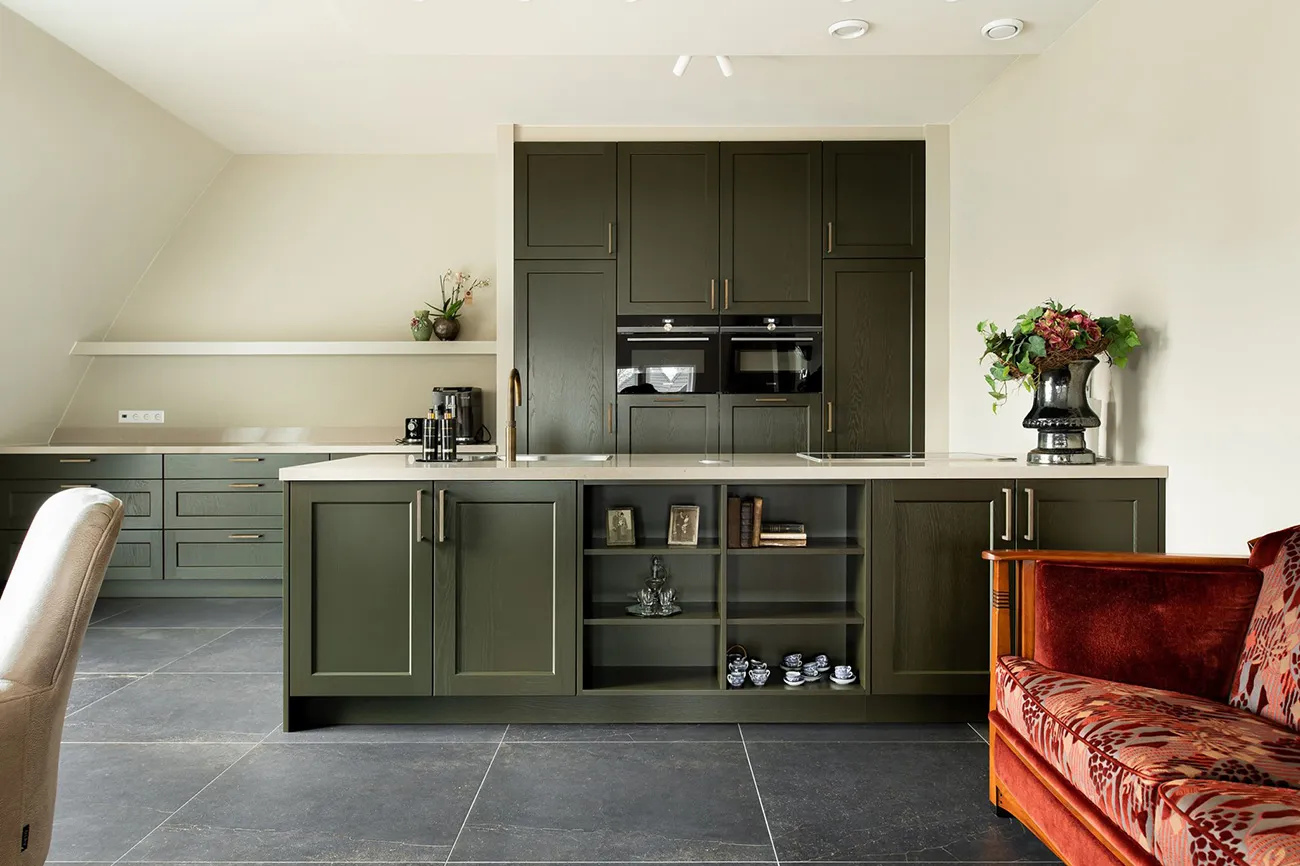
No problem if you tend to spill things while cooking: the stainless steel worktop is very easy to maintain.
Looks matter too
The balance of a material’s positive and negative properties has a major influence on the choice. Do the advantages outweigh the disadvantages? Aesthetics and design also play a part in this balance, or, put simply: does the end result look good? If the answer is no, the material is unlikely to be chosen, at least for a domestic kitchen. If the answer is yes, the mix of properties does not necessarily have to be the best. The combination of properties and aesthetics that appeals most to the customer wins out. Looks matter too, and they are usually the deciding factor. Inox is ideal for bespoke work. A sink can be welded in seamlessly, a draining area integrated or grooves added instead; cut-outs can be made in the right places for a hob, teppan yaki, sockets and much more.
Question about this story? Ask your question
Keep following this
Get an email when a new story is published. No account needed.
- ThemeKitchen materials
- SubjectGeneral