





International appointment in Cologne
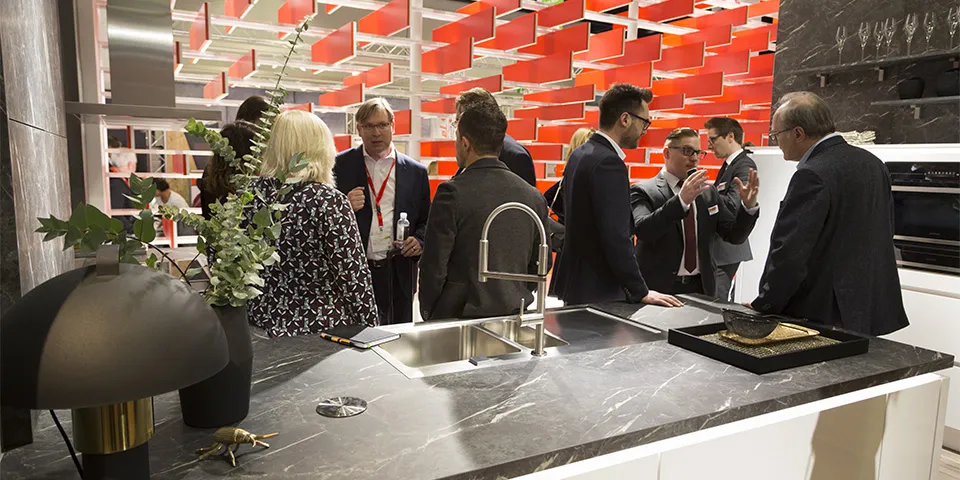
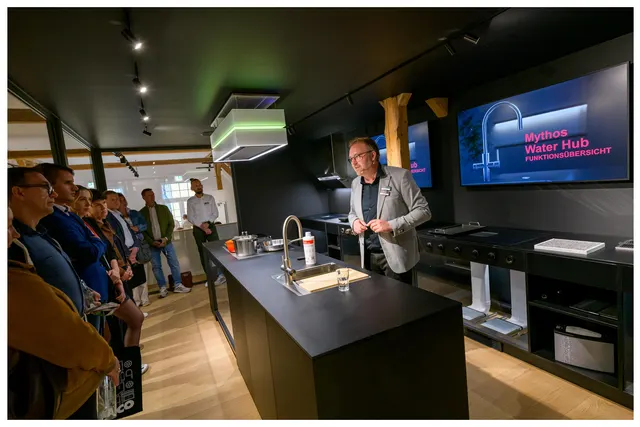
A new trade fair year got underway. In mid-January, many national and international exhibitors blew gather at the Cologne fairgrounds. On the agenda was the biennial appointment Living Kitchen. After seven days, the organizers closed the doors with a satisfied feeling. About 150,000 visitors from as many as 145 countries visited the fair.
The numbers prove once again the international nature of Living Kitchen. For seven days, 271 exhibitors from 28 countries showed their latest products, technologies and finishes. Among visitors, the internationalization is even more striking. More than half of the visitors came from outside Germany, the country counter clocked up to 145, including of course a whole bunch from neighboring countries. In terms of European risers, a few more distant countries stood out, namely Greece (+31%), Ireland (+30%) and Portugal (+31%). However, the distance to Cologne was not an obstacle for non-European visitors. From China (+23%), North America (+15%) and South America (+29%) a lot more interested people came to the fair.
Das Haus
The biennial Living Kitchen always forms a double poster with (the annual) IMM Cologne. Every year, this well-known international furniture and interior design fair gives a platform to a designer or, as this year, a designer duo, to draw out and present their vision of a future home. This year, Australian designers Kate and Joel Booy of Studio Truly Tryly drew the plans for Das Haus.
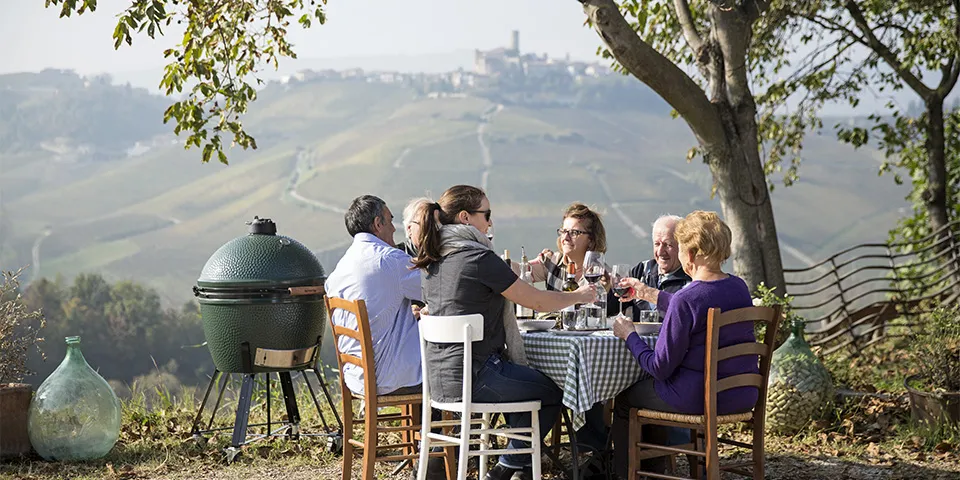
An outdoor stove for all seasons. (Photo: Big Green Egg)
No fixed dividing walls in the house, but different zones that are coordinated in terms of materials, colors and sizes. "Everyone immediately felt at home in Das Haus," say the organizers. And the designers add, "Soft upholstery on the walls, floors and bed, solid kitchen blocks and heavy furniture, new prototypes along with classics, lighting, accessories, design objects and art, it all came together beautifully in a blueprint of interior design of the future." Joel Booy: "The kitchen was our starting point. After all, it is the center of social life." The kitchen and living space were located in the Active Zone of Das Haus and flowed into each other. Thus the kitchen consisted of a number of solid kitchen blocks, a worktop that flowed into a bench seat and a large multi-purpose table. Very inconspicuously, visitors entered the living area, where the seats were placed not around a television but around an imaginary panoramic window (represented at the fair by a large entrance).
The 'Kitchen of the Future'
n by Naber in a new color, namely anthracite. (Photo: Constantin Meyer)
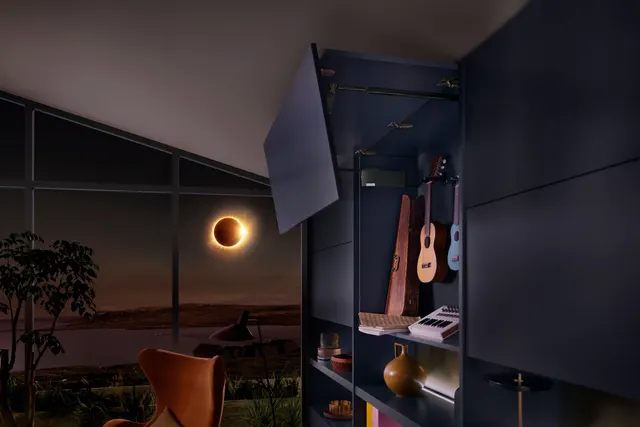
Renowned designer Alfredo Häberli created his "Kitchen of the Future" for Living Kitchen. The Future Kitchen installation, with its striking green shelves, walls and surfaces, gave visitors a visionary glimpse into what Häberli sees happening in a kitchen in the (not so distant) future. According to Häberli, the kitchen will remain the center of a home. However, it will involve more than just the traditional functions (preparing food, socializing). In the kitchen, the conscious handling of all kinds of resources will evolve into a daily ritual. By far the most striking evolution concerns mobility. Häberli believes that it is not limited to media but that traditionally fixed appliances such as an oven and stove will also become mobile. In his Future Kitchen, these can move with users throughout the kitchen, or be moved around to save space. Häberli also designed eleven appliances and accessories for Future Kitchen. These were not physically present but could be visualized in the kitchen through augmented reality. For example, in collaboration with Samsung, he drew a transparent, horizontal refrigerator. The oven, too, is completely transparent and descends from the ceiling when someone needs it.
Standing out in the crowd
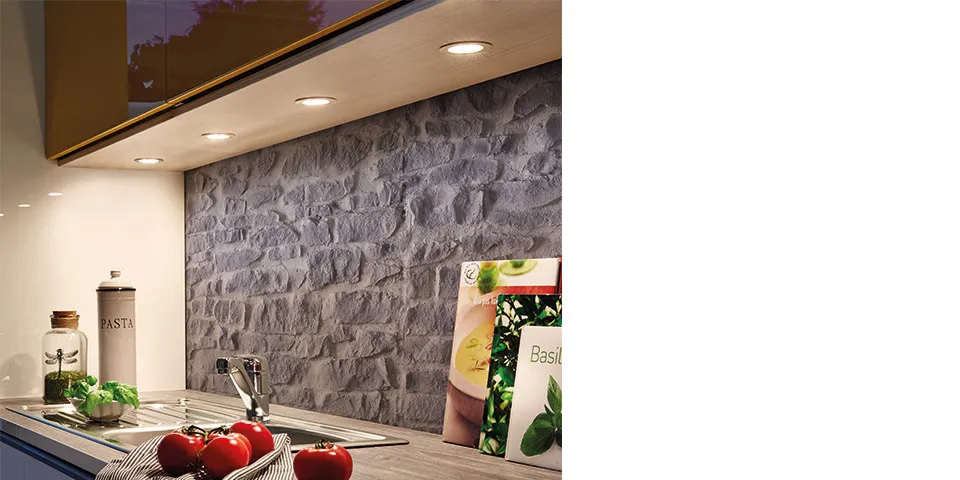
Appropriate lighting that makes it easier to work in the kitchen and is subsequently unobtrusive and creates a pleasant atmosphere. (Photo: Hera)
An international fair with many (well-known) exhibitors: it turns out to be no mean feat to "attract" visitors to your innovations. Exhibitors with a striking name sometimes arouse the curiosity of trade show visitors. If the picture turns out to be right (name, booth, product), then participation in a trade show can be called successful. One such eye-catching name is Big Green Egg. This American company has been producing kamados, a versatile outdoor cooking appliance based on the more than 3,000-year-old Japanese kamado tradition, since modern times. The appliance, with the look of a large green egg, is made of ceramics also used by NASA. Seven different models are available, from Mini to 2XL. "A Big Green Egg can be used for an entire year," we hear at the booth. "The ceramic keeps the heat in, it can get up to 350°C in such a green egg, without the outside temperature having any influence on it at all."
Presenting novelties at the fair
Showpiece at Blanco, the EVOL-S Volume Crane. (Photo: Blanco)
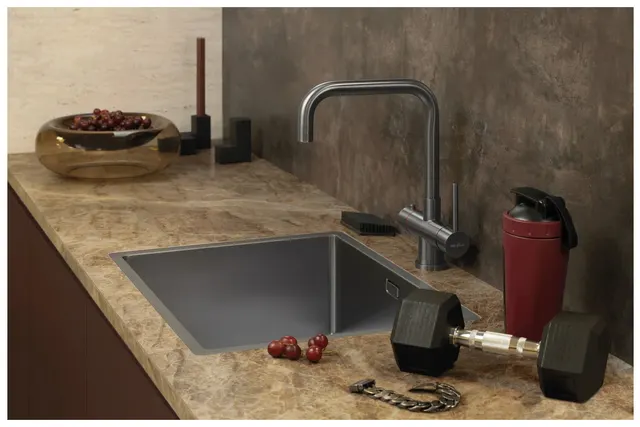
Many manufacturers aim at the big well-known trade fairs to present their latest developments to the (professional) public. This was also the case at Blanco, where visitors were able to test the new EVOL-S volume tap. This faucet measures the amount of water very precisely, making measuring cups unnecessary and preventing excess water from flowing away. Turning the handy dial is enough to set the scale, ranging from 100 ml to 5 liters. Once the choice is made, it is enough to touch the side of the dial to make the water flow. An innovative system, the Dynamic Flow Control System, controls the water flow. Strong and fast when a large amount is needed, somewhat slower when only a little water is required.
Existing products in the spotlight
A vacuum device completely embedded in the worktop, that's Quva.(Photo: Dekker)
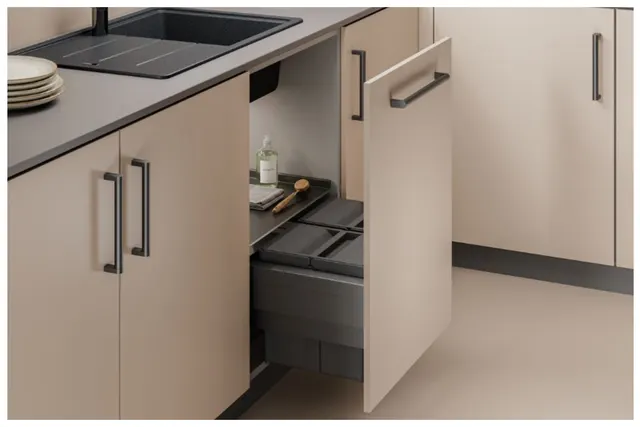
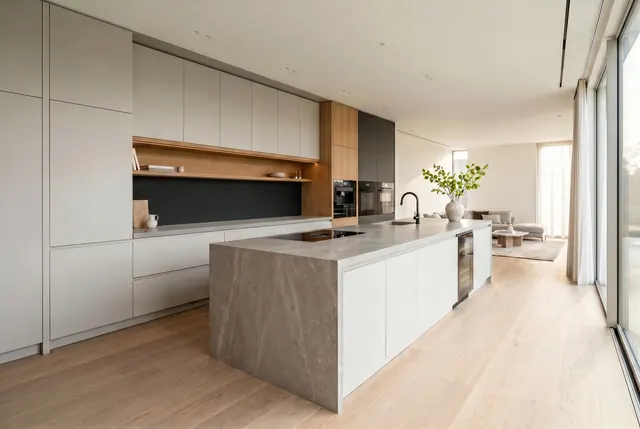
Without novelties or with a limited number, a trade fair participation can also be a success. At Naber, for example, plenty of attention was drawn to its own developments in the field of kitchen ventilation (Compair®), anthracite as a new color within the 'n by naber' range of kitchen furniture and waste collection solutions (Cox®). Also at Plasma Made - where the in-house developed plasma filter was in the picture - as at Hera, which specializes in lighting in kitchens, no major novelties.
Looking to the future
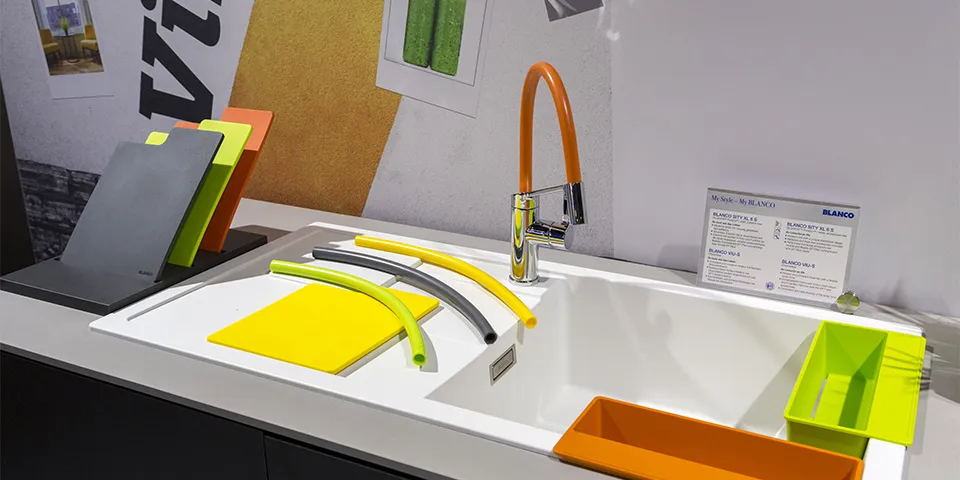
These colorful accessories from Blanco add an eye-catching touch to the sink.
Sometimes a launch date is not yet known but exhibitors are already showing their prototypes. At the Dekker stand, for example, we discovered a vacuum appliance that is completely incorporated into the worktop. So no appliance on the kitchen worktop. Further on, at Ballerina, they went a step further. There, part of the booth was set up as a "digital kitchen. A glimpse of what the future might bring. Important fact: it was not a futuristic vision, but a show with products that are already available today. Eye-catcher in this show: the drone that comes to deliver groceries to the kitchen.
Question about this story? Ask your question
Companies in this story
Keep following this
Get an email when a new story is published. No account needed.
- ThemeThe changing kitchen industry
- SubjectGeneral
- CompanyNaber