Platform about design and technology in the kitchen, home, and bathroom industry
In the kitchen industry, it’s all about the details. A cabinet front that isn’t quite flush, an edge that doesn’t line up properly, or a combination of materials that behaves differently than expected—these are small imperfections that are immediately visible in the final result. That’s precisely why expertise is just as important as the machine being used.
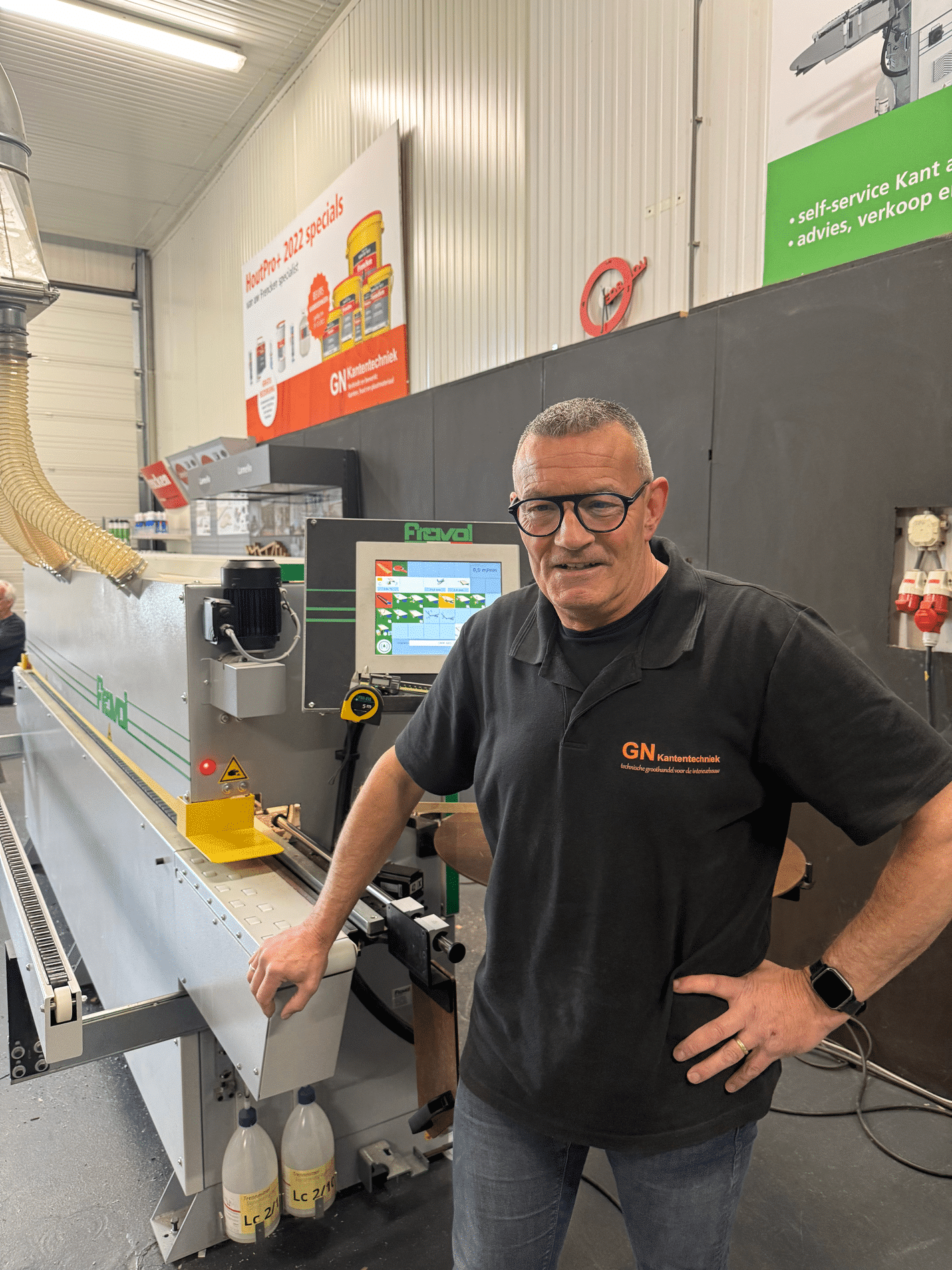
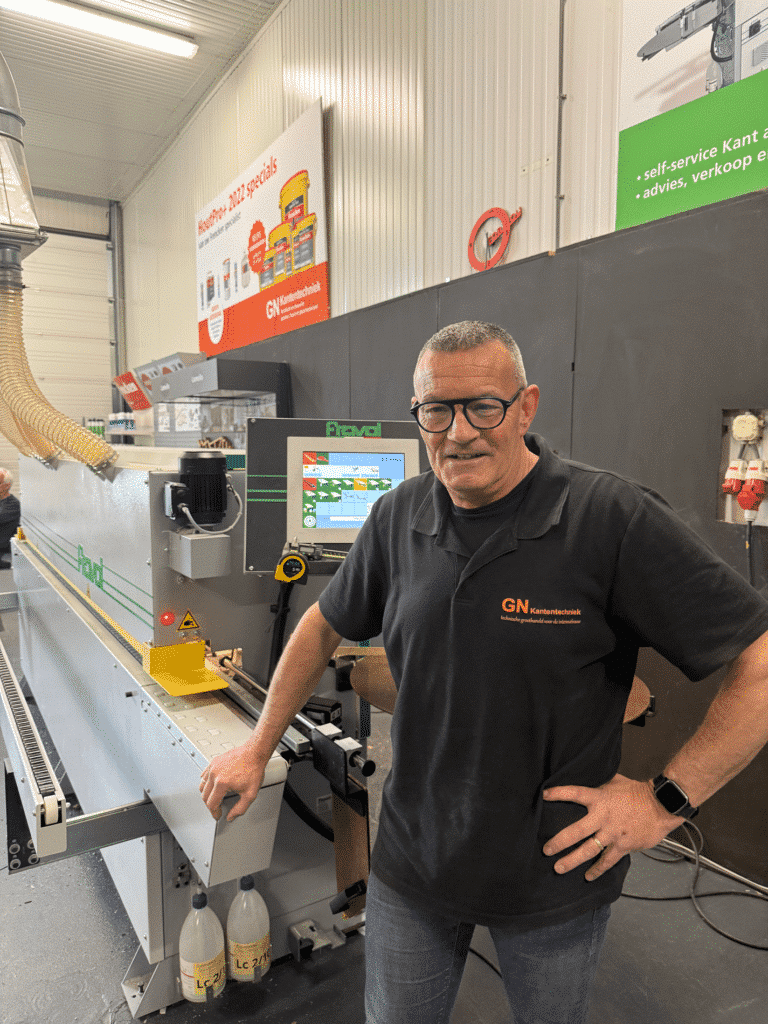
Geert Nefkens, director of Fravol Nederland & Panelentechniek, sees this in action every day. He regularly welcomes professionals who are willing to drive an hour and a half each way—one hour and a half there and one hour and a half back—not only to view edge-banding machines but also to test them themselves. “These people understand that keeping their knowledge up to date is always a must,” he says. “They realize that the end result really has to be excellent.”
According to Nefkens, that’s exactly what it often comes down to in practice. A good machine is important, but it doesn’t guarantee a good end product. Especially in kitchen manufacturing, where many different sheet materials, decors, edge banding, and finishes come together, every project requires a careful assessment in advance. How does a material respond to processing? Does the chosen edge banding match the panel? Are the settings, adhesive type, and feed rate tailored to the application? And perhaps the most important question: does the user know why they are making certain choices?
In this context, Nefkens refers to a four-part system: sheet material, edging material, machine, and user. Only when these four components are properly coordinated can the quality that a kitchen specialist wants to deliver to their customer be achieved. “If the end result isn’t satisfactory, you sometimes hear that it’s the machine’s fault. But that’s too simplistic,” says Nefkens.
For kitchen specialty stores and kitchen builders, this is a familiar challenge. “Consumer expectations are high. The kitchen has long since ceased to be merely a functional space; it’s now an important part of the interior design. That means the finish, durability, and aesthetic appeal must be of the highest quality. A customer doesn’t see the technical decisions made behind the scenes, but they do notice if an edge isn’t straight, a cabinet front doesn’t line up properly, or a finish wears out faster than expected. That’s precisely where the value of thorough preparation becomes apparent—even to the end user.”
That is why quality does not begin in the workshop, but already during the preparation phase, according to Nefkens. “The right choice of materials, a thorough preliminary analysis, and sufficient knowledge of the installation process largely determine the final result. I therefore advocate always taking a critical look at your own actions. Always start by asking yourself: ”Did I do everything right?’”
According to him, that attitude is what distinguishes mere production from true craftsmanship. Nefkens concludes: “Those who continue to learn, test, and analyze prevent mistakes before they happen. For the kitchen industry, that’s not a luxury, but a necessity. Because the machine does what it’s supposed to do. It’s the craftsman who determines whether technology, materials, and application come together in a final product that ultimately works.”