






Safely back at cafe and restaurant
Het is een bekend gegeven: hygiëne in de keuken vraagt speciale aandacht. Het wassen en desinfecteren van de handen staat…
It is a well-known fact: hygiene in the kitchen requires special attention. Hand washing and disinfection is central to users of sanitary facilities in public places (restaurants, cafes, bars...) and is also essential in the kitchen.
To meet those requirements, procedures have been developed to minimize the risk of contamination. Maximum hygiene, both in the kitchen and in visitor sanitation facilities, is required. More than ever, the installation of sanitary facilities with numerous functionalities adapted to public spaces is essential, and contactless solutions are therefore in great demand.
No manual contact
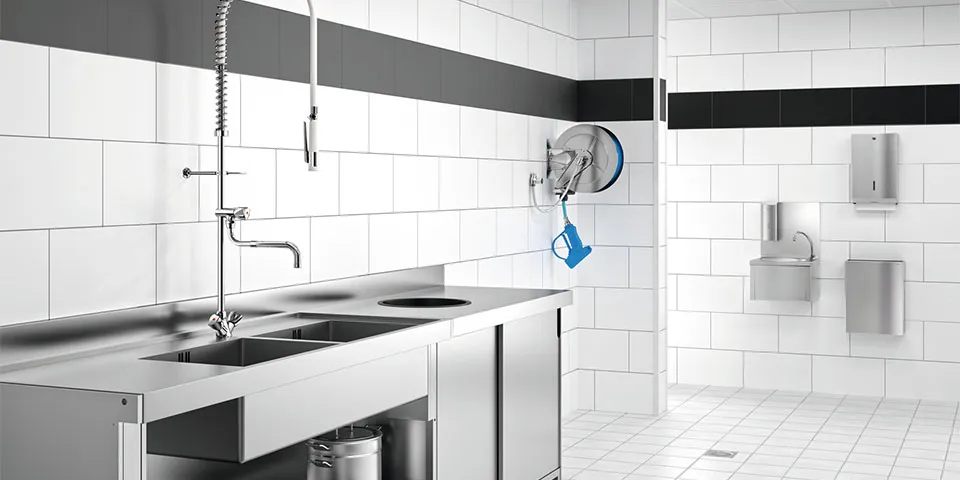
To comply with the recommendations of the Guide to Good Hygiene Practice (GBPH) or EC Regulation 852/2004, the sanitary facilities of public toilets and professional kitchens must be equipped with means for washing and drying hands in appropriate places. In addition, the premises must be equipped with sinks with running water and products necessary for cleaning and disinfecting hands.
Electronic or mechanical self-closing faucets and soap or alcohol dispensers without manual contact and so on: DELABIE offers a wide range of solutions that meet the highest hygiene requirements. For example, electronic faucets stop as soon as hands leave the sensor field and self-closing faucets automatically close a few seconds after being activated, allowing time to moisten or rinse hands. The stainless steel hand wash basins also perfectly meet hygiene standards. Both the mechanical versions, with knee operation, and the electronic versions guarantee contactless cleaning. Thus, no manual contact is required, preventing transmission of germs via the hands and ensuring maximum hygiene. The standard also states that taps for washing food and rinsing equipment must be separate from the sink, and under no circumstances must toilets have direct access to the areas where food is handled.
The sanitary facilities of the restaurant must meet hygiene requirements.
Waterproof hand hygiene
Restaurant sanitation facilities must comply with hygiene requirements and, more specifically, those requirements concerning hand hygiene. Hand hygiene is in fact a whole chain of successive applications in the sanitary facilities of a public place, from the toilet or urinal to the sink. In addition to washing hands correctly, drying them correctly is also an essential element of hand hygiene. This is because wet skin has a greater risk of bacterial transmission than dry skin. Therefore, the GBPH recommends single-use towels or electronic hand dryers.
Preventing waste
Moreover, in the battle to keep bacteria at bay, we wash our hands longer and more often. On average, we wash our hands three times more often and twice longer. So this has a significant impact on water consumption. With conventional faucets, while lathering the hands, the user sees gallons of water flowing into the sink: a thorough wash can take between 40 and 50 seconds. Thus, overconsumption of hot and cold water has increased dramatically and can reach nearly 60 liters of water per day and per person. It is essential to systematically install faucets in all public places that thus not only ensure maximum hygiene, but also allow significant water savings. Indeed, ecological and economic concerns remain crucial. Today, hand hygiene has become more necessary than ever. DELABIE's sanitary facilities are specially designed for places such as restaurants, hotels, and so on. Hand hygiene and water conservation are part of the company's DNA, as are exceptional resistance to vandalism and intensive use, and ease of installation and maintenance.
Question about this story? Ask your question
Companies in this story

Keep following this
Get an email when a new story is published. No account needed.
- ThemeKitchen water and sinks
- SubjectGeneral
- CompanyDelabie