






Using the right products is essential for any professional kitchen
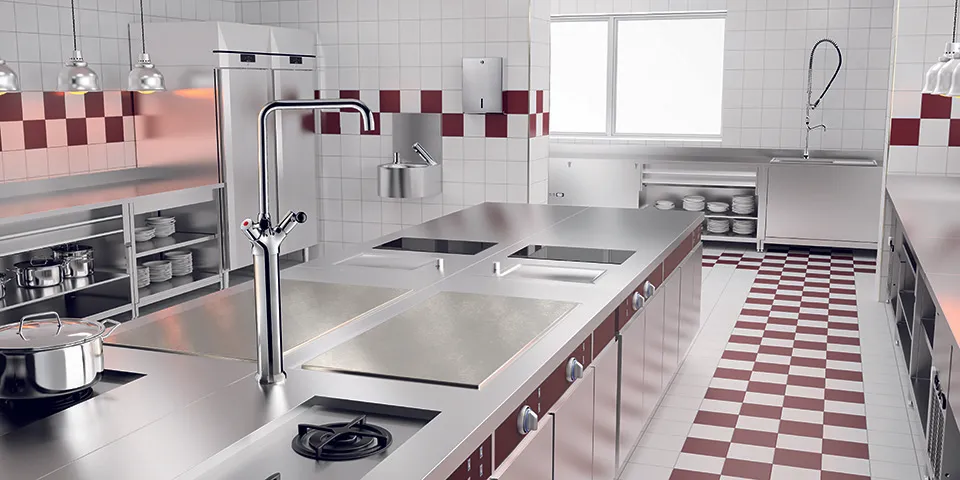
Hygiene is a key concern in restaurants and commercial kitchens. Taps and sanitary facilities must therefore always meet the statutory…
Hygiene is a key word in restaurants and commercial kitchens. Therefore, faucets and sanitary facilities must always meet the legal requirements for hygiene. For intensive use, materials must be chosen according to quantitative needs, such as the number of tables and type of restaurant. Quality is also important: compliance with hygiene standards, ergonomics, user-friendliness... Pre-rinse columns, taps, hand wash basins, and so on: the quality of equipment is essential for optimal productivity in any professional kitchen. In this report, Delabie specialists take a closer look at some of the criteria customers should consider.
Hygiene
Hygiene standards are extremely strict. For example, hot and cold water for hand washing are mandatory and the handwashing sink must not be manually operated. The standard also states that faucets for washing food and rinsing equipment must be separate from the sink, and under no circumstances should toilets have direct access to food processing areas. In choosing the right material, it is important to avoid the formation of bacterial foci. Products and systems in bacteriostatic stainless steel, copper supply pipes with low water retention, pre-rinse columns with a column and spout with smooth inside and faucets with hygienic jet breakers offer an ideal solution. Furthermore, it is also appropriate to choose removable faucets and spouts, which allow internal cleaning and removal of bacterial biofilm. The material of the hoses of the flushing equipment should be suitable for the food industry, such as hytrel. Finally, the use of drain plugs with hollow grid without screw, avoids water retention and provides free flow, preventing dirt accumulation and reducing the number of microbial niches.
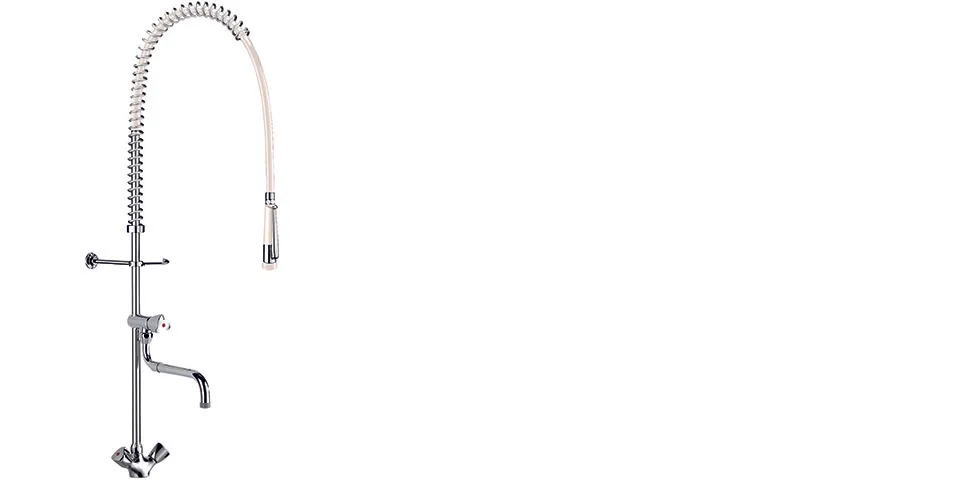
Faucets in commercial kitchens, catering, fish stores and the food industry must be extremely reliable and efficient, but above all they must withstand intensive use.
Resilience and effectiveness
Taps and sanitary fittings in commercial kitchens, catering, fish stores and the food industry must be extremely reliable and efficient, but above all they must withstand intensive use. During peak moments - a daily occurrence in every kitchen - the faucet is sometimes operated by bumping into it with a pot or pan, for example. Therefore, faucets must not only be functional, they must also be able to withstand high loads and be equipped with mechanisms and levers that can take a beating, both literally and figuratively. To fill or submerge large pots and pans as quickly as possible, there are faucets with full quarter-turn opening at large flow rates of up to 100 liters per minute. Faucets in chrome-plated solid brass or stainless steel with thick (1.25 millimeter) stainless steel spouts are ideal. A protective sleeve in PVC on the tension zone of the hoses of the flushing equipment (in reinforced and non-slip polypropylene) completes the picture.
User comfort and safety
When choosing plumbing fixtures, great attention should also be paid to ergonomics and ease of use. For example, handles and levers on faucets provide a better grip, and telescopic and swivel spouts facilitate passage and filling of large pots and pans. The high temperature of hot water, up to even 90°C, also poses a challenge. The mechanism of a faucet is therefore equipped with specific inner workings, made of lime-resistant or even rust-resistant material that can withstand this high temperature. The spouts of the faucets must also be resistant.
Question about this story? Ask your question
Companies in this story

Keep following this
Get an email when a new story is published. No account needed.
- ThemeKitchen water and sinks
- SubjectKitchen appliances
- CompanyDelabie