






Wine is noble material
Gezellig op het terras met een boekje erbij, met de vriendenkliek aan tafel tijdens een spelletjesavond. Dit zijn slechts twee…
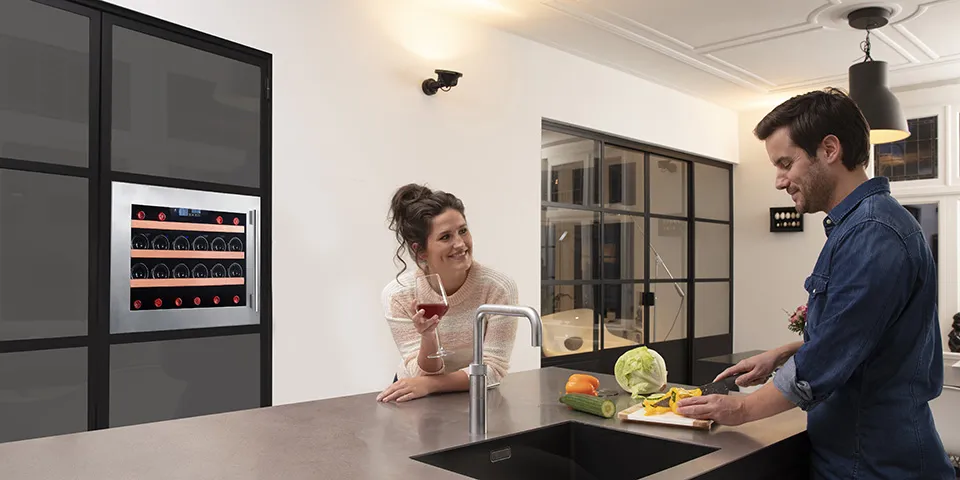
Cozy on the terrace with a book, with the clique of friends at the table during a game night. These are just two of the untold number of situations in which we like to enjoy a glass of wine. So storing the bottle has become a major concern. As a result, the wine cabinet has evolved from a gadget to a mainstream kitchen appliance.
Wine cabinets are something for the hospitality industry, such as bars and restaurants. This comment, common until a few years ago, we hardly hear today. It is true that when wine cabinets entered the private market, the majority of consumers, other than wine connoisseurs and collectors, barely
were interested in. "Why have a wine cabinet when we can also store our bottles in the cellar?" and "We can make better use of the space such a cabinet takes up." It was often said. The improvement of appliances and the fact that a kitchen is no longer a stuffy space, but the center of the home systematically changed perceptions. "And that has nothing to do with age," echoes a chorus of wine cabinet manufacturers and importers. "Young people and retirees alike, from layman to enthusiast to collector, recognize the benefits of a wine cabinet. In fact, there is an appliance for every type of customer."
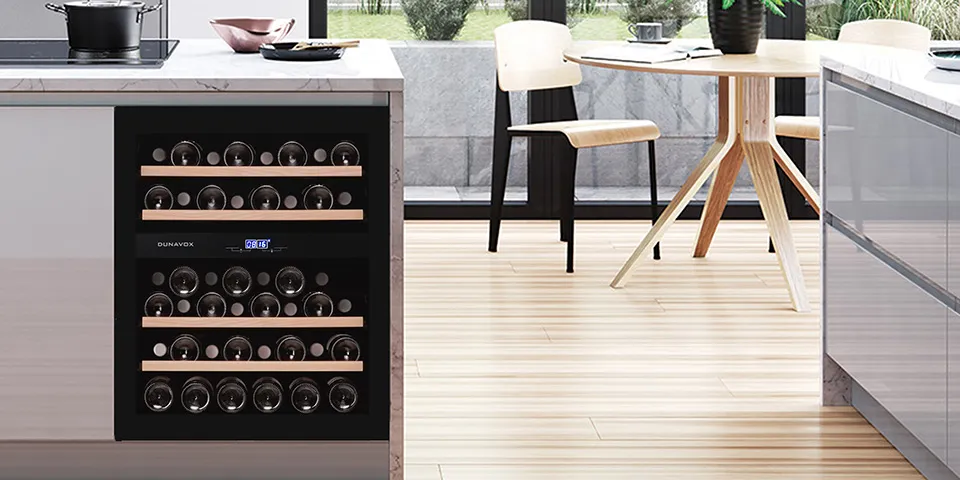
Whereas once the wine cabinet was a freestanding kitchen appliance, today the application is shifting more toward built-in models.
How to preserve a wine?
A wine lover wants, and this goes without saying, to enjoy his wine to the fullest. Storing and serving wine adds a great deal to its daily experience. Taste is precious. Storing the bottles correctly keeps the taste intact. Go wrong in storage, and the wine will most likely be ruined. Proper climate is essential. For example, temperature is probably the most important factor, especially keeping it constant. In addition, humidity, light, air and vibration are factors that must be closely monitored. A wine cabinet does this for you.
Important to remember, the ideal drinking temperature is not the same for every wine. For example, it is best to drink a rosé wine when it has a temperature of 6-7°C. For a white wine it is 10-12°C and for a glass of red it is 17-18°C. People used to say that reds are best drunk at room temperature. That is a bit too warm and does no good to the taste of the wine. Those who focus exclusively on one of these varieties can set the wine cabinet so that the temperature throughout is the ideal temperature for their favorite wine. No worries for those who don't want to or can't make that choice, several manufacturers have appliances available where different temperature zones can be set. That way you always have a bottle of each variety at ideal temperature. Unexpected visitors? No worries, the wine is ready to drink.
Freestanding or built-in?
In addition to controlling the various factors that impact wine quality, manufacturers pay close attention to the various mounting options of a wine cabinet. Whereas in the early days a wine cabinet was available purely as a freestanding model, today the focus is shifting to built-in. A wine cabinet that is nicely built in like an oven, for example, gives the kitchen an extra cachet. New developments follow each other in rapid succession. Further proof that the wine cabinet has become a kitchen appliance in its own right.
Question about this story? Ask your question
Keep following this
Get an email when a new story is published. No account needed.
- ThemeRefrigeration and dishwashing made easy
- SubjectKitchen appliances