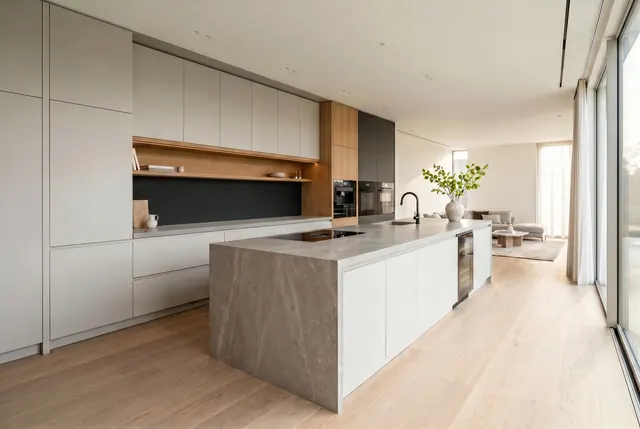






The best kitchen sales don't start with the cabinets, but with cooking
Text Kris VandekerckhoveImage Daan Halters – Louwers Mediagroep

De keukenbranche praat graag over materialen, kleuren, toestellen en afwerking. Maar volgens Christian Borsboom, algemeen directeur van STEEL Benelux, begint een goed verkoopgesprek ergens anders: bij luisteren. En vooral bij begrijpen hoe de consument zijn keuken straks echt gaat gebruiken.
The kitchen industry loves to talk about materials, colors, appliances, and finishes. But according to Christian Borsboom, managing director of STEEL Benelux, a good sales conversation starts somewhere else: with listening. And, above all, with understanding how the consumer will actually use their kitchen in the future.
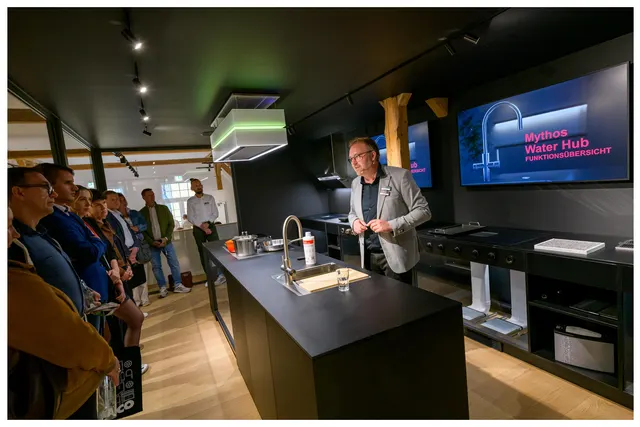
On KeukenCast, Borsboom discussed this topic with host Jerry Helmers and chef Jeroen van Oijen, known from *Chef on a Mission*. Their shared message is clear: when you sell a kitchen, you’re not just selling a beautiful design—you’re selling, above all, a place where people live, cook, and enjoy themselves.
According to Borsboom, consumers often come in with a clear idea of style, color, or material. Yet that isn’t always their real need. “Listen. And really listen,” he says, citing this as the foundation of every good sales conversation. Only then can an advisor ask the right questions.
Don't just ask what someone likes
For Jeroen van Oijen, this presents a great opportunity for the showroom. As a chef, he talks to many amateur cooks and notices how differently people approach cooking. Some cook simple meals every day, while others go all out a few times a year for friends or family. These differences directly influence the ideal kitchen layout and choice of appliances. “Do you love cooking, or do you love eating?” is, according to Van Oijen, a question that can really open up a conversation. After all, someone who’s mainly looking for convenience has different needs than someone who wants to spend hours in the kitchen on the weekend.
Borsboom agrees. In his view, a kitchen consultant doesn’t have to be a chef, but they do need to understand what cooking actually entails. “The whole point of a kitchen is to cook in it. If you know a little bit about cooking, that certainly helps.”

Experience is becoming more important than technology alone
In many showrooms, the emphasis is still heavily on appearance. That’s understandable, says Borsboom, because consumers are primarily inspired visually through magazines, websites, and social media. Still, the conversation shouldn’t stop there. The real depth comes from asking questions about usage, habits, and expectations. Van Oijen points to consumers’ latent needs in this regard. People often don’t yet know exactly what they need. By asking the right questions, an advisor can help them discover which kitchen truly fits their lifestyle.
Trends also play a role in this. At the Salone del Mobile in Milan (I), Borsboom noticed a recurring use of wood textures, dark wood, stainless steel, and warm tones. According to him, styles are constantly evolving, but one fundamental principle remains: cooking remains the heart of the kitchen.
The kitchen of tomorrow helps, but doesn't take over
Technology and AI will also influence the kitchen. Van Oijen expects that information and guidance will increasingly be built into appliances. Think of ovens that assist with cooking, core temperatures, and timing. Still, he doesn’t foresee a future where machines take over everything. In his view, people want to continue creating. Baking their own bread, fermenting ingredients, or perfecting a dish—it’s precisely those kinds of activities that bring satisfaction. Good appliances should support that creativity, not replace it.
Authenticity is becoming increasingly important in this regard. Van Oijen has noticed that consumers and home cooks are increasingly interested in learning how dishes are traditionally prepared. Not the quick five-minute version, but the real story behind carbonara, pizza, or other classics. “People want to understand why they do things.”
For kitchen retailers, this presents a clear opportunity. Anyone who wants to provide better advice must look beyond the cabinet fronts, countertops, and appliances. The question isn’t just which kitchen someone likes, but above all, what they want to experience with it. Because ultimately, as Borsboom and Van Oijen conclude, cooking brings people together. And that’s exactly why strong kitchen sales don’t start with the cabinets, but with a conversation about cooking.
Question about this story? Ask your question
Keep following this
Get an email when a new story is published. No account needed.
- ThemeCooking with smart appliances
- SubjectGeneral