






Workbook files
Worktops are the most frequently used part of a kitchen. They therefore have to withstand the most wear and tear: scratches, stains, temperature, moisture, and ‘normal’ wear and tear. A worktop must not only meet the requirements and needs in terms of use, but must also increasingly fit in with the interior. There is a wide range of materials and finishes to choose from. Each solution has specific properties. When purchasing a kitchen, careful consideration must therefore be given to the worktop.
Worktops are used every day. It goes without saying that a lot happens on the worktop when cooking. Just think of preparing the ingredients and the necessary pots and pans. And even after the meal, it's not over yet. After all, a worktop is ideal for charging mobile devices or placing other items on it ‘for a moment’. Everything can have an impact. Keys leave small scratches, drinks are spilled when pouring, and so on. All these actions have an impact on the worktop and its appearance. Food for thought.
Specific properties
Diresco focuses on quartz composite worktops.
There is something for everyone when it comes to the different materials available for making a worktop. Is a kitchen purely functional or is it really the beating heart of a home? There are suitable worktops for each of these two extremes and all possible situations in between. Of course, every material has its pros and cons. Some materials are more scratch-resistant than others. That makes sense, but it's an important thing to keep in mind when choosing a countertop. Looks aren't everything. You also need to consider scratch resistance, sensitivity to dirt and stains, and heat resistance. And what about maintenance?
Nature and design
Natural stone has been used in kitchens for many years. Just think of granite countertops. Marble is also often used in kitchen applications. They literally and figuratively add color to a kitchen, although the specific properties of these materials should not be underestimated. For example, most types of granite are easy to keep clean and granite is durable. It is a strong and hard material that immediately provides a wear-resistant and heat-resistant countertop. Acids such as vinegar and lemon are also no problem, although it is best to treat the granite worktop once a year to protect it.
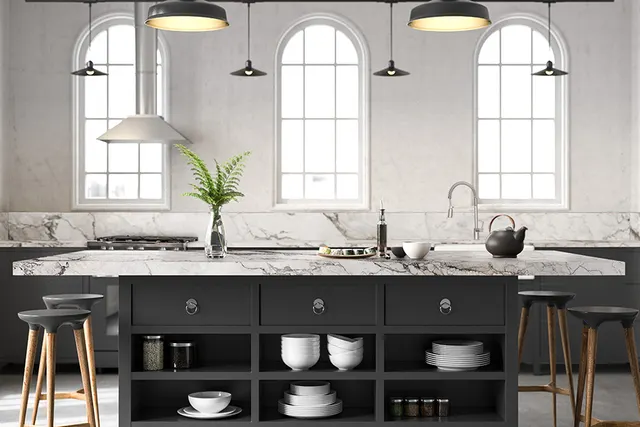
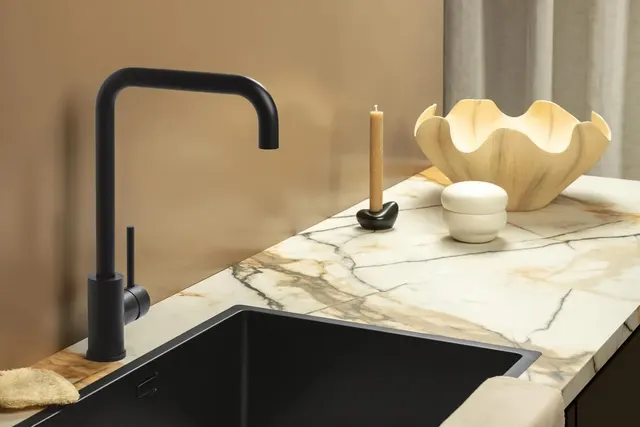
Marble is very popular because of its soft and unique appearance. The pattern is always unique, which can be an advantage for consumers who value appearance highly. However, the softness of marble makes it more susceptible to scratches and grease stains. Acids cause stains in the decorative layer of the stone. Despite these seemingly less attractive properties, the use of marble kitchen countertops is on the rise. This is a trend that has also been noticed by the manufacturers of composite countertops.
Composite material
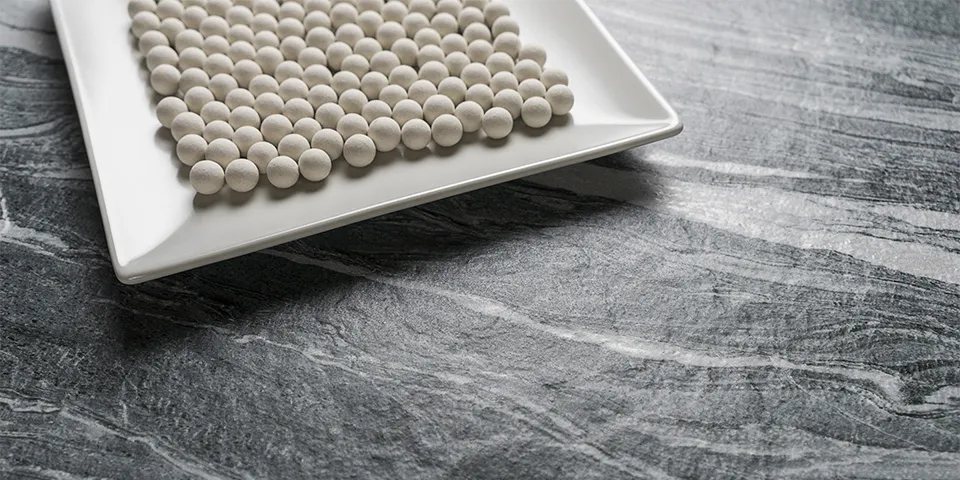
Various Dekton collections at Cosentino.
A composite worktop is, simply put, made of plastic and natural stone. These two materials are bound together by a synthetic resin. This creates composite, a material that brings together the best of both worlds. The type of natural stone used and the proportions of natural stone, resin, and plastic determine the quality of the composite. Robust slabs are created under heavy pressure, which can then be processed as desired. A composite worktop has interesting properties. It is waterproof, impact-resistant, heat-resistant, and almost scratch-free—properties that also make it suitable for use in bathrooms. However, hot pots and pans must be handled with care. A composite worktop will not crack or break under the influence of high temperatures, but there is a chance that it will discolor. An additional advantage of a composite worktop is that it is available in many colors and finishes. For example, it is possible to create a composite worktop with a marble look that is almost indistinguishable from real marble.
There is a wide selection
Of course, the choice is more extensive than ‘just’ natural stone and composite. Worktops are also available in wood, glass, stainless steel, ceramic, concrete, Dekton, Corian, and so on.
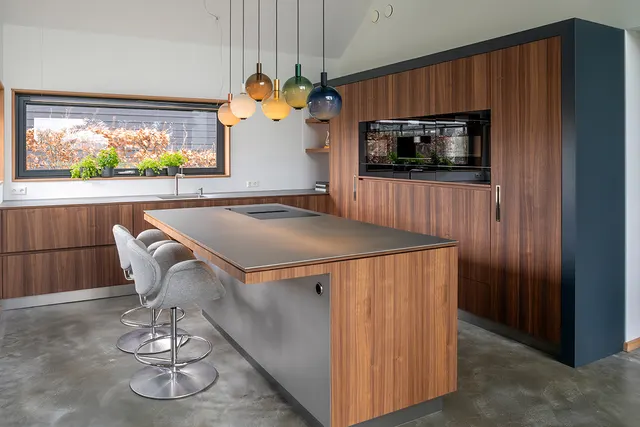
For a long time, wood was the most commonly used material for worktops. That may no longer be the case today, but wood is still an option. After all, wood is the material of choice for creating a warm atmosphere. The required scratch, heat, and moisture resistance is achieved by applying a protective top layer.
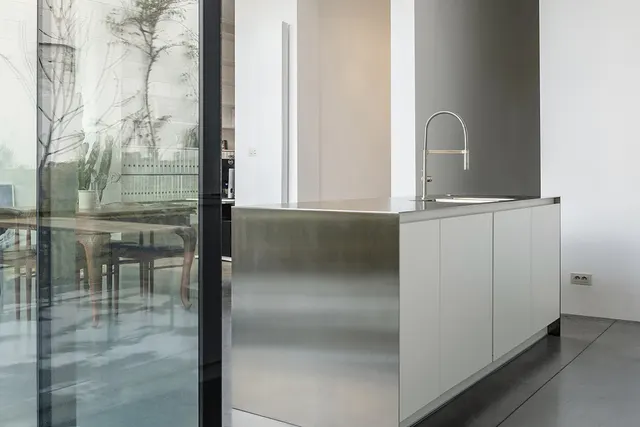
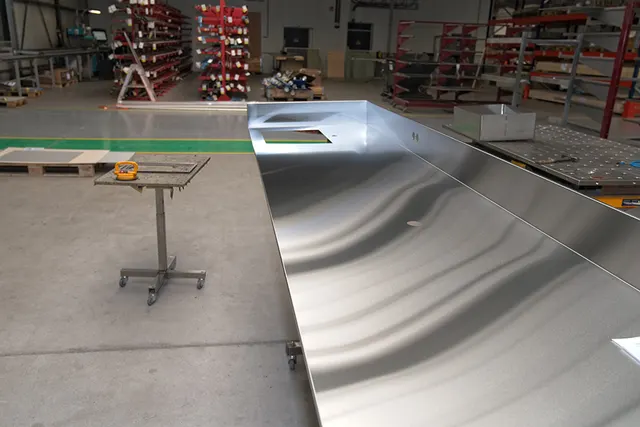
Stainless steel was long reserved for commercial kitchens in restaurants, but has now made the transition to private homes. Temperature and moisture have no impact on the material, which is also easy to maintain. Scratches are visible on stainless steel. However, some consumers choose a stainless steel worktop precisely for this reason.
Ceramic countertops have only recently begun to gain popularity. The material is heat, stain, and scratch resistant and can also be perfectly combined with other materials. Heavy or sharp objects are the biggest enemy of ceramics.
Question about this story? Ask your question
Keep following this
Get an email when a new story is published. No account needed.
- ThemeKitchen materials
- SubjectWorktops